

Motmot

マユジロヤブモズ 対 セグロヤブモズ

Tchagra tchagra 対 Laniarius ferrugineus

マユジロヤブモズとセグロヤブモズのクイズ
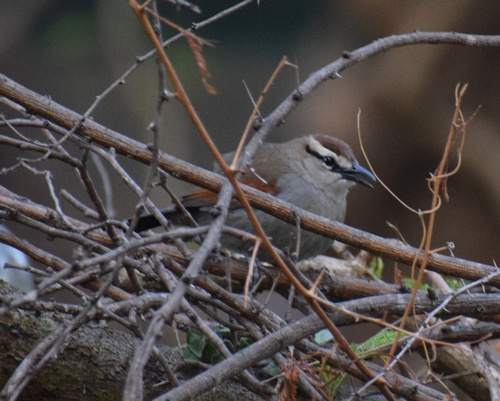
マユジロヤブモズ (Tchagra tchagra) マユジロヤブモズ
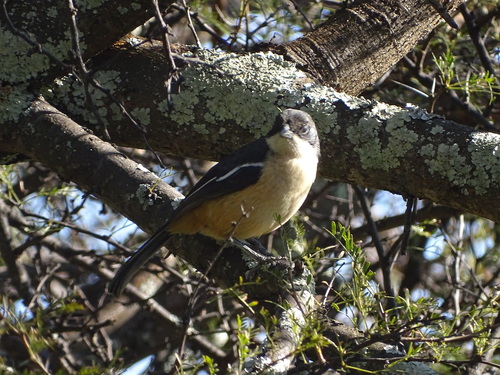
セグロヤブモズ (Laniarius ferrugineus) セグロヤブモズ

メディア

読み込み中…

要点

南マユジロヤブモズとセグロヤブモズを区別する最も信頼できるフィールドマークは頭の模様です:南マユジロヤブモズは茶色の冠に太い白い眉斑と黒い目のストライプを示しますが、セグロヤブモズは強い眉斑のない均一に暗い(黒または暗灰色の)頭を持っています。飛んでいる時や止まっている時、セグロヤブモズの白い翼のストライプと赤褐色の脇腹は特徴的ですが、南マユジロヤブモズは栗色の翼と淡い腹部を持っています。幼鳥は混乱を招くことがありますが、マユジロヤブモズの淡い目のストライプと鈍い色合いは、セグロヤブモズの縞模様やまだら模様と対比します。構造とサイズも役立ちます:セグロヤブモズはより重く、がっしりしており、より頑丈なくちばしを持っています。両種は密なカバーを好みますが、行動や鳴き声は異なり、セグロヤブモズはより内気で隠れる傾向があります。

識別のコツ

  1. Head pattern (all ages): 南マユジロヤブモズは茶色の冠、太い白い眉斑、黒い目のストライプを持っています—これはセグロヤブモズ(均一に暗い(黒または暗灰色)の頭と強い眉斑がない)と区別する最も早い方法です。
  2. Crown color (adults): マユジロヤブモズの冠は茶色(赤褐色の亜種を除く)ですが、セグロヤブモズの頭と背中は黒(オス)または暗灰色(メス)です。
  3. Supercilium (all ages): マユジロヤブモズは常に広い白い眉斑を示します;セグロヤブモズはこの特徴が全くありません。
  4. Wing pattern (adults): セグロヤブモズは止まっている時や飛んでいる時に見える太い白い翼のストライプを持っています;マユジロヤブモズの折りたたまれた翼は栗色で白い翼のストライプはありません。
  5. Tail pattern (adults): 両者は白い尾を持つ黒い尾を持っていますが、セグロヤブモズの尾は長く、白い外羽がありますが、マユジロヤブモズの尾は白い先端を持っています。
  6. Underparts (adults): マユジロヤブモズは下が淡い灰色ですが;セグロヤブモズは下が白で、下腹部、脇腹、尾羽の下に赤褐色の色合いがあります(特にオスとメスでは、幼鳥ではあまり見られません)。
  7. Juvenile/immature marks: 幼いセグロヤブモズは上がまだらの淡い茶色で、淡い翼のバーと強い縞模様を持っています—マユジロヤブモズは決して示しません。幼鳥のマユジロヤブモズは成鳥より鈍い色合いで、淡い目のストライプを持っていますが、下に縞模様やまだら模様はありません。
  8. Bill structure: セグロヤブモズのくちばしはより頑丈で重い;マユジロヤブモズのくちばしは長めで黒いですが、スリムです。
  9. Size and bulk: セグロヤブモズはより重く、がっしりしています(約58 g対約47 g)、尾が長く、より頑丈な外観を持っています。これは両者が一緒に見られない限り微妙です。
  10. Behavior: セグロヤブモズは内気で、隠れながら密な植生の中で餌を探し、目立って止まることはほとんどありません;マユジロヤブモズはよりオープンに止まる可能性が高いです。
  11. Song: マユジロヤブモズの歌は降下する笛の音で、しばしば止まり木やディスプレイ飛行から発せられます;セグロヤブモズのデュエットはより複雑で液体のようで変化に富み、ooo-whee-oooのフレーズがあります。
  12. Sex differences: セグロヤブモズのメスは上が暗灰色で、胸に赤褐色の色合いがあります;マユジロヤブモズの性別は似ていますが、若い鳥は鈍い色合いです。
  13. Habitat overlap: 両者は密な低木を好みますが、マユジロヤブモズはより沿岸に生息し、セグロヤブモズは南東アフリカでより広範囲に分布しています。
  14. Common pitfalls: 幼いセグロヤブモズのまだら模様と縞模様は鈍いマユジロヤブモズと間違えられることがありますが、強い眉斑の欠如と縞模様の存在が重要です。幼いチャイロヤブモズ(このペアには含まれません)は茶色の冠を示すこともありますが、南マユジロヤブモズよりも大きく、くちばしは短いです。
  15. Context clues: 鳥がデュエットを歌っているか、非常に低く隠れて餌を探している場合はセグロヤブモズを疑い、オープンに止まって降下する笛の音を出している場合はマユジロヤブモズを疑います。

大きさ

セグロヤブモズは南マユジロヤブモズに比べて明らかに大きく、重い(体重約58 g)です。セグロヤブモズは長さ20〜22 cmですが、マユジロヤブモズはやや小さく17〜21 cmです。セグロヤブモズはよりがっしりしており、より頑丈に見え、相対的に長い尾と頑丈なくちばしを持っています。フィールドでは、このサイズの違いは両種が並んで見られるときに最も明らかですが、単独で見られると微妙です。

羽色

行動

セグロヤブモズは特に内気で隠れる傾向があり、密な植生の中で低く餌を探し、目立って止まることはほとんどありません。南マユジロヤブモズは密な低木を好むものの、特にディスプレイ中はオープンに止まっているのが見られることが多いです。セグロヤブモズの餌探しは主に地面の上または近くで、茂みの中を這い回りますが、マユジロヤブモズは歌の飛行や領土のディスプレイ中により活発で目立つことがあります。

生息環境

両種は密な低木や茂みで見られますが、南マユジロヤブモズは南アフリカの南部および南東部の沿岸の茂みや密な低木により密接に関連しています。セグロヤブモズは南東アフリカ全体に広く分布し、南東ジンバブエ、東ボツワナ、モザンビーク、南部/東部南アフリカを含みます。両者は厚いカバーを好みますが、セグロヤブモズはより広範囲の密な生息地で見られることがあります。

声

南マユジロヤブモズのオスの歌は降下する笛の音(ttttrtr te te te teuuu)で、しばしば止まり木やディスプレイ飛行から発せられます;メスはトリルのtzerrrrrrrrで応答します。セグロヤブモズはデュエットコールで最もよく知られており:液体のooo-whee-oooの後に、笛のooo-ooo-wheeeまたはwheee-wheeeの後にooo-whee-oooが続き、多くのバリエーションがあります。セグロヤブモズのデュエットはより複雑で、黒頭オリオールと混同されることがありますが、マユジロヤブモズの歌はよりシンプルで降下します。

より良い説明を送る

比較と同じ項目を使ってください。文章はすぐに公開されます。

The most reliable field mark to separate Southern Tchagra from Southern Boubou is the head pattern: Southern Tchagra shows a brown crown with a bold white supercilium and black eye-stripe, while Southern Boubou has a uniformly dark (black or dark grey) head without a strong supercilium. In flight or perched, Southern Boubou’s white wing stripe and rufous flanks are distinctive, whereas Southern Tchagra has chestnut wings and pale underparts. Juveniles can be confusing, but the Tchagra’s buff eye-stripe and duller tones contrast with the Boubou’s barred and mottled pattern. Structure and size also help: Southern Boubou is heavier, bulkier, and has a more robust bill. Both species prefer dense cover, but their behavior and vocalizations differ, with Boubou being shyer and more skulking.

  1. Head pattern (all ages): Southern Tchagra has a brown crown, bold white supercilium, and black eye-stripe—this is the quickest way to separate it from Southern Boubou, which has a uniformly dark (black or dark grey) head and no strong supercilium.
  2. Crown color (adults): Tchagra’s crown is brown (except in some subspecies with reddish-brown), while Boubou’s head and back are black (male) or dark grey (female).
  3. Supercilium (all ages): Tchagra always shows a broad white supercilium; Boubou lacks this feature entirely.
  4. Wing pattern (adults): Southern Boubou has a bold white wing stripe, visible when perched or in flight; Tchagra’s folded wings are chestnut without a white wing stripe.
  5. Tail pattern (adults): Both have black tails with white, but Boubou’s tail is longer and has white outer feathers, while Tchagra’s tail is tipped white.
  6. Underparts (adults): Tchagra is pale grey below; Boubou is white below, shading to rufous on the lower belly, flanks, and undertail (especially in males and females, less so in juveniles).
  7. Juvenile/immature marks: Young Boubou is mottled buff-brown above, with a buffy wing bar and strong barring below—never shown by Tchagra. Juvenile Tchagra is duller than adult, with a buff eye-stripe, but never barred or mottled below.
  8. Bill structure: Boubou’s bill is stouter and heavier; Tchagra’s is longish and black, but slimmer.
  9. Size and bulk: Boubou is heavier and bulkier (~58 g vs ~47 g), with a longer tail and more robust appearance. This is subtle unless both are seen together.
  10. Behavior: Boubou is shy, skulking, and forages low in dense vegetation; Tchagra is more likely to perch in the open, especially when singing or displaying.
  11. Song: Tchagra’s song is a descending whistle, often from a perch or in display flight; Boubou’s duet is more complex, liquid, and variable, with ooo-whee-ooo phrases.
  12. Sex differences: Boubou females are dark grey above with a rufous wash to the breast; Tchagra sexes are similar, but young birds are duller.
  13. Habitat overlap: Both prefer dense scrub, but Tchagra is more coastal in range, while Boubou is more widespread in southeastern Africa.
  14. Common pitfalls: Juvenile Boubou’s mottling and barring can be mistaken for a dull Tchagra, but the lack of a strong supercilium and presence of barring are key. Juvenile Black-crowned Tchagra (not in this pair) can also show a brown crown, but is larger and has a shorter bill than Southern Tchagra.
  15. Context clues: If the bird is singing a duet or foraging very low and hidden, suspect Boubou; if perched openly and giving a descending whistle, suspect Tchagra.

Southern Boubou is noticeably larger and heavier (body mass ~58 g) compared to Southern Tchagra (~47 g). Boubou measures 20–22 cm in length, while Tchagra is slightly smaller at 17–21 cm. Boubou appears bulkier and more robust, with a relatively longer tail and stouter bill. In the field, this size difference is most apparent when both species are seen side by side, but can be subtle when seen alone.

  • Juvenile/immature birds: Southern Tchagra juveniles are duller than adults, with a buff stripe through the eye, and lack strong barring or mottling. Southern Boubou juveniles are mottled buff-brown above, have a buff wash to the wing bar, and are barred below—this barring is a key mark for young Boubous and never shown by Tchagra.
  • Adults: Southern Tchagra shows a brown crown, black eye-stripe, broad white supercilium, pale grey underparts, pale brown upperparts, chestnut folded wings, and a black tail with white tip. Southern Boubou adult males are black above (head to tail), with a striking white wing stripe, long black tail with white outer feathers, and white underparts shading to rufous on the lower belly, undertail, and flanks. Females are similar but dark grey above and have a rufous wash to the breast. Tchagra never shows the Boubou’s white wing stripe or rufous flanks, and Boubou never shows Tchagra’s strong supercilium or chestnut wings.

Southern Boubou is notably shy and skulking, foraging low in dense vegetation and rarely perching conspicuously. Southern Tchagra, while also favoring dense scrub, is more likely to be seen perched in the open, especially during display. Boubou’s foraging is mostly on or near the ground, creeping through bushes, while Tchagra may be more active and visible during song flights or territorial displays.

Both species occur in dense scrub and bush, but Southern Tchagra is more closely associated with coastal bush and dense scrub in southern and southeastern South Africa and Eswatini. Southern Boubou ranges more widely in southeastern Africa, including southeastern Zimbabwe, eastern Botswana, Mozambique, and southern/eastern South Africa. Both prefer thick cover, but Boubou may be found in a broader range of dense habitats.

Southern Tchagra’s male song is a descending whistle (ttttrtr te te te teuuu), often given from a perch or in display flight; the female responds with a trilled tzerrrrrrrr. Southern Boubou is best known for its duetted calls: a liquid ooo-whee-ooo, followed by a whistled ooo-ooo-wheee or wheee-wheee followed by ooo-whee-ooo, with many variations. Boubou’s duet is more complex and can be confused with black-headed oriole, while Tchagra’s song is simpler and more descending.

変更を破棄しますか?

保存していない編集があります。今離れると失われます。

マユジロヤブモズ · セグロヤブモズ · 苦手な鳥