

pardela-escura vs christmas shearwater
Ardenna grisea versus Puffinus nativitatis
Jogue um quiz com pardela-escura e christmas shearwater
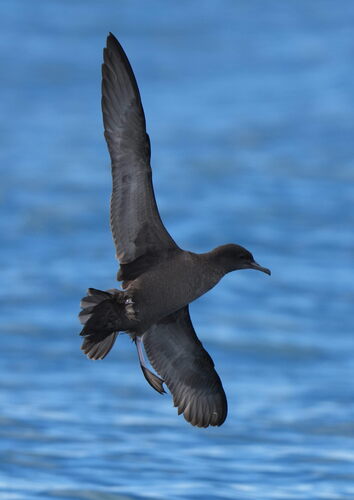 pardela-escura
 christmas shearwater
Em resumo
A marca de campo mais confiável para separar a pardela-escura do christmas shearwater é o padrão da parte inferior da asa: a pardela-escura (todas as idades) apresenta uma faixa prateada distinta ao longo do centro da parte inferior da asa, enquanto a parte inferior das asas do christmas shearwater é uniformemente marrom escuro, sem nenhum painel claro. O tamanho também é uma pista forte: a pardela-escura é significativamente maior e com asas mais longas. Em boa luz, a pardela-escura aparece marrom chocolate escuro, enquanto o christmas shearwater é mais cinza-escuro com um tom ferrugento e sutis bordas claras nas coberturas das asas superiores. O estilo de voo e a forma da cauda oferecem mais pistas, mas a parte inferior da asa é o melhor separador único em campo.
Dicas de identificação
- Padrão da parte inferior da asa: Em voo, procure pela ampla faixa prateada ao longo do centro da parte inferior da asa na pardela-escura (todas as idades); a parte inferior da asa do christmas shearwater é uniformemente marrom escuro. Esta é a marca mais confiável.
- Tamanho e estrutura: A pardela-escura é muito maior e com asas mais longas do que o christmas shearwater. Se você tiver uma noção de escala (com outras aves marinhas ou por comparação direta), isso é uma pista forte.
- Cor da parte superior da asa e do corpo: A pardela-escura é marrom chocolate escuro, às vezes parecendo preta, com um aspecto brilhante e uniforme. O christmas shearwater é cinza-escuro com um tom ferrugento e pode mostrar bordas claras nas coberturas das asas superiores, dando uma aparência ligeiramente escamosa ou desgastada de perto.
- Forma da cauda em voo: A cauda do christmas shearwater geralmente afunila para um ponto, com os pés se estendendo além da ponta da cauda, enquanto a cauda da pardela-escura é menos pontuda e os pés são menos óbvios.
- Estilo de voo: A pardela-escura voa com asas rígidas, raramente batendo, e faz longos e poderosos deslizamentos. O christmas shearwater frequentemente usa batidas de asas mais lentas e mais relaxadas e pode se assemelhar a um petrel em voo.
- Branco sob o queixo: O christmas shearwater pode mostrar uma pequena mancha branca sob o queixo, mas isso é sutil e nem sempre visível; a pardela-escura não possui essa marca.
- Bico e cabeça: Ambas as espécies têm bicos e olhos escuros, mas o christmas shearwater tem um bico mais esguio e delicado e uma cabeça ligeiramente bulbosa em comparação com o perfil mais robusto da pardela-escura.
- Cor dos pés: O christmas shearwater tem pés marrom-acinzentados, mas isso raramente é visível em campo; os pés da pardela-escura não são distintivos nesse contexto.
- Tamanho do grupo: A pardela-escura é frequentemente vista em grandes bandos em movimento rápido, especialmente durante a migração; o christmas shearwater é mais solitário ou em pequenos grupos.
- Contexto geográfico: Se visto no Pacífico central tropical, é mais provável que seja um christmas shearwater; a pardela-escura é mais provável em águas temperadas ou subárticas, especialmente fora da temporada de reprodução.
- Habitat: A pardela-escura é altamente pelágica e migratória, enquanto o christmas shearwater é mais localizado em ilhas de reprodução no Pacífico central.
- Voz: Não é uma marca de campo útil no mar para nenhuma das espécies.
- Marcas específicas de idade: Ambas as espécies têm plumagens juvenis e adultas semelhantes, então a idade não é um separador importante, exceto pelo padrão consistente da parte inferior da asa.
- Condições de iluminação: Em luz fraca, ambas as espécies podem parecer totalmente escuras, mas a faixa prateada da parte inferior da asa da pardela-escura pode ainda brilhar em luz lateral forte.
- Confusão potencial: Ambas as espécies podem ser confundidas com outras pardelas totalmente escuras em suas respectivas áreas, mas o padrão da parte inferior da asa é o melhor separador entre essas duas.
Tamanho
A pardela-escura é uma ave muito maior, medindo 40–51 cm de comprimento com uma envergadura de 94–110 cm [wikipedia]. O christmas shearwater é visivelmente menor e mais esguio, com cerca de 36 cm de comprimento e 75 cm de envergadura [wikipedia]. Essa diferença de tamanho é frequentemente aparente se ambas as espécies forem vistas juntas ou com aves marinhas familiares para escala. A pardela-escura também é mais pesada e mais robusta, enquanto o christmas shearwater é mais leve e mais delicado em construção.
Plumagem
A principal diferença de plumagem é a parte inferior da asa: a pardela-escura (todas as idades) mostra uma ampla faixa prateada correndo ao longo do centro da parte inferior da asa, visível em boa luz e especialmente em voo. A parte inferior da asa do christmas shearwater é uniformemente marrom escuro, sem nenhum painel ou faixa clara. Nas partes superiores, a pardela-escura é geralmente marrom chocolate escuro, às vezes parecendo quase preta em luz fraca, enquanto o christmas shearwater é cinza-escuro com um tom ferrugento e sutis bordas claras nas coberturas das asas superiores. O christmas shearwater pode mostrar uma pequena área branca sob o queixo, mas isso nem sempre é visível. Ambas as espécies são totalmente escuras em geral, mas a pardela-escura é mais brilhante e uniforme, enquanto o christmas shearwater pode parecer ligeiramente mais claro por baixo e mais desgastado ou ferrugento, especialmente de perto. As plumagens juvenis e adultas são semelhantes em ambas as espécies, sem marcas específicas de idade fortes, exceto o padrão da parte inferior da asa, que é consistente em todas as idades.
Comportamento
A pardela-escura geralmente voa com asas rígidas e retas, raramente batendo as asas e frequentemente deslizando baixo sobre a água de maneira poderosa e direta, lembrando um pequeno albatroz. Seu voo é rápido e intencional, com arcos profundos e cortantes. O christmas shearwater, embora capaz do clássico voo 'cortante', usa mais frequentemente uma batida de asas mais lenta e mais relaxada, às vezes se assemelhando a um petrel. Em voo, a cauda do christmas shearwater geralmente parece pontuda, com os pés se estendendo além da ponta da cauda, enquanto a cauda da pardela-escura é menos proeminente. A pardela-escura é mais provável de ser vista em grandes bandos em movimento rápido, enquanto o christmas shearwater é geralmente encontrado sozinho ou em pequenos grupos.
Habitat
A pardela-escura é uma migrante de longa distância, reproduzindo-se no hemisfério sul e abrangendo amplamente os oceanos Pacífico e Atlântico, frequentemente vista longe da costa em águas temperadas e subárticas. O christmas shearwater é restrito ao Pacífico central tropical, reproduzindo-se em ilhas remotas e raramente se afastando muito dessas áreas. Assim, a localização e a estação podem ser úteis: a pardela-escura é improvável em águas estritamente tropicais, enquanto o christmas shearwater raramente é visto fora dos trópicos do Pacífico central.
Voz
A pardela-escura é vocal à noite em áreas de reprodução, produzindo gritos altos e crocados, mas geralmente é silenciosa no mar, exceto quando se alimenta em grandes grupos. As vocalizações do christmas shearwater não são descritas em detalhes, mas no mar também é geralmente silenciosa. Assim, a voz não é um separador confiável na maioria das situações de campo.
pardela-escura · christmas shearwater · Minhas aves difíceis