

Motmot

ハイイロミズナギドリ 対 コミズナギドリ

Ardenna grisea 対 Puffinus nativitatis

ハイイロミズナギドリとコミズナギドリのクイズ
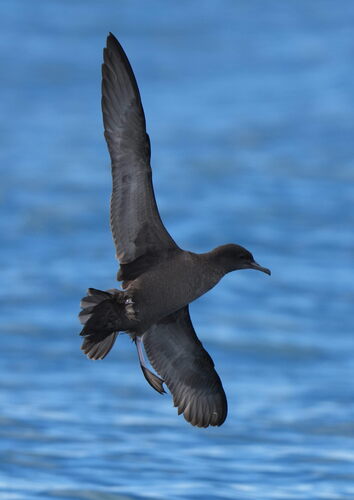
ハイイロミズナギドリ (Ardenna grisea) ハイイロミズナギドリ
コミズナギドリ (Puffinus nativitatis) コミズナギドリ

メディア

読み込み中…

要点

ハイイロミズナギドリとコミズナギドリを区別する最も信頼できるフィールドマークは、下翼のパターンです:ハイイロミズナギドリ(すべての年齢)は下翼の中央に明確な銀色のストライプを示しますが、コミズナギドリの下翼は均一に暗褐色で、淡いパネルはありません。サイズも強い手がかりです:ハイイロミズナギドリはかなり大きく、翼が長いです。良い光の下では、ハイイロミズナギドリは暗いチョコレートブラウンに見えますが、コミズナギドリは黒っぽい灰色で、錆色の色合いと上翼の覆羽に微妙な淡いフリンジがあります。飛行スタイルと尾の形もさらなる手がかりを提供しますが、下翼はフィールドでの最も良い単独の区別点です。

識別のコツ

  1. 下翼のパターン: 飛行中、ハイイロミズナギドリ(すべての年齢)の下翼の中央に広い銀色のストライプを探してください;コミズナギドリの下翼は均一に暗褐色です。これは最も信頼できるマークです。
  2. サイズと構造: ハイイロミズナギドリはコミズナギドリよりもはるかに大きく、翼が長いです。スケール感(他の海鳥や直接比較による)を持っている場合、これは強い手がかりです。
  3. 上翼と体の色: ハイイロミズナギドリは暗いチョコレートブラウンで、時には黒に見え、光沢のある均一な外観です。コミズナギドリは黒っぽい灰色で、錆色の色合いがあり、上翼の覆羽に淡いフリンジを示すことがあり、近くで見るとやや鱗状または擦り切れた外観になります。
  4. 飛行中の尾の形: コミズナギドリの尾は通常先端に向かって細くなり、足が尾の先端を超えて伸びますが、ハイイロミズナギドリの尾はあまり尖っておらず、足はあまり目立ちません。
  5. 飛行スタイル: ハイイロミズナギドリは硬直したまっすぐな翼で飛び、めったに羽ばたかず、長く力強い滑空を行います。コミズナギドリはしばしば遅く、よりゆったりとした羽ばたきを使用し、飛行中にペトレルに似ることがあります。
  6. 顎の下の白: コミズナギドリは顎の下に小さな白い斑点を示すことがありますが、これは微妙で常に見えるわけではありません;ハイイロミズナギドリにはこのマークはありません。
  7. くちばしと頭: 両種ともに暗いくちばしと目を持っていますが、コミズナギドリはハイイロミズナギドリのより頑丈なプロファイルに比べて、より細く繊細なくちばしとわずかに膨らんだ頭を持っています。
  8. 足の色: コミズナギドリは茶色がかった灰色の足を持っていますが、これはフィールドではめったに見えません;ハイイロミズナギドリの足はこの文脈では特に目立ちません。
  9. 群れのサイズ: ハイイロミズナギドリは特に移動中に大きく速く動く群れで見られることが多いですが、コミズナギドリはより孤立しているか、小さな群れで見られます。
  10. 地理的文脈: 熱帯中央太平洋で見られた場合、コミズナギドリの可能性が高いです;ハイイロミズナギドリは特に繁殖シーズン外では温帯または亜北極の水域で見られる可能性が高いです。
  11. 生息地: ハイイロミズナギドリは非常に遠洋性で移動性が高いですが、コミズナギドリは中央太平洋の繁殖島により局所的です。
  12. 声: どちらの種にとっても海での役に立つフィールドマークではありません。
  13. 年齢特有のマーク: 両種は類似の幼鳥と成鳥の羽毛を持っているため、年齢は一貫した下翼のパターンを除いて主要な区別点ではありません。
  14. 照明条件: 光が悪い場合、両種は全体的に暗く見えることがありますが、ハイイロミズナギドリの銀色の下翼ストライプは強い側光でまだフラッシュすることがあります。
  15. 混同の可能性: 両種はそれぞれの範囲内で他の全体的に暗いミズナギドリと混同されることがありますが、下翼のパターンがこの二つの間の最良の区別点です。

大きさ

ハイイロミズナギドリはかなり大きな鳥で、全長40〜51 cm、翼幅94〜110 cmです [wikipedia]。コミズナギドリは明らかに小さく、より細身で、約36 cmの長さで、翼幅は75 cmです [wikipedia]。このサイズの違いは、両種が一緒に見られたり、スケールのために馴染みのある海鳥と一緒に見られたりする場合にしばしば明らかです。ハイイロミズナギドリはまた、より重く、頑丈ですが、コミズナギドリは軽く、より繊細な体型です。

羽色

主要な羽毛の違いは下翼です:ハイイロミズナギドリ(すべての年齢)は下翼の中央に広い銀色のストライプを示し、良い光の下で特に飛行中に見えます。コミズナギドリの下翼は均一に暗褐色で、淡いパネルやストライプはありません。上面では、ハイイロミズナギドリは全体的に暗いチョコレートブラウンで、光が悪いときにはほぼ黒に見えることがありますが、コミズナギドリは黒っぽい灰色で、錆色の色合いがあり、上翼の覆羽に微妙な淡いフリンジがあります。コミズナギドリは顎の下に小さな白い部分を示すことがありますが、これは常に見えるわけではありません。両種は全体的に全暗ですが、ハイイロミズナギドリはより光沢があり、均一ですが、コミズナギドリは下側がやや淡く見え、特に近くで見ると擦り切れたように見えることがあります。幼鳥と成鳥の羽毛は両種で類似しており、下翼のパターンを除いて強い年齢特有のマークはありません。

行動

ハイイロミズナギドリは通常、硬直したまっすぐな翼で飛び、めったに羽ばたかず、力強く直接的な方法で水面近くを滑空します。小型のアルバトロスを思わせる飛行で、速く目的意識を持った飛行をし、深い切り裂く弧を描きます。コミズナギドリは、クラシックな「切り裂く」飛行が可能ですが、より遅く、よりゆったりとした羽ばたきを使用することが多く、時にはペトレルに似ることがあります。飛行中、コミズナギドリの尾は通常尖って見え、足が尾の先端を超えて伸びますが、ハイイロミズナギドリの尾はあまり目立ちません。ハイイロミズナギドリは大きく速く動く群れで見られる可能性が高いですが、コミズナギドリは通常、単独または小さな群れで遭遇します。

生息環境

ハイイロミズナギドリは長距離移動する鳥で、南半球で繁殖し、太平洋と大西洋の両方を広く移動し、温帯および亜北極の水域で沖合でよく見られます。コミズナギドリは熱帯中央太平洋に制限され、遠隔の島で繁殖し、これらの地域から遠く離れることはめったにありません。したがって、場所と季節が役立つ場合があります:ハイイロミズナギドリは厳密に熱帯の水域では見られない可能性が高く、コミズナギドリは中央太平洋の熱帯外ではめったに見られません。

声

ハイイロミズナギドリは繁殖地で夜に声を出し、大きなクーイングやクロークを発しますが、通常は海では静かで、大きな群れで餌を取るとき以外は声を出しません。コミズナギドリの声は詳細に記述されていませんが、海では一般的に静かです。したがって、声はほとんどのフィールド状況で信頼できる区別点ではありません。

より良い説明を送る

比較と同じ項目を使ってください。文章はすぐに公開されます。

The most reliable field mark to separate Sooty Shearwater from Christmas Shearwater is the underwing pattern: Sooty Shearwater (all ages) shows a distinct silvery stripe along the center of the underwing, while Christmas Shearwater's underwings are uniformly dark brown without any pale panel. Size is also a strong clue: Sooty Shearwater is significantly larger and longer-winged. In good light, Sooty Shearwater appears dark chocolate-brown, whereas Christmas Shearwater is more blackish-grey with a rusty tinge and subtle pale fringes on the upperwing coverts. Flight style and tail shape offer further clues, but the underwing is the best single separator in the field.

  1. Underwing pattern: In flight, look for the broad, silvery stripe along the center of the underwing in Sooty Shearwater (all ages); Christmas Shearwater's underwing is uniformly dark brown. This is the single most reliable mark.
  2. Size and structure: Sooty Shearwater is much larger and longer-winged than Christmas Shearwater. If you have a sense of scale (with other seabirds or by direct comparison), this is a strong clue.
  3. Upperwing and body color: Sooty Shearwater is dark chocolate-brown, sometimes appearing black, with a glossy, uniform look. Christmas Shearwater is blackish-grey with a rusty-brown tinge and may show pale fringes to the upperwing coverts, giving a slightly scaly or worn look at close range.
  4. Tail shape in flight: Christmas Shearwater's tail usually tapers to a point, with the feet extending beyond the tail tip, while Sooty Shearwater's tail is less pointed and the feet are less obvious.
  5. Flight style: Sooty Shearwater flies with stiff, straight wings, rarely flapping, and makes long, powerful glides. Christmas Shearwater often uses slower, more leisurely wingbeats and can resemble a petrel in flight.
  6. White under chin: Christmas Shearwater may show a small patch of white under the chin, but this is subtle and not always visible; Sooty Shearwater lacks this mark.
  7. Bill and head: Both species have dark bills and eyes, but Christmas Shearwater has a more slender, delicate bill and a slightly bulbous head compared to Sooty Shearwater's more robust profile.
  8. Feet color: Christmas Shearwater has brown-grey feet, but this is rarely visible in the field; Sooty Shearwater's feet are not distinctive in this context.
  9. Group size: Sooty Shearwater is often seen in large, fast-moving flocks, especially on migration; Christmas Shearwater is more solitary or in small groups.
  10. Geographic context: If seen in the tropical central Pacific, Christmas Shearwater is more likely; Sooty Shearwater is more likely in temperate or subarctic waters, especially outside the breeding season.
  11. Habitat: Sooty Shearwater is highly pelagic and migratory, while Christmas Shearwater is more localized to breeding islands in the central Pacific.
  12. Voice: Not a useful field mark at sea for either species.
  13. Age-specific marks: Both species have similar juvenile and adult plumage, so age is not a major separator except for the consistent underwing pattern.
  14. Lighting conditions: In poor light, both species can appear all-dark, but the silvery underwing stripe of Sooty Shearwater may still flash in strong side light.
  15. Potential confusion: Both species can be confused with other all-dark shearwaters in their respective ranges, but the underwing pattern is the best separator between these two.

Sooty Shearwater is a much larger bird, measuring 40–51 cm in length with a wingspan of 94–110 cm [wikipedia]. Christmas Shearwater is noticeably smaller and more slender, at about 36 cm long with a 75 cm wingspan [wikipedia]. This size difference is often apparent if both species are seen together or with familiar seabirds for scale. Sooty Shearwater is also heavier and more robust, while Christmas Shearwater is lighter and more delicate in build.

The key plumage difference is the underwing: Sooty Shearwater (all ages) shows a broad, silvery stripe running along the center of the underwing, visible in good light and especially in flight. Christmas Shearwater's underwing is uniformly dark brown, lacking any pale panel or stripe. On the upperparts, Sooty Shearwater is overall dark chocolate-brown, sometimes appearing almost black in poor light, while Christmas Shearwater is blackish-grey with a rusty-brown tinge and subtle pale fringes to the upperwing coverts. Christmas Shearwater may show a small area of white under the chin, but this is not always visible. Both species are all-dark overall, but Sooty Shearwater is glossier and more uniform, while Christmas Shearwater can look slightly paler below and more worn or rusty, especially at close range. Juvenile and adult plumages are similar in both species, with no strong age-specific marks except the underwing pattern, which is consistent at all ages.

Sooty Shearwater typically flies with stiff, straight wings, rarely flapping and often gliding low over the water in a powerful, direct manner, reminiscent of a small albatross. Its flight is fast and purposeful, with deep, shearing arcs. Christmas Shearwater, while capable of the classic 'shearing' flight, more often uses a slower, more leisurely wingbeat, sometimes resembling a petrel. In flight, Christmas Shearwater's tail usually appears pointed, with the feet extending beyond the tail tip, while Sooty Shearwater's tail is less prominent. Sooty Shearwater is more likely to be seen in large, fast-moving flocks, while Christmas Shearwater is usually encountered singly or in small groups.

Sooty Shearwater is a long-distance migrant, breeding in the southern hemisphere and ranging widely across both the Pacific and Atlantic Oceans, often seen far offshore in temperate and subarctic waters. Christmas Shearwater is restricted to the tropical central Pacific, breeding on remote islands and rarely straying far from these areas. Thus, location and season can be helpful: Sooty Shearwater is unlikely in strictly tropical waters, while Christmas Shearwater is rarely seen outside the central Pacific tropics.

Sooty Shearwater is vocal at night on breeding grounds, producing loud coos and croaks, but is usually silent at sea except when feeding in large groups. Christmas Shearwater's vocalizations are not described in detail, but at sea it is also generally silent. Thus, voice is not a reliable separator in most field situations.

変更を破棄しますか?

保存していない編集があります。今離れると失われます。

ハイイロミズナギドリ · コミズナギドリ · 苦手な鳥