

anu-preto vs tiziu
Crotophaga ani versus Volatinia jacarina
Jogue um quiz com anu-preto e tiziu
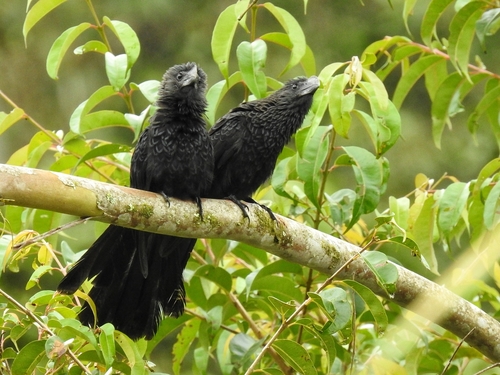 anu-preto
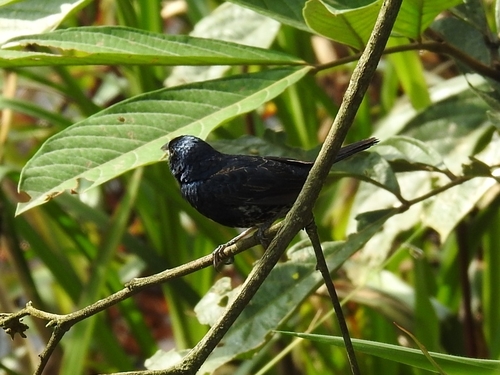 tiziu
Em resumo
A marca de campo mais confiável para separar o anu-preto do tiziu é o tamanho e a estrutura: o anu é uma ave grande, esbelta e de cauda longa, com um bico maciço e profundamente estriado, enquanto o tiziu é uma ave minúscula, compacta e semelhante a um tentilhão, com um bico curto e cônico. Em voo, apenas o tiziu exibe uma mancha branca na parte inferior da asa (visível em machos e algumas fêmeas/juvenis), enquanto o anu é uniformemente preto brilhante, sem flashes nas asas. Fêmeas e tizuis imaturos são marrons e estriados, nunca pretos brilhantes, então a confusão é mais provável com tizuis machos adultos. Ambas as espécies podem ser encontradas em áreas abertas, mas o anu está sempre em grupos barulhentos e frequentemente visto correndo no chão, enquanto o tiziu é solitário ou em pequenos bandos e empoleira-se ereto em caules de grama. Chamadas e canções também são bastante diferentes.
Dicas de identificação
- O tamanho é a pista mais imediata: O anu-preto é enorme em comparação com o pequeno tiziu. Se a ave parecer do tamanho de um sabiá ou maior, é um anu; se for do tamanho de um pardal ou menor, é um tiziu.
- A forma do bico é diagnóstica: O anu tem um bico maciço, profundo e estriado que parece quase de papagaio; o tiziu tem um bico curto, cônico e semelhante a um tentilhão. Isso é visível mesmo à distância.
- Comprimento e forma da cauda: O anu tem uma cauda muito longa e larga, frequentemente mantida baixa ou aberta; a cauda do tiziu é curta e quadrada.
- Plumagem em voo: Apenas os machos tizuis mostram uma mancha branca na parte inferior da asa (axilares e base das remiges) em voo; o anu é uniformemente preto brilhante, sem branco em lugar algum, em qualquer idade ou sexo.
- Fêmeas e tizuis juvenis: Estes são marrons acima com estrias, e abaixo são amarelados, mostrando barras de asa fracas e bordas tertiais amareladas. O anu é sempre preto brilhante, nunca marrom ou estriado.
- Cor da íris: Ambos têm íris marrons, então isso não é útil para separação.
- Comportamento social: O anu está sempre em grupos barulhentos e apertados, frequentemente correndo no chão ou empoleirando-se juntos. Os tizuis são solitários ou em pequenos grupos soltos, raramente no chão.
- Estilo de forrageio: O anu frequentemente forrageia no chão, às vezes perto do gado, e corre bem; o tiziu empoleira-se ereto em caules de grama ou arbustos baixos, raramente visto correndo.
- Estilo de voo: O voo do anu é fraco e vacilante; o tiziu é rápido e direto, às vezes realizando voos curtos de exibição.
- Vocalizações: O anu emite um chamado nasal e choroso 'ooo-leeek', frequentemente repetido pelo grupo. O tiziu não emite esse chamado.
- Contexto de habitat: Ambos podem estar em áreas abertas, mas o anu prefere áreas com árvores dispersas e está frequentemente perto de gado; o tiziu é mais encontrado em campos gramados e áreas de ervas daninhas.
- Dimorfismo sexual: Apenas os machos tizuis são totalmente escuros; fêmeas e juvenis são marrons e estriados, então a confusão só é possível com tizuis machos adultos.
- Barras de asa e bordas tertiais: Presentes em fêmeas/juvenis tizuis, ausentes no anu.
- Tamanho do grupo: O anu quase nunca está sozinho; o tiziu é frequentemente solitário ou em pares/bandos pequenos.
- Se em dúvida: Procure a combinação de tamanho, forma do bico, comprimento da cauda e comportamento em grupo—esses juntos são quase infalíveis para separar essas duas espécies.
Tamanho
O anu-preto é dramaticamente maior: cerca de 35 cm (14 pol) de comprimento e pesando cerca de 97 g, em comparação com os 8,7–10,9 cm (3,4–4,3 pol) e 8–12 g do tiziu. O anu é quase quatro vezes o comprimento e mais de oito vezes a massa do tiziu. A longa cauda e o grande bico pesado do anu são óbvios mesmo à distância, enquanto o tiziu é uma ave minúscula e atarracada com uma cauda curta e um bico pequeno, semelhante a um tentilhão. O tamanho sozinho geralmente é suficiente para separá-los se vistos juntos.
Plumagem
Tizuis juvenis e fêmeas são marrons acima com estrias e partes inferiores amareladas, nunca pretos brilhantes, então a confusão é provável apenas com machos adultos. Machos adultos tizuis são pretos com um brilho azul, mas têm uma cauda preta plana e penas de voo, e em voo mostram uma mancha branca diagnóstica na parte inferior da asa (axilares, coberturas da parte inferior da asa e base das remiges), que está ausente no anu. O anu é preto brilhante por toda parte, sem branco em lugar algum, e tem uma íris marrom. O bico do anu é maciço e profundamente estriado, enquanto o bico do tiziu é curto e cônico. Fêmeas e tizuis juvenis têm barras de asa fracas e bordas amareladas nos tertiais, que os anis nunca mostram. Em resumo: apenas os machos tizuis são totalmente escuros, mas eles são muito menores, não têm o bico do anu e mostram branco na asa ao voar.
Comportamento
O anu-preto está sempre em grupos barulhentos e gregários, frequentemente correndo no chão ou empoleirando-se juntos em árvores. Seu voo é fraco e vacilante. O anu é geralmente visto forrageando no chão, às vezes perto do gado, e é conspícuo em seu comportamento social. O tiziu é geralmente solitário ou em pequenos bandos soltos, empoleirando-se ereto em caules de grama ou arbustos baixos, e raramente é visto correndo no chão. Tizuis frequentemente realizam voos curtos de exibição, especialmente os machos, e não são tão socialmente conspícuos quanto os anis. O comportamento em grupo do anu e o forrageio no chão são pistas comportamentais fortes.
Habitat
Ambas as espécies ocorrem em áreas abertas, campos de ervas daninhas e áreas agrícolas, mas o anu-preto é mais provável em áreas semi-abertas com árvores ou arbustos dispersos, frequentemente perto de gado ou em áreas perturbadas. O tiziu prefere campos gramados, áreas de ervas daninhas e bordas de campos, e é menos provável de ser visto em grupos em árvores. Embora seus habitats se sobreponham, a preferência do anu por empoleirar-se em árvores e forragear no chão em grupos é distinta.
Voz
O anu-preto emite um chamado choroso e distinto 'ooo-leeek', frequentemente repetido por várias aves em um grupo, tornando sua presença óbvia. As vocalizações do tiziu não são descritas nas notas fornecidas, mas eles não emitem os chamados chorosos do anu. Se você ouvir um grupo de aves fazendo chamados repetidos, nasais e chorosos, é provável que esteja ouvindo anis.