

Motmot

オオハシカッコウ 対 シコンヒワ

Crotophaga ani 対 Volatinia jacarina

オオハシカッコウとシコンヒワのクイズ
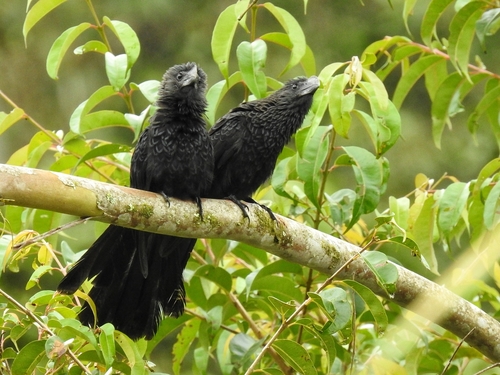
オオハシカッコウ (Crotophaga ani) オオハシカッコウ
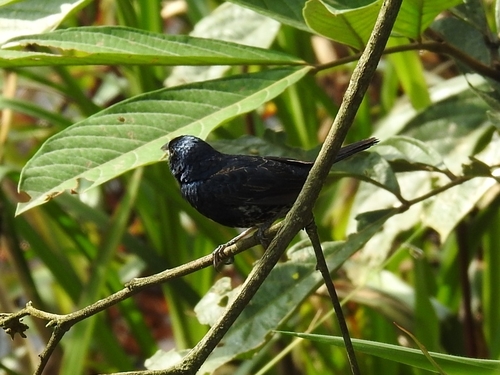
シコンヒワ (Volatinia jacarina) シコンヒワ

メディア

読み込み中…

要点

オオハシカッコウとシコンヒワを区別する最も信頼できるフィールドマークはサイズと構造です:オオハシカッコウは大きく、細長い、長い尾を持つ鳥で、巨大で深い溝のあるくちばしを持っています。一方、シコンヒワは小さく、コンパクトで、フィンチのような鳥で、短く円錐形のくちばしを持っています。飛行中、シコンヒワだけが白いアンダーウィングパッチを示します(オスと一部のメス/幼鳥に見られます)が、オオハシカッコウは翼のフラッシュなしで均一に光沢のある黒です。メスと未熟なシコンヒワは茶色でストリーキーで、決して光沢のある黒ではないため、混乱は主に成鳥のオスのシコンヒワとの間で起こります。両種は開けた土地に見られますが、オオハシカッコウは常に騒がしい群れにいて、しばしば地面を走っているのが見られますが、シコンヒワは孤独または小さな群れで、草の茎に直立して止まります。鳴き声と歌もかなり異なります。

識別のコツ

  1. サイズは最も即座の手がかり:オオハシカッコウは小さなシコンヒワと比べて巨大です。もし鳥がロビンサイズまたはそれ以上に見えるなら、それはオオハシカッコウです;もしスズメサイズまたはそれ以下なら、それはシコンヒワです。
  2. くちばしの形は診断的:オオハシカッコウは巨大で深い溝のあるくちばしを持ち、ほぼオウムのように見えます;シコンヒワは短く円錐形のフィンチのようなくちばしを持っています。これは遠くからでも見えます。
  3. 尾の長さと形:オオハシカッコウは非常に長く広い尾を持ち、しばしば低く持たれたり扇状に広げられたりします;シコンヒワの尾は短く四角です。
  4. 飛行中の羽毛:オスのシコンヒワだけが飛行中に白いアンダーウィングパッチ(腋羽と飛翔羽の基部)を示します;オオハシカッコウは年齢や性別に関係なく均一に光沢のある黒で、どこにも白はありません。
  5. メスと幼鳥のシコンヒワ:これらは上面が茶色でストリーキー、下面がバフィーで、淡い翼帯とバフィーの三次羽の縁を示します。オオハシカッコウは常に光沢のある黒で、決して茶色やストリーキーではありません。
  6. 虹彩の色:両者とも茶色の虹彩を持っているため、これでは区別できません。
  7. 社会的行動:オオハシカッコウは常に騒がしい密な群れにいて、しばしば地面を走ったり一緒に止まったりします。シコンヒワは孤独または小さな緩い群れで、地面にいることは稀です。
  8. 採餌スタイル:オオハシカッコウはしばしば地面で採餌し、時には牛の近くで、よく走ります;シコンヒワは草の茎や低い低木に直立して止まり、走っているのが見られることは稀です。
  9. 飛行スタイル:オオハシカッコウの飛行は弱く不安定です;シコンヒワは速く直接的で、時には短いディスプレイフライトを行います。
  10. 鳴き声:オオハシカッコウは鼻にかかった、うなり声の「ooo-leeek」と呼ばれる鳴き声を出し、しばしば群れによって繰り返されます。シコンヒワはこの鳴き声を出しません。
  11. 生息地の文脈:両者は開けた土地にいることができますが、オオハシカッコウは散在する木や家畜の近くを好み、シコンヒワは草の生えた野原や雑草の生えた場所に多く見られます。
  12. 性的二形性:オスのシコンヒワだけが全体が暗いです;メスと幼鳥は茶色でストリーキーで、混乱は成鳥のオスのシコンヒワとの間でのみ可能です。
  13. 翼帯と三次羽の縁:メス/幼鳥のシコンヒワには存在し、オオハシカッコウにはありません。
  14. 群れのサイズ:オオハシカッコウはほとんど一人ではありません;シコンヒワはしばしば一人またはペア/小さな群れでいます。
  15. 疑わしい場合:サイズ、くちばしの形、尾の長さ、群れの行動の組み合わせを探してください—これらは一緒にこれら二つの種を区別するためにほぼ確実です。

大きさ

オオハシカッコウは劇的に大きいです:約35 cm(14インチ)で、重さは約97 gで、シコンヒワの8.7–10.9 cm(3.4–4.3インチ)と8–12 gと比較されます。オオハシカッコウはシコンヒワの約四倍の長さで、質量は八倍以上です。オオハシカッコウの長い尾と大きく重いくちばしは、遠くからでも明らかで、シコンヒワは小さく、太い鳥で、短い尾と小さくフィンチのようなくちばしを持っています。サイズだけで通常は一緒に見た場合にそれらを区別するのに十分です。

羽色

幼鳥とメスのシコンヒワは上面が茶色でストリーキー、下面がバフィーで、決して光沢のある黒ではないため、混乱は成鳥のオスとの間でのみ起こります。成鳥のオスのシコンヒワは青い光沢のある黒ですが、平らな黒い尾と飛翔羽を持ち、飛行中にはオオハシカッコウにはない診断的な白いアンダーウィングパッチ(腋羽、アンダーウィングカバー、飛翔羽の基部)を示します。オオハシカッコウは全体が光沢のある黒で、どこにも白はなく、茶色の虹彩を持っています。オオハシカッコウのくちばしは巨大で深い溝がありますが、シコンヒワのくちばしは短く円錐形です。メスと幼鳥のシコンヒワは淡い翼帯とバフィーの三次羽の縁を持っていますが、オオハシカッコウは決して示しません。要約すると:オスのシコンヒワだけが全体が暗いですが、彼らははるかに小さく、オオハシカッコウのくちばしがなく、飛行中に翼に白を示します。

行動

オオハシカッコウは常に騒がしい、社交的な群れにいて、しばしば地面を走ったり木に一緒に止まったりします。その飛行は弱く不安定です。オオハシカッコウは通常、地面で採餌しているのが見られ、時には牛の近くで、社会的行動が目立ちます。シコンヒワは通常孤独または小さな緩い群れで、草の茎や低い低木に直立して止まり、地面を走っているのが見られることは稀です。シコンヒワは特にオスが短いディスプレイフライトを行うことが多く、オオハシカッコウほど目立って社交的ではありません。オオハシカッコウの群れの行動と地面での採餌は強い行動の手がかりです。

生息環境

両種は開けた土地、雑草の生えた野原、農業地域に生息していますが、オオハシカッコウは散在する木や低木のある半開放的な地域にいる可能性が高く、しばしば牛の近くや乱れた地域にいます。シコンヒワは草の生えた野原、雑草の生えた場所、田んぼの端を好み、木の中で群れで見られることは少ないです。彼らの生息地は重なりますが、オオハシカッコウの木に止まり、群れで地面で採餌する好みは独特です。

声

オオハシカッコウは特徴的な鼻にかかったうなり声の「ooo-leeek」と呼ばれる鳴き声を出し、しばしば群れの中で数羽の鳥によって繰り返され、彼らの存在を明らかにします。シコンヒワの鳴き声は提供されたメモには記載されていませんが、オオハシカッコウのうなり声を出すことはありません。もし、繰り返し鼻にかかったうなり声を出している鳥の群れを聞いたら、それはオオハシカッコウを聞いている可能性が高いです。

より良い説明を送る

比較と同じ項目を使ってください。文章はすぐに公開されます。

The most reliable field mark to separate Smooth-billed Ani from Blue-black Grassquit is size and structure: the ani is a large, lanky, long-tailed bird with a massive, deeply ridged bill, while the grassquit is a tiny, compact, finch-like bird with a short, conical bill. In flight, only the grassquit shows a white underwing patch (visible in males and some females/juveniles), while the ani is uniformly glossy black without wing flashes. Female and immature grassquits are brown and streaky, never glossy black, so confusion is most likely with adult male grassquits. Both species can be found in open country, but the ani is always in noisy groups and often seen running on the ground, while the grassquit is solitary or in small flocks and perches upright on grass stems. Calls and song are also quite different.

  1. Size is the most immediate clue: Smooth-billed Ani is huge compared to the tiny Blue-black Grassquit. If the bird looks robin-sized or larger, it's an ani; if sparrow-sized or smaller, it's a grassquit.
  2. Bill shape is diagnostic: Ani has a massive, deep, ridged bill that looks almost parrot-like; grassquit has a short, conical, finch-like bill. This is visible even at a distance.
  3. Tail length and shape: Ani has a very long, broad tail, often held low or fanned; grassquit's tail is short and square.
  4. Plumage in flight: Only male grassquits show a white underwing patch (axillaries and base of remiges) in flight; ani is uniformly glossy black with no white anywhere, in any age or sex.
  5. Female and juvenile grassquits: These are brown above with streaking, buffy below, and show faint wing bars and buff tertial edges. Ani is always glossy black, never brown or streaky.
  6. Iris color: Both have brown irises, so this is not helpful for separation.
  7. Social behavior: Ani is always in noisy, tight groups, often running on the ground or perching together. Grassquits are solitary or in small loose groups, rarely on the ground.
  8. Foraging style: Ani often forages on the ground, sometimes near cattle, and runs well; grassquit perches upright on grass stems or low shrubs, rarely seen running.
  9. Flight style: Ani's flight is weak and wobbly; grassquit is quick and direct, sometimes performing short display flights.
  10. Vocalizations: Ani gives a nasal, whining 'ooo-leeek' call, often repeated by the group. Grassquit does not give this call.
  11. Habitat context: Both can be in open country, but ani prefers areas with scattered trees and is often near livestock; grassquit is more in grassy fields and weedy patches.
  12. Sexual dimorphism: Only male grassquits are all-dark; females and juveniles are brown and streaky, so confusion is only possible with adult male grassquits.
  13. Wing bars and tertial edges: Present in female/juvenile grassquits, absent in ani.
  14. Group size: Ani is almost never alone; grassquit is often alone or in pairs/small flocks.
  15. If in doubt: Look for the combination of size, bill shape, tail length, and group behavior—these together are nearly foolproof for separating these two species.

Smooth-billed Ani is dramatically larger: about 35 cm (14 in) long and weighing around 97 g, compared to the Blue-black Grassquit's 8.7–10.9 cm (3.4–4.3 in) and 8–12 g. The ani is nearly four times the length and over eight times the mass of the grassquit. The ani's long tail and large, heavy bill are obvious even at a distance, while the grassquit is a tiny, stubby bird with a short tail and small, finch-like bill. Size alone is usually enough to separate them if seen together.

Juvenile and female Blue-black Grassquits are brown above with streaking and buffy underparts, never glossy black, so confusion is only likely with adult males. Adult male grassquits are black with a blue sheen, but have a flat black tail and flight feathers, and in flight show a diagnostic white patch on the underwing (axillaries, underwing coverts, and base of remiges), which is absent in the ani. The ani is glossy black all over, with no white anywhere, and a brown iris. The ani's bill is massive and deeply ridged, while the grassquit's is short and conical. Female and juvenile grassquits have faint wing bars and buffy edges on the tertials, which anis never show. In summary: only male grassquits are all-dark, but they are much smaller, lack the ani's bill, and show white in the wing when flying.

Smooth-billed Ani is always in noisy, gregarious groups, often running on the ground or perching together in trees. Its flight is weak and wobbly. The ani is usually seen foraging on the ground, sometimes near cattle, and is conspicuous in its social behavior. Blue-black Grassquit is usually solitary or in small loose flocks, perching upright on grass stems or low shrubs, and is rarely seen running on the ground. Grassquits often perform short display flights, especially males, and are not as conspicuously social as anis. Ani's group behavior and ground foraging are strong behavioral clues.

Both species occur in open country, weedy fields, and agricultural areas, but Smooth-billed Ani is more likely in semi-open areas with scattered trees or shrubs, often near cattle or in disturbed areas. Blue-black Grassquit prefers grassy fields, weedy patches, and field edges, and is less likely to be seen in groups in trees. While their habitats overlap, the ani's preference for perching in trees and foraging on the ground in groups is distinctive.

Smooth-billed Ani gives a distinctive whining 'ooo-leeek' call, often repeated by several birds in a group, making their presence obvious. Blue-black Grassquit's vocalizations are not described in the provided notes, but they do not give the ani's whining calls. If you hear a group of birds making repeated, nasal, whining calls, you are likely hearing anis.

変更を破棄しますか?

保存していない編集があります。今離れると失われます。

オオハシカッコウ · シコンヒワ · 苦手な鳥