

Smooth-billed Ani vs Blue-black Grassquit
Crotophaga ani contro Volatinia jacarina
Fai un quiz con Smooth-billed Ani e Blue-black Grassquit
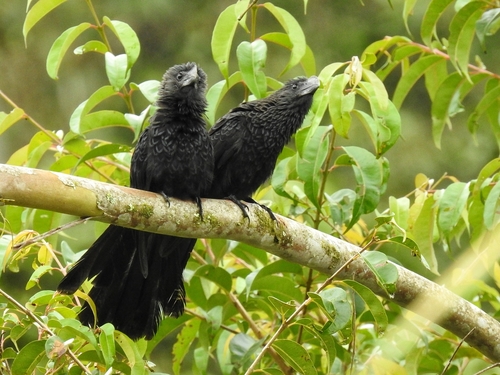 Smooth-billed Ani
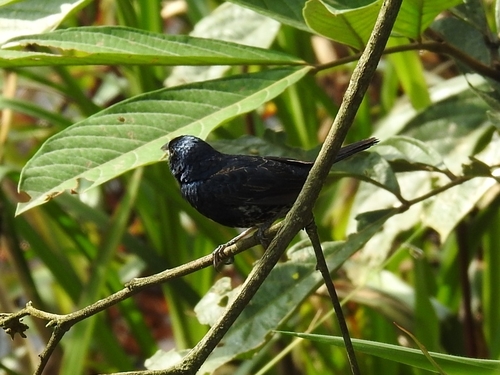 Blue-black Grassquit
In breve
Il segno distintivo più affidabile per separare Smooth-billed Ani da Blue-black Grassquit è la dimensione e la struttura: l'ani è un grande uccello snello e dalla lunga coda con un becco massiccio e profondamente scanalato, mentre il grassquit è un piccolo uccello compatto, simile a un fringillide, con un becco corto e conico. In volo, solo il grassquit mostra una macchia bianca sotto l'ala (visibile nei maschi e in alcune femmine/giovani), mentre l'ani è uniformemente nero lucido senza riflessi sulle ali. Le femmine e i giovani grassquit sono marroni e striati, mai neri lucidi, quindi la confusione è più probabile con i maschi adulti di grassquit. Entrambe le specie possono essere trovate in campi aperti, ma l'ani è sempre in gruppi rumorosi e spesso visto correre a terra, mentre il grassquit è solitario o in piccoli gruppi e si posiziona eretto sui fusti d'erba. I richiami e il canto sono anche piuttosto diversi.
Consigli di identificazione
- La dimensione è l'indizio più immediato: Smooth-billed Ani è enorme rispetto al piccolo Blue-black Grassquit. Se l'uccello sembra delle dimensioni di un pettirosso o più grande, è un ani; se è delle dimensioni di un passero o più piccolo, è un grassquit.
- La forma del becco è diagnostica: L'ani ha un becco massiccio, profondo e scanalato che sembra quasi simile a quello di un pappagallo; il grassquit ha un becco corto, conico e simile a quello di un fringillide. Questo è visibile anche da lontano.
- Lunghezza e forma della coda: L'ani ha una coda molto lunga e larga, spesso tenuta bassa o aperta; la coda del grassquit è corta e quadrata.
- Piumaggio in volo: Solo i maschi di grassquit mostrano una macchia bianca sotto l'ala (assili e base delle remiganti) in volo; l'ani è uniformemente nero lucido con nessun bianco in nessuna parte, in qualsiasi età o sesso.
- Femmine e giovani grassquit: Questi sono marroni sopra con striature, color crema sotto, e mostrano deboli barre alari e bordi color crema sui terziali. L'ani è sempre nero lucido, mai marrone o striato.
- Colore dell'iride: Entrambi hanno iridi marroni, quindi questo non è utile per la separazione.
- Comportamento sociale: L'ani è sempre in gruppi rumorosi e compatti, spesso correndo a terra o posandosi insieme. I grassquit sono solitari o in piccoli gruppi sciolti, raramente a terra.
- Stile di foraggiamento: L'ani spesso cerca cibo a terra, a volte vicino al bestiame, e corre bene; il grassquit si posiziona eretto sui fusti d'erba o sui cespugli bassi, raramente visto correre.
- Stile di volo: Il volo dell'ani è debole e traballante; il grassquit è veloce e diretto, a volte eseguendo brevi voli di display.
- Vocalizzazioni: L'ani emette un richiamo nasale e lamentoso 'ooo-leeek', spesso ripetuto dal gruppo. Il grassquit non emette questo richiamo.
- Contesto dell'habitat: Entrambi possono trovarsi in campi aperti, ma l'ani preferisce aree con alberi sparsi ed è spesso vicino al bestiame; il grassquit si trova più frequentemente in campi erbosi e aree infestanti.
- Dimorfismo sessuale: Solo i maschi di grassquit sono completamente scuri; le femmine e i giovani sono marroni e striati, quindi la confusione è possibile solo con i maschi adulti di grassquit.
- Barre alari e bordi terziali: Presenti nei grassquit femmina/giovane, assenti nell'ani.
- Dimensione del gruppo: L'ani è quasi mai solo; il grassquit è spesso solo o in coppie/piccoli gruppi.
- Se hai dubbi: Cerca la combinazione di dimensione, forma del becco, lunghezza della coda e comportamento di gruppo—questi insieme sono quasi infallibili per separare queste due specie.
Taglia
Smooth-billed Ani è drammaticamente più grande: circa 35 cm (14 in) di lunghezza e pesa circa 97 g, rispetto ai 8,7–10,9 cm (3,4–4,3 in) e 8–12 g del Blue-black Grassquit. L'ani è quasi quattro volte la lunghezza e oltre otto volte la massa del grassquit. La lunga coda e il grande becco pesante dell'ani sono evidenti anche da lontano, mentre il grassquit è un piccolo uccello tozzo con una coda corta e un becco piccolo, simile a quello di un fringillide. La dimensione da sola è solitamente sufficiente per separarli se visti insieme.
Piumaggio
I giovani e le femmine di Blue-black Grassquit sono marroni sopra con striature e parti inferiori color crema, mai neri lucidi, quindi la confusione è probabile solo con i maschi adulti. I maschi adulti di grassquit sono neri con una lucentezza blu, ma hanno una coda nera piatta e piume di volo, e in volo mostrano una macchia bianca diagnostica sotto l'ala (assili, copritrici sotto l'ala e base delle remiganti), che è assente nell'ani. L'ani è nero lucido ovunque, senza bianco in nessuna parte, e ha un'iride marrone. Il becco dell'ani è massiccio e profondamente scanalato, mentre quello del grassquit è corto e conico. Le femmine e i giovani grassquit hanno deboli barre alari e bordi color crema sui terziali, che gli anis non mostrano mai. In sintesi: solo i maschi di grassquit sono completamente scuri, ma sono molto più piccoli, mancano del becco dell'ani e mostrano bianco nell'ala quando volano.
Comportamento
Smooth-billed Ani è sempre in gruppi rumorosi e gregarici, spesso correndo a terra o posandosi insieme sugli alberi. Il suo volo è debole e traballante. L'ani è solitamente visto cercare cibo a terra, a volte vicino al bestiame, ed è evidente nel suo comportamento sociale. Blue-black Grassquit è solitamente solitario o in piccoli gruppi sciolti, posandosi eretto sui fusti d'erba o sui cespugli bassi, e raramente visto correre a terra. I grassquit spesso eseguono brevi voli di display, specialmente i maschi, e non sono così socialmente evidenti come gli anis. Il comportamento di gruppo dell'ani e la ricerca di cibo a terra sono forti indizi comportamentali.
Habitat
Entrambe le specie si trovano in campi aperti, campi infestanti e aree agricole, ma Smooth-billed Ani è più probabile che si trovi in aree semiaperte con alberi o cespugli sparsi, spesso vicino al bestiame o in aree disturbate. Blue-black Grassquit preferisce campi erbosi, aree infestanti e bordi dei campi, ed è meno probabile che venga visto in gruppi sugli alberi. Sebbene i loro habitat si sovrappongano, la preferenza dell'ani per posarsi sugli alberi e cercare cibo a terra in gruppi è distintiva.
Voce
Smooth-billed Ani emette un richiamo lamentoso distintivo 'ooo-leeek', spesso ripetuto da diversi uccelli in un gruppo, rendendo la loro presenza evidente. Le vocalizzazioni del Blue-black Grassquit non sono descritte nelle note fornite, ma non emettono i richiami lamentosi dell'ani. Se senti un gruppo di uccelli emettere richiami ripetuti, nasali e lamentosi, è probabile che tu stia ascoltando anis.
Smooth-billed Ani · Blue-black Grassquit · I miei uccelli difficili