

pipira-vermelha vs tiziu
Ramphocelus carbo versus Volatinia jacarina
Jogue um quiz com pipira-vermelha e tiziu
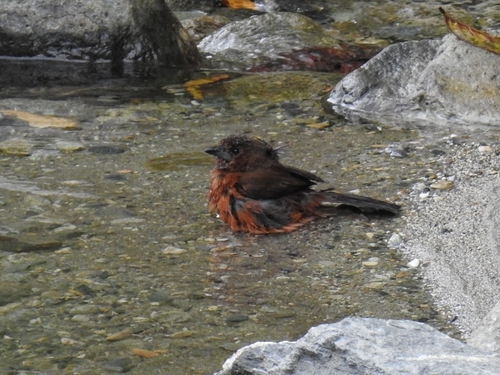 pipira-vermelha
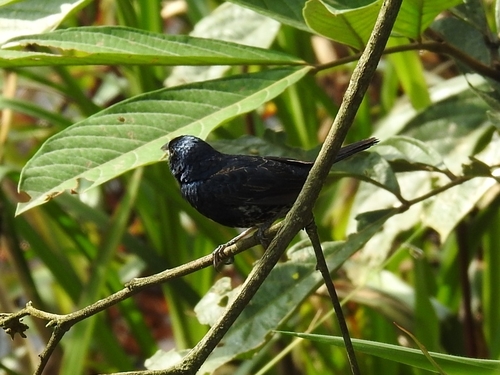 tiziu
Em resumo
A marca de campo mais confiável para separar a pipira-vermelha do tiziu é o tamanho geral e a estrutura do bico: a pipira-vermelha é muito maior e tem um bico grosso, pesado e de base clara, enquanto o tiziu é minúsculo, com um bico curto e cônico. Para aves imaturas ou fêmeas, concentre-se nos padrões das asas e das partes inferiores: as fêmeas/imaturas de pipira são de um rico marrom-avermelhado com asas escuras simples, enquanto as fêmeas/imaturas de tiziu são de um marrom quente com partes inferiores listradas e barras de asa fracas. Em voo, os machos adultos de tiziu mostram uma mancha branca na parte inferior da asa, ausente nas pipiras. Ambas as espécies são sexualmente dimórficas, mas apenas o macho de tiziu é azul-preto brilhante; os machos de pipira são de um vermelho profundo a negro com um bico prateado marcante. O tamanho e a estrutura geralmente são suficientes para a separação, mesmo à distância.
Dicas de identificação
- Tamanho: A pipira-vermelha é quase duas vezes mais longa e muito mais pesada que o tiziu. Se você ver uma ave robusta do tamanho de um sabiá, é a pipira; uma ave do tamanho de um pardal é o tiziu. Isso funciona para todas as idades e sexos.
- Forma e cor do bico: A pipira tem um bico grosso e de base profunda com uma mandíbula inferior prateada (macho) ou marrom escura (fêmea); o tiziu tem um bico pequeno e cônico, negro por cima e claro por baixo. A cor do bico é mais útil em machos adultos, mas a forma é sempre útil.
- Plumagem de machos adultos: Os machos de pipira são de um vermelho profundo a negro com uma aparência aveludada e um bico prateado marcante; os machos de tiziu são azul-preto brilhante, nunca vermelho ou aveludado, e não têm um bico claro.
- Plumagem de fêmeas e imaturos: As fêmeas/imaturas de pipira são de um rico marrom-avermelhado por cima e por baixo, com asas simples e sem listras ou barras de asa. As fêmeas/imaturas de tiziu são de um marrom quente com coroas e costas listradas, duas barras de asa fracas e um peito e flancos listrados. Procure as partes inferiores listradas e as barras de asa nos tizis.
- Tiziu juvenil: Mostra ainda mais listras por baixo e asas/cauda mais escuras do que a fêmea adulta; os juvenis de pipira são de um marrom-avermelhado simples e nunca listrados.
- Padrão das asas em voo (macho adulto de tiziu): Os machos de tiziu mostram uma mancha branca na base da parte inferior da asa, visível em voo. A pipira nunca mostra branco na asa.
- Cauda: A cauda do tiziu é curta e marrom (fêmea/imatura) ou negra (macho), às vezes com pontas claras que se desgastam. A cauda da pipira é mais longa, negra escura (macho) ou escura (fêmea), sem pontas claras.
- Cor das pernas: Ambas têm pernas escuras; não é útil.
- Cor da íris: Ambas têm íris marrons a marrom-avermelhado; não é útil.
- Comportamento: Os tizis costumam pousar eretos em caules de grama ou fios e fazem voos curtos e saltitantes; as pipiras se movem mais lentamente através de arbustos e são menos propensas a serem vistas em grama aberta.
- Habitat: Os tizis preferem campos abertos, gramados ou com ervas daninhas; as pipiras preferem arbustos mais densos e bordas de florestas. Use como contexto de apoio.
- Dimorfismo sexual: Ambas as espécies são sexualmente dimórficas, mas apenas o macho de tiziu é azul-preto brilhante; apenas o macho de pipira é vermelho profundo aveludado com um bico prateado.
- Variação de subespécies: A maioria das marcas de campo se aplica a todas as subespécies, mas note que algumas subespécies de pipira são mais claras ou mais escuras; sempre verifique a forma e o tamanho do bico, independentemente da variação de cor.
- Bandos mistos: Se você ver ambas as espécies juntas, a diferença de tamanho e estrutura é marcante.
- Voz: Não é diagnóstica a partir das notas fornecidas.
Tamanho
pipira-vermelha is much larger (16–17 cm, 21–37.5 g) than tiziu (8.7–10.9 cm, 8–12 g) [wikipedia]. The tanager is nearly twice the length and at least double the mass. The tanager also has a noticeably heavier, broader bill, while the grassquit's bill is small and conical. Even in the field, this size difference is usually obvious, especially if both species are seen in the same habitat.
Plumagem
-
Juvenile and female/immature birds: pipira-vermelha females and immatures are rich reddish-brown above and below, with plain dusky wings and no wing bars or streaks. tiziu females and juveniles are warm brown above with faint darker streaks on the crown and back, brown wings with two faint wing bars, and buffy edges on the tertials. Their underparts are buff with a cinnamon wash and a band of darker streaks across the breast and flanks. Juvenile grassquits are even more streaked below and have darker wings and tail than adult females.
-
Adult males: pipira-vermelha males are deep plush carmine to blackish with a velvety appearance, and a striking silvery-white lower mandible. Their wings and tail are dusky black with no blue gloss or white patches. tiziu males are glossy blue-black all over, with a small white patch at the base of the underwing (visible in flight only), and a blackish bill with a pale gray to horn-colored lower mandible. Their wings and tail are flat black, lacking the plush or velvety texture of the tanager.
-
Bill color: Male tanagers have a two-toned bill (dark blue-gray above, silvery white below with a black tip); female tanagers have a uniformly brownish dusky bill. Grassquits have a blackish upper mandible and a pale gray to horn-colored lower mandible in both sexes.
-
Iris and legs: Both species have brown to reddish-brown irises and dark legs, not useful for separation.
Comportamento
O tiziu é altamente ativo, frequentemente visto fazendo voos curtos e saltitantes e exibindo com rápidas batidas de asas, especialmente os machos. Eles costumam pousar eretos em caules de grama expostos ou fios, às vezes em grupos soltos. A pipira-vermelha é mais deliberada, movendo-se lentamente através de arbustos ou árvores baixas, frequentemente em pares ou pequenos grupos. Elas são menos propensas a exibir em grama aberta ou fazer voos curtos repetidos. Em voo, as pipiras parecem mais volumosas e menos ágeis do que o tiziu.
Habitat
Ambas as espécies se sobrepõem amplamente em alcance e podem ocorrer em habitats semelhantes de borda e segundo crescimento. No entanto, o tiziu está mais intimamente ligado a campos abertos e gramados, áreas com ervas daninhas, pastagens e beiras de estrada, frequentemente em vegetação baixa. A pipira-vermelha prefere bordas arbustivas, limites florestais e vegetação mais densa, e é menos provável de ser encontrada em campos abertos ou agrícolas. O habitat por si só não é diagnóstico, mas pode apoiar a identificação quando combinado com outras marcas.