

Silver-beaked Tanager vs Blue-black Grassquit
Ramphocelus carbo contro Volatinia jacarina
Fai un quiz con Silver-beaked Tanager e Blue-black Grassquit
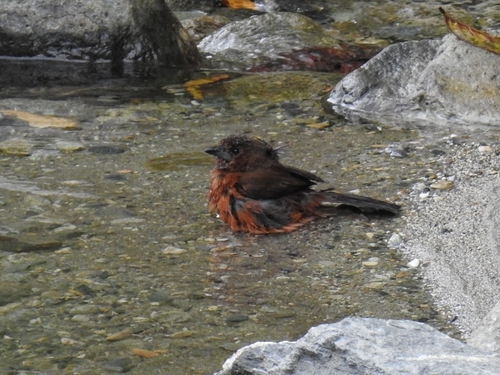 Silver-beaked Tanager
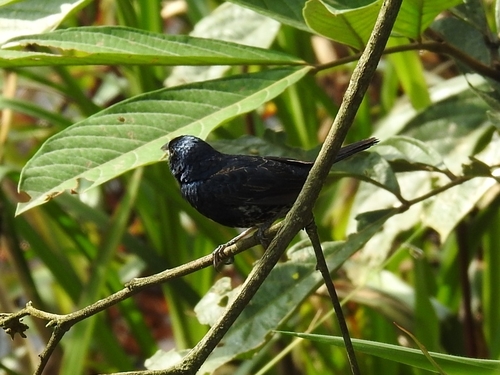 Blue-black Grassquit
In breve
Il segno distintivo più affidabile per separare il Silver-beaked Tanager dal Blue-black Grassquit è la dimensione complessiva e la struttura del becco: il Silver-beaked Tanager è molto più grande e ha un becco spesso, pesante e con una base chiara, mentre il Blue-black Grassquit è minuscolo, con un becco corto e conico. Per gli uccelli immaturi o femminili, concentrati sui modelli delle ali e delle parti inferiori: i tanager femminili/immaturi sono di un ricco marrone rossastro con ali grigie semplici, mentre i grassquit femminili/immaturi sono di un marrone caldo con parti inferiori striate e barre alari deboli. In volo, i maschi adulti dei grassquit mostrano una macchia bianca sotto l'ala, assente nei tanager. Entrambe le specie sono sessualmente dimorfiche, ma solo il maschio del grassquit è blu-nero lucido; i maschi del tanager sono di un rosso profondo peluche fino al nero con un becco argenteo sorprendente. La dimensione e la struttura sono spesso sufficienti per la separazione anche a distanza.
Consigli di identificazione
- Dimensione: Il Silver-beaked Tanager è quasi due volte più lungo e molto più pesante del Blue-black Grassquit. Se vedi un uccello robusto delle dimensioni di un pettirosso, è il tanager; un uccello delle dimensioni di un passero è il grassquit. Questo vale per tutte le età e i sessi.
- Forma e colore del becco: Il tanager ha un becco spesso e profondo con una mandibola inferiore argentata (maschio) o marrone scuro (femmina); il grassquit ha un piccolo becco conico e affilato, nero sopra e chiaro sotto. Il colore del becco è più utile nei maschi adulti, ma la forma è sempre utile.
- Piumaggio dei maschi adulti: I maschi del tanager sono di un rosso profondo peluche fino al nero con un aspetto vellutato e un becco argentato sorprendente; i maschi del grassquit sono blu-nero lucido, mai rossi o peluche, e non hanno un becco chiaro.
- Piumaggio femminile e immaturo: I tanager femminili/immaturi sono di un ricco marrone rossastro sopra e sotto, con ali semplici e senza striature o barre alari. I grassquit femminili/immaturi sono di un marrone caldo con corone e schiene striate, due barre alari deboli e un petto e fianchi striati. Cerca le parti inferiori striate e le barre alari sui grassquit.
- Giovanile grassquit: Mostra ancora più striature sotto e ali/coda più scure rispetto alla femmina adulta; i giovanili del tanager sono di un marrone rossastro semplice e mai striati.
- Modello delle ali in volo (maschio adulto grassquit): I maschi del Blue-black Grassquit mostrano una macchia bianca alla base dell'ala inferiore, visibile in volo. Il Silver-beaked Tanager non mostra mai bianco nell'ala.
- Coda: La coda del grassquit è corta e marrone (femmina/immaturo) o nera (maschio), a volte con punte chiare che si consumano. La coda del tanager è più lunga, nera scura (maschio) o grigia (femmina), senza punte chiare.
- Colore delle zampe: Entrambi hanno zampe scure; non utile.
- Colore dell'iride: Entrambi hanno iridi marroni fino a marrone rossastro; non utile.
- Comportamento: I grassquit spesso si posano in posizione eretta su steli d'erba o fili e fanno brevi voli rimbalzanti; i tanager si muovono più lentamente tra i cespugli e sono meno propensi a essere visti nell'erba aperta.
- Habitat: I grassquit favoriscono campi aperti, erbosi o infestati; i tanager preferiscono cespugli più densi e il bordo della foresta. Usa come contesto di supporto.
- Dimorfismo sessuale: Entrambe le specie sono sessualmente dimorfiche, ma solo il maschio del grassquit è blu-nero lucido; solo il maschio del tanager è di un rosso profondo peluche con un becco argentato.
- Variazione delle sottospecie: La maggior parte dei segni sul campo si applica a tutte le sottospecie, ma nota che alcune sottospecie di tanager sono più chiare o più scure; controlla sempre la forma e la dimensione del becco indipendentemente dalla variazione di colore.
- Stormi misti: Se vedi entrambe le specie insieme, la differenza di dimensione e struttura è sorprendente.
- Voce: Non diagnostica dalle note fornite.
Taglia
Il Silver-beaked Tanager è molto più grande (16–17 cm, 21–37.5 g) del Blue-black Grassquit (8.7–10.9 cm, 8–12 g) [wikipedia]. Il tanager è quasi due volte la lunghezza e almeno il doppio della massa. Il tanager ha anche un becco visibilmente più pesante e più largo, mentre il becco del grassquit è piccolo e conico. Anche sul campo, questa differenza di dimensione è solitamente ovvia, specialmente se entrambe le specie sono viste nello stesso habitat.
Piumaggio
-
Uccelli giovanili e femminili/immaturi: Le femmine e gli immaturi del Silver-beaked Tanager sono di un ricco marrone rossastro sopra e sotto, con ali grigie semplici e senza barre alari o striature. Le femmine e i giovanili del Blue-black Grassquit sono di un marrone caldo sopra con deboli striature più scure sulla corona e sulla schiena, ali marroni con due barre alari deboli e bordi chiari sulle terziali. Le loro parti inferiori sono chiare con una sfumatura cannella e una banda di striature più scure sul petto e sui fianchi. I giovanili grassquit sono ancora più striati sotto e hanno ali e coda più scure rispetto alle femmine adulte.
-
Maschi adulti: I maschi del Silver-beaked Tanager sono di un carminio profondo peluche fino al nero con un aspetto vellutato e una mandibola inferiore argentata sorprendente. Le loro ali e coda sono nere scure senza lucentezza blu o macchie bianche. I maschi del Blue-black Grassquit sono blu-nero lucido ovunque, con una piccola macchia bianca alla base dell'ala inferiore (visibile solo in volo), e un becco nero con una mandibola inferiore di colore grigio chiaro o corno. Le loro ali e coda sono nere piatte, prive della consistenza peluche o vellutata del tanager.
-
Colore del becco: I maschi dei tanager hanno un becco bicolore (grigio-blu scuro sopra, bianco argentato sotto con una punta nera); le femmine dei tanager hanno un becco uniformemente marrone scuro. I grassquit hanno una mandibola superiore nera e una mandibola inferiore di colore grigio chiaro o corno in entrambi i sessi.
-
Iride e zampe: Entrambe le specie hanno iridi marroni fino a marrone rossastro e zampe scure, non utili per la separazione.
Comportamento
Il Blue-black Grassquit è altamente attivo, spesso visto fare brevi voli rimbalzanti e mostrarsi con rapidi battiti d'ali, specialmente i maschi. Spesso si posano in posizione eretta su steli d'erba o fili, a volte in gruppi sciolti. Il Silver-beaked Tanager è più deliberato, muovendosi lentamente tra i cespugli o gli alberi bassi, spesso in coppie o piccoli gruppi. Sono meno propensi a mostrarsi nell'erba aperta o a fare ripetuti brevi voli. In volo, i tanager appaiono più ingombranti e meno agili rispetto al grassquit.
Habitat
Entrambe le specie si sovrappongono ampiamente nell'areale e possono verificarsi in habitat simili di margine e di seconda crescita. Tuttavia, il Blue-black Grassquit è più strettamente legato a campi aperti e erbosi, macchie infestanti, pascoli e bordi stradali, spesso in vegetazione bassa. Il Silver-beaked Tanager preferisce i bordi cespugliosi, i confini forestali e la vegetazione più densa, ed è meno probabile che venga trovato in praterie aperte o campi agricoli. L'habitat da solo non è diagnostico ma può supportare l'identificazione quando combinato con altri segni.
Silver-beaked Tanager · Blue-black Grassquit · I miei uccelli difficili