

scott's oriole vs varied bunting
Icterus parisorum versus Passerina versicolor
Jogue um quiz com scott's oriole e varied bunting
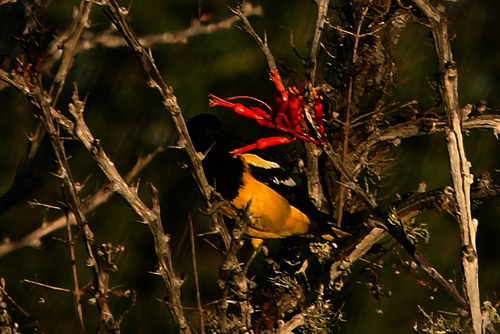 scott's oriole
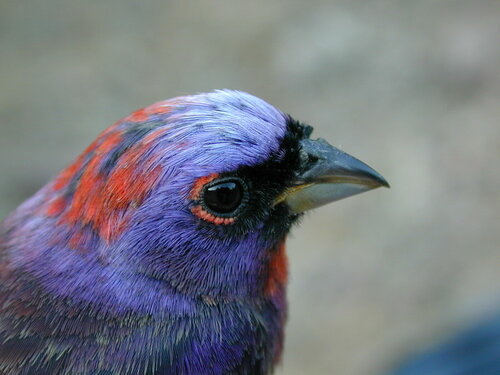 varied bunting
Em resumo
A marca de campo mais confiável para separar o scott's oriole do varied bunting é o tamanho e a estrutura: o scott's oriole é muito maior e mais alongado, com uma cauda longa e um bico pontudo, enquanto o varied bunting é um pequeno pássaro tipo tentilhão, robusto e de cauda curta. Os machos adultos do scott's oriole são impressionantemente pretos e amarelos, enquanto os machos do varied bunting são roxo-avermelhados com uma mancha vermelha na nuca. As fêmeas de ambas as espécies são mais apagadas, mas as fêmeas do scott's oriole mostram tons de oliva e amarelo com listras, enquanto as fêmeas do varied bunting são marrons simples, sem listras. Em voo ou empoleiradas, concentre-se no tamanho, forma e padrão das asas para a separação mais rápida.
Dicas de identificação
- Tamanho e forma: O scott's oriole é muito maior e mais alongado, com uma cauda longa e um bico pontudo. O varied bunting é pequeno, robusto, de cauda curta e tem um bico arredondado, tipo tentilhão. Isso é frequentemente óbvio mesmo à distância ou em voo (todas as idades).
- Barras nas asas: O scott's oriole (ambos os sexos, todas as idades) mostra duas barras brancas proeminentes nas asas em uma asa escura, além de epauletes amarelos pálidos nos machos. O varied bunting nunca mostra barras nas asas—suas asas são simples e escuras (todas as idades).
- Amarelo vs. roxo/vermelho: O macho adulto do scott's oriole é preto e amarelo limão, com amarelo nas partes inferiores e na rabadilha. O macho do varied bunting é roxo-avermelhado com uma nuca vermelha, nunca amarelo. Isso é diagnóstico para machos adultos em plumagem de reprodução.
- Plumagem feminina: A fêmea do scott's oriole é oliva acinzentada acima com listras e partes inferiores amareladas; frequentemente mostra uma garganta escura e barras nas asas. A fêmea do varied bunting é marron claro simples, sem listras, sem barras nas asas e sem tons amarelos.
- Padrão da cauda: O scott's oriole tem uma cauda principalmente preta (macho) ou oliva (fêmea) com bases amareladas e pontas brancas, especialmente nas penas externas. A cauda do varied bunting é curta e simples, sem bases ou pontas contrastantes.
- Cor e forma do bico: O scott's oriole tem um bico preto ou azul-escuro, esbelto e pontudo com uma base cinza. O varied bunting tem um bico curto, grosso e cônico típico de tentilhões e finches, e nunca é tão pontudo.
- Comportamento de empoleiramento: O scott's oriole frequentemente se empoleira alto e de forma conspícua, especialmente em yucca ou ramos abertos. O varied bunting é mais propenso a se esconder baixo em arbustos densos e raramente está tão exposto.
- Contexto do habitat: Se o pássaro estiver em deserto aberto com yucca ou agave, é mais provável que seja um scott's oriole. Em arbustos densos e espinhosos ou perto da água, o varied bunting é favorecido.
- Perfil de voo: O scott's oriole em voo parece longo e esbelto com uma cauda longa; o varied bunting é compacto e de cauda curta.
- Cor sazonal do macho: O macho do varied bunting torna-se mais marron no outono, mas ainda carece de amarelo e barras nas asas. Os machos do scott's oriole permanecem pretos e amarelos.
- Listras: A fêmea do scott's oriole mostra listras sutis acima; a fêmea do varied bunting é sem listras.
- Cor do íris e das pernas: Ambos têm íris escuras e pernas acinzentadas, não úteis para separação.
- Voz: Não descrita nas notas; não confie no canto para separação aqui.
- Marcas juvenis/imaturas: Nenhum padrão distintivo de asa superior juvenil ou imaturo é descrito para qualquer uma das espécies; confie no tamanho, estrutura e barras nas asas para pássaros jovens.
- Armadilhas comuns: Fêmeas e imaturos do scott's oriole podem ser confundidos com tentilhões apagados, mas sempre verifique as barras nas asas e os tons amarelados. Os varied buntings nunca são amarelos ou têm barras nas asas.
Tamanho
O scott's oriole é substancialmente maior, cerca de 23 cm (9,1 pol) de comprimento com uma envergadura de 32 cm (13 pol) e pesando 32–41 g. Em contraste, o varied bunting é muito menor e mais leve, com 11–14 cm (4,3–5,5 pol) de comprimento, uma envergadura de 21 cm (8,3 pol) e apenas 11–13 g de massa [wikipedia][wikidata]. A cauda longa e o corpo esbelto do oriole são óbvios mesmo à distância, enquanto o bunting é compacto, de cauda curta e visivelmente mais leve.
Plumagem
Nenhum padrão distintivo de asa superior juvenil ou imaturo é descrito para qualquer uma das espécies, então concentre-se nas plumagens adultas e femininas.
O macho adulto do scott's oriole é inconfundível: cabeça, costas, garganta e peito pretos, com partes inferiores, rabadilha e coberturas superiores brilhantemente amarelas. As asas são pretas com epauletes amarelos pálidos (coberturas menores e medianas) e duas barras brancas nas asas a partir das coberturas maiores e medianas com pontas brancas. A cauda é principalmente preta com bases amarelas e pontas brancas, especialmente em direção às penas externas.
O macho adulto do varied bunting é roxo-avermelhado profundo no geral, com uma mancha vermelha brilhante na nuca, e carece de barras nas asas ou epauletes; a cor torna-se mais marron no outono.
A fêmea do scott's oriole é oliva acinzentada acima com listras mais escuras, um queixo/garganta/peito superior pretos, e partes inferiores oliva-amareladas pálidas. As asas são marrons escuras com bordas oliva/amareladas e duas barras brancas nas asas. A cauda é oliva com bases amareladas.
A fêmea do varied bunting é marron claro simples no geral, sem listras ou quaisquer barras nas asas, e se assemelha a uma fêmea do mariposa-azul desbotada.
Em resumo: O scott's oriole de ambos os sexos mostra barras nas asas e algum amarelo ou oliva, enquanto o varied bunting é sempre de asas simples e nunca amarelado.
Comportamento
O scott's oriole frequentemente se empoleira de forma conspícua em yuccas ou ramos abertos, movendo-se com um modo lento e deliberado típico dos orioles. Pode ser visto forrageando por insetos ou néctar em florestas abertas ou bordas de desertos. O varied bunting é mais secreto, forrageando baixo em arbustos densos e espinhosos, e tende a se esconder em vez de se empoleirar em aberto. Seus movimentos são mais semelhantes aos de um tentilhão e menos alongados do que os do oriole.
Habitat
O scott's oriole prefere florestas abertas e encostas desérticas, especialmente onde yucca ou agave estão presentes, e é frequentemente encontrado no sudoeste dos EUA e no México [wikipedia]. O varied bunting está mais intimamente ligado a arbustos densos e espinhosos, florestas espinhosas e florestas arbustivas, frequentemente perto da água, e geralmente é encontrado em regiões semelhantes do sudoeste, mas com uma preferência por habitats mais densos e arbustivos [wikipedia]. Embora os habitats se sobreponham, o scott's oriole é mais provável de ser encontrado em paisagens abertas e áridas, enquanto o varied bunting é encontrado em vegetação densa e baixa.