

scott's oriole vs golden-cheeked warbler
Icterus parisorum versus Setophaga chrysoparia
Jogue um quiz com scott's oriole e golden-cheeked warbler
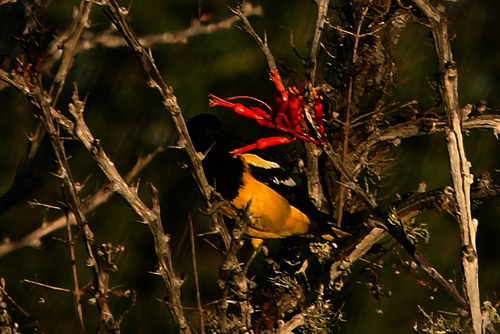 scott's oriole
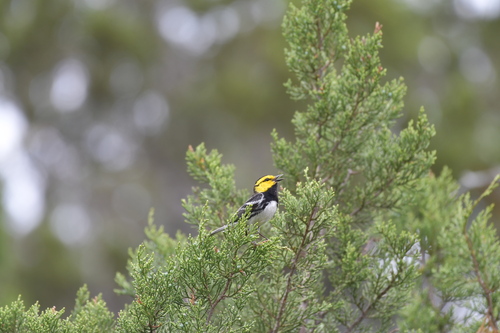 golden-cheeked warbler
Em resumo
A marca de campo mais confiável para separar o scott's oriole do golden-cheeked warbler é o tamanho e a estrutura geral: o scott's oriole é muito maior, com um bico longo e pontudo e um padrão de cores preto e amarelo ousado, enquanto o golden-cheeked warbler é um warbler pequeno e compacto com um bico delicado e um rosto amarelo marcante com marcas pretas. Em voo ou empoleirado, o tamanho do oriole, as barras das asas e o padrão da cauda são distintos, especialmente nos machos. Fêmeas e imaturos de ambas as espécies podem ser confusos, mas o oriole sempre mostra um perfil muito maior e mais robusto e um padrão de asas diferente. O habitat e a distribuição também ajudam: o scott's oriole é encontrado no sudoeste árido e no México, enquanto o golden-cheeked warbler é restrito às florestas de carvalho e zimbro do Texas central.
Dicas de identificação
- Tamanho e Estrutura: O scott's oriole é muito maior e mais robusto que o golden-cheeked warbler. Se o pássaro parecer do tamanho de um tordo ou maior, não é um warbler. Warblers são pequenos, rápidos e delicados.
- Formato do Bico: O scott's oriole tem um bico longo, pontudo e grosso, adequado para sondar e comer frutas/néctar. O golden-cheeked warbler tem um bico curto e fino, próprio para comer insetos. O tamanho do bico é óbvio a curta distância.
- Barras das Asas: Os scott's orioles adultos (ambos os sexos) mostram duas barras brancas ousadas nas asas escuras, além de um epaulet amarelo (coberturas menores/mediantes) nos machos. O golden-cheeked warbler não tem barras nas asas—suas asas são cinza ou escuras.
- Padrão da Cauda: O scott's oriole tem uma cauda longa com bases amarelas e pontas brancas, especialmente óbvias nas penas externas. O golden-cheeked warbler tem uma cauda curta e simples, sem padrão amarelo ou branco.
- Plumagem do Macho Adulto: O macho scott's oriole é preto por cima com um ventre e uma rabadilha amarelos brilhantes; o macho golden-cheeked warbler nunca é preto por cima, mas tem um rosto amarelo, garganta preta e costas cinzas.
- Plumagem da Fêmea/Imaturo: A fêmea do scott's oriole é oliva por cima com listras, amarelo pálido por baixo, e ainda mostra barras nas asas e uma cauda longa. A fêmea/imatura do golden-cheeked warbler é cinza por cima, branca por baixo, com rosto amarelo, e não tem barras nas asas ou padrão na cauda.
- Padrão do Rosto: O golden-cheeked warbler sempre tem um rosto amarelo brilhante com uma linha ocular preta e garganta preta, único entre os warblers do Texas. O scott's oriole nunca mostra esse padrão de rosto.
- Jizz em Voo: O scott's oriole voa com batidas de asas lentas e fortes e uma cauda longa arrastando; o golden-cheeked warbler é rápido, agitado e de cauda curta.
- Postura Empoleirada: Os orioles costumam se empoleirar de forma ereta e exposta, enquanto os warblers são mais propensos a se esconder na folhagem, movendo-se rapidamente.
- Habitat: Se você estiver em uma floresta de carvalho e zimbro do Texas central, considere o golden-cheeked warbler. Se estiver no sudoeste árido, deserto aberto ou entre yuccas, o scott's oriole é mais provável.
- Distribuição: O golden-cheeked warbler é endêmico do Texas central; o scott's oriole se distribui do sudoeste dos EUA até o México.
- Cor das Partes Inferiores: O scott's oriole (macho) tem um ventre e rabadilha amarelos limão; o golden-cheeked warbler tem partes inferiores brancas com amarelo apenas no rosto.
- Cor das Costas: O scott's oriole (macho) tem costas pretas; o golden-cheeked warbler tem costas cinzas.
- Voz: Não descrita nas notas, mas as canções dos orioles são tipicamente ricas e assobiadas, enquanto as canções dos warblers são altas, zumbidoras e rápidas. Use com cautela.
- Sazonalidade: O golden-cheeked warbler está presente apenas durante a temporada de reprodução no Texas (primavera/verão); o scott's oriole está presente no sudoeste e no México dependendo da estação.
Tamanho
O scott's oriole é significativamente maior: cerca de 23 cm (9,1 pol) de comprimento com uma envergadura de 32 cm (13 pol) e pesando 32–41 g. Em contraste, o golden-cheeked warbler é um warbler pequeno típico, muito mais curto e leve (as medidas exatas não são fornecidas aqui, mas os warblers geralmente têm de 11 a 13 cm de comprimento e pesam menos de 10 g). O tamanho do oriole é evidente mesmo à distância, com uma cauda longa e um corpo robusto, enquanto o warbler é compacto e se move rapidamente.
Plumagem
- Juvenil/Imaturo/Primeiro ano (quando relevante):
- Nenhum padrão de asa juvenil/imaturo detalhado é fornecido para ambas as espécies, mas as fêmeas e imaturos do scott's oriole têm tons oliva e amarelados com listras, enquanto os imaturos do golden-cheeked warbler não são descritos aqui, mas geralmente se assemelham aos adultos com contraste menos nítido.
- Macho Adulto do Scott's Oriole: Cabeça, costas, garganta e peito pretos marcantes, com rabadilha e partes inferiores amarelo limão. As asas são pretas com coberturas menores/mediantes amarelas pálidas (formando um epaulet) e duas barras brancas nas asas; a cauda é principalmente preta com bases amarelas e pontas brancas, especialmente nas penas externas.
- Fêmea Adulto do Scott's Oriole: Oliva-cinza por cima com listras, amarelo oliva-pálido por baixo, queixo/garganta/peito superior escuros, duas barras brancas nas asas e cauda oliva com bases amareladas.
- Golden-cheeked Warbler (adulto): Não totalmente descrito aqui, mas sempre mostra um rosto amarelo brilhante com uma linha ocular preta e garganta preta, contrastando com um dorso cinza e partes inferiores brancas. Não tem as barras das asas e o padrão da cauda do oriole. Sem amarelo na rabadilha ou cauda. O bico é pequeno e pontudo, não pesado como o do oriole.
- Contraste chave: O scott's oriole sempre mostra barras de asas ousadas e uma cauda longa com bases amarelas, enquanto o golden-cheeked warbler tem uma asa simples e uma cauda muito mais curta.
Comportamento
O scott's oriole frequentemente se empoleira de forma conspícua em yuccas ou ramos abertos, às vezes cantando de pontos altos. Seu voo é forte e direto, condizente com seu tamanho maior. O golden-cheeked warbler é muito mais ativo e inquieto, flutuando pela folhagem, coletando insetos e raramente ficando parado por muito tempo. Os warblers são geralmente mais difíceis de serem vistos em aberto e se movem rapidamente entre os ramos.
Habitat
O scott's oriole é encontrado em habitats áridos ou semiáridos no sudoeste dos EUA e no México, frequentemente associado a yucca, florestas abertas ou encostas desérticas. O golden-cheeked warbler é restrito ao Texas central, reproduzindo-se apenas em florestas maduras de carvalho e zimbro com zimbro Ashe e vários carvalhos, frequentemente em terrenos montanhosos. Se você estiver fora do habitat de carvalho e zimbro do Texas central, é extremamente improvável encontrar o golden-cheeked warbler.
scott's oriole · golden-cheeked warbler · Minhas aves difíceis