

Scott's Oriole vs Golden-cheeked Warbler
Icterus parisorum contro Setophaga chrysoparia
Fai un quiz con Scott's Oriole e Golden-cheeked Warbler
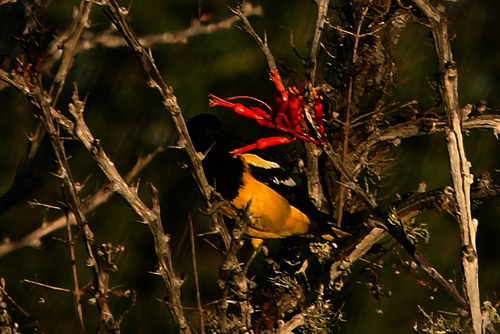 Scott's Oriole
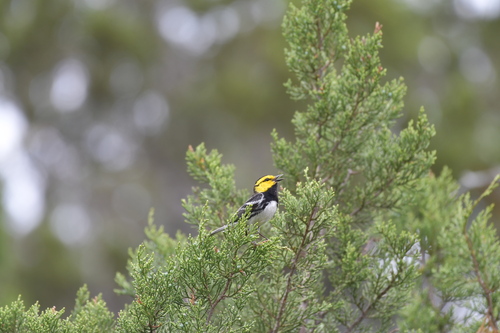 Golden-cheeked Warbler
In breve
Il segno distintivo più affidabile per separare Scott's Oriole da Golden-cheeked Warbler è la dimensione e la struttura complessiva: Scott's Oriole è molto più grande, con un becco lungo e appuntito e un audace schema di colori nero e giallo, mentre Golden-cheeked Warbler è un piccolo e compatto warbler con un becco delicato e un sorprendente viso giallo con marcature nere. In volo o posato, la dimensione dell'oriole, le barre alari e il modello della coda sono distintivi, specialmente nei maschi. Le femmine e gli immaturi di entrambe le specie possono essere confusi, ma l'oriole mostra sempre un profilo molto più grande e massiccio e un diverso schema alare. L'habitat e l'areale aiutano anche: Scott's Oriole si trova nel sud-ovest arido e in Messico, mentre Golden-cheeked Warbler è limitato alle foreste di querce e ginepri del Texas centrale.
Consigli di identificazione
- Dimensione e Struttura: Scott's Oriole è molto più grande e massiccio di Golden-cheeked Warbler. Se l'uccello sembra delle dimensioni di un pettirosso o più grande, non è un warbler. I warblers sono piccoli, veloci e delicati.
- Forma del Becco: Scott's Oriole ha un becco lungo, appuntito e spesso, adatto per sondare e mangiare frutta/nettare. Golden-cheeked Warbler ha un becco corto e fine, adatto per mangiare insetti. La dimensione del becco è evidente da vicino.
- Barre Alari: Gli Scott's Orioles adulti (entrambi i sessi) mostrano due audaci barre alari bianche su ali nerastre, oltre a un epaulet giallo (copritrici minori/mediane) nei maschi. Golden-cheeked Warbler non ha barre alari—le sue ali sono semplicemente grigio scuro o nere.
- Modello della Coda: Scott's Oriole ha una lunga coda con basi gialle e punte bianche, particolarmente evidenti sulle piume esterne. Golden-cheeked Warbler ha una coda corta e semplice senza modello giallo o bianco.
- Piumaggio del Maschio Adulto: Il maschio di Scott's Oriole è nero sopra con un ventre e un'area caudale giallo brillante; il maschio di Golden-cheeked Warbler non è mai nero sopra, ma ha un viso giallo, una gola nera e un dorso grigio.
- Piumaggio Femminile/Immaturi: La femmina di Scott's Oriole è oliva sopra con striature, gialla chiara sotto, e mostra ancora barre alari e una lunga coda. La femmina/immaturo di Golden-cheeked Warbler è grigia sopra, bianca sotto, con un viso giallo, e non ha barre alari o modello della coda.
- Modello del Viso: Golden-cheeked Warbler ha sempre un viso giallo brillante con una linea nera attorno agli occhi e una gola nera, unico tra i warblers del Texas. Scott's Oriole non mostra mai questo modello del viso.
- Jizz in Volo: Scott's Oriole vola con battiti d'ala lenti e forti e una lunga coda che segue; Golden-cheeked Warbler è rapido, tremolante e con una coda corta.
- Postura Posata: Gli orioles spesso si posano in modo eretto e esposto, mentre i warblers sono più propensi a nascondersi nel fogliame, muovendosi rapidamente.
- Habitat: Se ti trovi nella foresta di querce e ginepri del Texas centrale, considera Golden-cheeked Warbler. Se sei nel sud-ovest arido, nel deserto aperto, o tra le yuccas, è più probabile che tu veda Scott's Oriole.
- Areale: Golden-cheeked Warbler è endemico del Texas centrale; Scott's Oriole si estende dal sud-ovest degli Stati Uniti fino al Messico.
- Colore delle Parti Inferiori: Scott's Oriole (maschio) ha un ventre e un'area caudale giallo limone; Golden-cheeked Warbler ha parti inferiori bianche con giallo solo sul viso.
- Colore del Dorso: Scott's Oriole (maschio) ha un dorso nero; Golden-cheeked Warbler ha un dorso grigio.
- Voce: Non descritta nelle note, ma i canti degli orioles sono tipicamente ricchi e fischiati, mentre i canti dei warblers sono alti, ronzanti e rapidi. Usare con cautela.
- Stagionalità: Golden-cheeked Warbler è presente solo durante la stagione di riproduzione in Texas (primavera/estate); Scott's Oriole è presente nel sud-ovest e in Messico a seconda della stagione.
Taglia
Scott's Oriole è significativamente più grande: circa 23 cm (9,1 in) di lunghezza con un'apertura alare di 32 cm (13 in) e un peso di 32–41 g. Al contrario, Golden-cheeked Warbler è un tipico piccolo warbler, molto più corto e leggero (le misure esatte non sono fornite qui, ma i warblers sono generalmente lunghi 11–13 cm e pesano meno di 10 g). La dimensione dell'oriole è evidente anche da lontano, con una lunga coda e un corpo robusto, mentre il warbler è compatto e si muove rapidamente.
Piumaggio
- Giovanile/Immature/Primo anno (dove pertinente):
- Non è fornito un modello alare giovanile/immaturo dettagliato per nessuna delle due specie, ma le femmine e gli immaturi di Scott's Oriole hanno toni oliva e giallastri con striature, mentre gli immaturi di Golden-cheeked Warbler non sono descritti qui, ma assomigliano tipicamente agli adulti con meno contrasto netto.
- Maschio Adulto di Scott's Oriole: Testa, dorso, gola e petto neri, con area caudale e parti inferiori giallo limone. Le ali sono nere con copritrici minori/mediane giallo pallido (che formano un epaulet) e due barre alari bianche; la coda è per lo più nera con basi gialle e punte bianche, specialmente sulle piume esterne.
- Femmina Adulto di Scott's Oriole: Oliva-grigia sopra con striature, giallo oliva pallido sotto, mento/gola/petto superiore nerastro, due barre alari bianche, e coda oliva con basi giallastre.
- Golden-cheeked Warbler (adulto): Non completamente descritto qui, ma mostra sempre un viso giallo brillante con una linea nera attorno agli occhi e una gola nera, in contrasto con un dorso grigio e parti inferiori bianche. Manca delle barre alari e del modello della coda dell'oriole. Nessun giallo sull'area caudale o sulla coda. Il becco è piccolo e appuntito, non pesante come quello dell'oriole.
- Contrasto chiave: Scott's Oriole mostra sempre barre alari audaci e una lunga coda con basi gialle, mentre Golden-cheeked Warbler ha un'ala semplice e una coda molto più corta.
Comportamento
Scott's Oriole spesso si posano in modo evidente su yuccas o rami aperti, a volte cantando da punti di vista elevati. Il suo volo è forte e diretto, adatto alla sua dimensione maggiore. Golden-cheeked Warbler è molto più attivo e irrequieto, svolazzando attraverso il fogliame, raccogliendo insetti e raramente restando fermo a lungo. I warblers sono generalmente più difficili da individuare all'aperto e si muovono rapidamente tra i rami.
Habitat
Scott's Oriole si trova in habitat aridi o semi-aridi nel sud-ovest degli Stati Uniti e in Messico, spesso associato a yucca, boschi aperti o pendii desertici. Golden-cheeked Warbler è limitato al Texas centrale, riproducendosi solo in foreste mature di querce e ginepri con ginepro Ashe e varie querce, spesso in terreni collinari. Se ti trovi al di fuori dell'habitat di querce e ginepri del Texas centrale, è estremamente improbabile vedere Golden-cheeked Warbler.
Scott's Oriole · Golden-cheeked Warbler · I miei uccelli difficili