

Turpial de Scott vs Reinita Caridorada
Icterus parisorum frente a Setophaga chrysoparia
Juega un quiz con Turpial de Scott y Reinita Caridorada
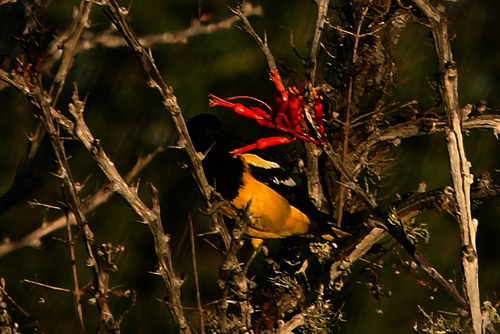 Turpial de Scott
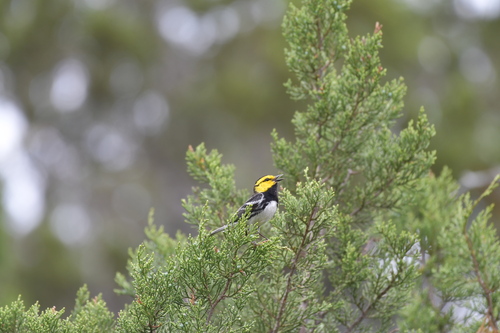 Reinita Caridorada
En breve
La marca de campo más confiable para separar el Turpial de Scott de la Reinita Caridorada es el tamaño y la estructura general: el Turpial de Scott es mucho más grande, con un pico largo y puntiagudo y un patrón de color negro y amarillo audaz, mientras que la Reinita Caridorada es una pequeña y compacta reinita con un pico delicado y una cara amarilla llamativa con marcas negras. En vuelo o posado, el tamaño del oriole, las barras alares y el patrón de la cola son distintivos, especialmente en los machos. Las hembras y los inmaduros de ambas especies pueden ser confusos, pero el oriole siempre muestra un perfil mucho más grande y robusto y un patrón de alas diferente. El hábitat y el rango también ayudan: el Turpial de Scott se encuentra en el suroeste árido y México, mientras que la Reinita Caridorada está restringida a los bosques de encino y enebro del centro de Texas.
Consejos de identificación
- Tamaño y Estructura: El Turpial de Scott es mucho más grande y robusto que la Reinita Caridorada. Si el pájaro parece del tamaño de un mirlo o más grande, no es una reinita. Las reinitas son pequeñas, rápidas y delicadas.
- Forma del Pico: El Turpial de Scott tiene un pico largo, puntiagudo y grueso, adecuado para sondear y comer fruta/néctar. La Reinita Caridorada tiene un pico corto y fino, adaptado para comer insectos. El tamaño del pico es obvio a corta distancia.
- Barras Alares: Los Turpiales de Scott adultos (ambos sexos) muestran dos barras alares blancas audaces en alas negruzcas, además de un epaulet amarillo (cobertoras menores/medianas) en los machos. La Reinita Caridorada carece de barras alares; sus alas son de un gris liso o oscuro.
- Patrón de la Cola: El Turpial de Scott tiene una cola larga con bases amarillas y puntas blancas, especialmente obvias en las plumas externas. La Reinita Caridorada tiene una cola corta y lisa sin patrón amarillo o blanco.
- Plumaje del Macho Adulto: El macho del Turpial de Scott es negro por encima con un vientre y una rabadilla amarillos brillantes; el macho de la Reinita Caridorada nunca es negro por encima, pero tiene una cara amarilla, garganta negra y espalda gris.
- Plumaje de la Hembra/Inmaduro: La hembra del Turpial de Scott es de color oliva por encima con estrías, de un amarillo pálido por debajo, y aún muestra barras alares y una cola larga. La hembra/inmaduro de la Reinita Caridorada es gris por encima, blanca por debajo, con cara amarilla, y carece de barras alares o patrón de cola.
- Patrón de la Cara: La Reinita Caridorada siempre tiene una cara amarilla brillante con una línea ocular negra y garganta negra, única entre las reinitas de Texas. El Turpial de Scott nunca muestra este patrón facial.
- Jizz en Vuelo: El Turpial de Scott vuela con aleteos lentos y fuertes y una cola larga que lo sigue; la Reinita Caridorada es rápida, aleteante y de cola corta.
- Postura al Posarse: Los orioles a menudo se posan de manera erguida y expuesta, mientras que las reinitas son más propensas a estar ocultas en el follaje, moviéndose rápidamente.
- Hábitat: Si estás en el bosque de encino y enebro del centro de Texas, considera la Reinita Caridorada. Si estás en el suroeste árido, desierto abierto o entre yuccas, es más probable que veas al Turpial de Scott.
- Rango: La Reinita Caridorada es endémica del centro de Texas; el Turpial de Scott se extiende desde el suroeste de EE. UU. hasta México.
- Color de las Partes Inferiores: El Turpial de Scott (macho) tiene un vientre y rabadilla amarillos limón; la Reinita Caridorada tiene partes inferiores blancas con amarillo solo en la cara.
- Color de la Espalda: El Turpial de Scott (macho) tiene la espalda negra; la Reinita Caridorada tiene la espalda gris.
- Voz: No se describe en las notas, pero las canciones de los orioles son típicamente ricas y silbadas, mientras que las canciones de las reinitas son altas, zumbonas y rápidas. Usar con precaución.
- Estacionalidad: La Reinita Caridorada está presente solo durante la temporada de cría en Texas (primavera/verano); el Turpial de Scott está presente en el suroeste y México dependiendo de la temporada.
Tamaño
El Turpial de Scott es significativamente más grande: aproximadamente 23 cm (9.1 in) de largo con una envergadura de 32 cm (13 in) y un peso de 32–41 g. En contraste, la Reinita Caridorada es una típica reinita pequeña, mucho más corta y ligera (no se dan aquí medidas exactas, pero las reinitas suelen medir entre 11–13 cm de largo y pesar menos de 10 g). El tamaño del oriole es evidente incluso a distancia, con una cola larga y un cuerpo robusto, mientras que la reinita es compacta y se mueve rápidamente.
Plumaje
- Juvenil/Inmaduro/Primer año (donde sea relevante):
- No se proporciona un patrón de alas juvenil/inmaduro detallado para ninguna de las especies, pero las hembras e inmaduros del Turpial de Scott tienen tonos oliva y amarillentos con estrías, mientras que los inmaduros de la Reinita Caridorada no se describen aquí, pero típicamente se asemejan a los adultos con menos contraste nítido.
- Macho Adulto del Turpial de Scott: Cabeza, espalda, garganta y pecho negros llamativos, con rabadilla y partes inferiores amarillas limón. Las alas son negras con cobertoras menores/medianas de un amarillo pálido (formando un epaulet) y dos barras alares blancas; la cola es mayormente negra con bases amarillas y puntas blancas, especialmente en las plumas externas.
- Hembra Adulto del Turpial de Scott: Oliva-gris por encima con estrías, oliva-amarillo pálido por debajo, barbilla/garganta/pecho superior negruzco, dos barras alares blancas, y cola oliva con bases amarillentas.
- Reinita Caridorada (adulto): No se describe completamente aquí, pero siempre muestra una cara amarilla brillante con una línea ocular negra y garganta negra, contrastando con una espalda gris y partes inferiores blancas. Carece de las barras alares y el patrón de cola del oriole. No hay amarillo en la rabadilla o cola. El pico es pequeño y puntiagudo, no pesado como el del oriole.
- Contraste clave: El Turpial de Scott siempre muestra barras alares audaces y una cola larga con bases amarillas, mientras que la Reinita Caridorada tiene un ala lisa y una cola mucho más corta.
Comportamiento
El Turpial de Scott a menudo se posa de manera conspicua en yuccas o ramas abiertas, a veces cantando desde puntos altos. Su vuelo es fuerte y directo, acorde a su mayor tamaño. La Reinita Caridorada es mucho más activa e inquieta, revoloteando a través del follaje, recolectando insectos y rara vez se queda quieta por mucho tiempo. Las reinitas son generalmente más difíciles de ver en el abierto y se mueven rápidamente entre las ramas.
Hábitat
El Turpial de Scott se encuentra en hábitats áridos o semiáridos en el suroeste de EE. UU. y México, a menudo asociado con yucca, bosques abiertos o laderas desérticas. La Reinita Caridorada está restringida al centro de Texas, reproduciéndose solo en bosques maduros de encino y enebro con enebro Ashe y varios encinos, a menudo en terrenos montañosos. Si estás fuera del hábitat de encino y enebro del centro de Texas, es extremadamente poco probable que veas a la Reinita Caridorada.