

rufous-tailed hummingbird vs blue-chested hummingbird
Amazilia tzacatl versus Polyerata amabilis
Jogue um quiz com rufous-tailed hummingbird e blue-chested hummingbird
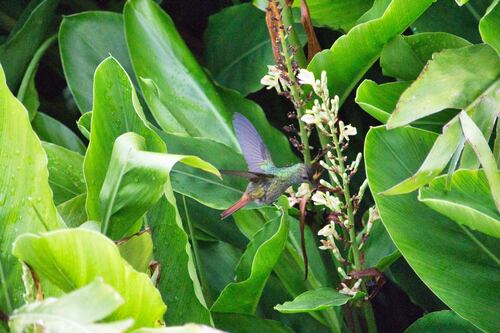 rufous-tailed hummingbird
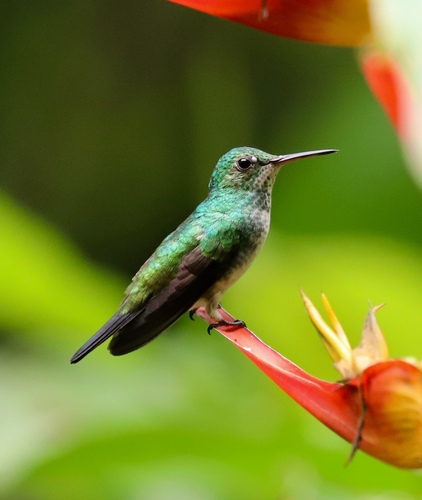 blue-chested hummingbird
Em resumo
A marca de campo mais confiável para separar o beija-flor de cauda ruiva do beija-flor de peito azul é a cauda: o beija-flor de cauda ruiva sempre apresenta uma cauda principalmente ruiva (castanho-avermelhada) com apenas um verde limitado nas pontas e nas penas externas, enquanto o beija-flor de peito azul tem uma cauda que é muito mais escura e carece de ruivo extenso. Em todas as plumagens, o beija-flor de cauda ruiva também apresenta mais ruivo nas coberturas da cauda superior e inferior, e suas partes inferiores são mais claras, com um ventre acinzentado ou esbranquiçado, enquanto o beija-flor de peito azul tem uma parte inferior mais uniforme, verde ou azulada. Os beija-flores de cauda ruiva juvenis podem mostrar um tom canela no peito inferior e na rabadilha, o que o beija-flor de peito azul nunca tem. A cor e a estrutura do bico também diferem sutilmente. Essas marcas são visíveis tanto quando empoleirados quanto em voo, mas a cor da cauda é o separador mais consistente em todas as idades.
Dicas de identificação
- A cor da cauda é a melhor marca de campo: O beija-flor de cauda ruiva sempre apresenta uma cauda principalmente ruiva (castanho-avermelhada), visível tanto quando empoleirado quanto em voo. A cauda do beija-flor de peito azul é muito mais escura, carecendo de ruivo extenso.
- Coberturas da cauda superior e inferior: O beija-flor de cauda ruiva tem coberturas da cauda superior e inferior castanho-avermelhadas; o beija-flor de peito azul não tem. Verifique essas manchas ruivas quando o pássaro abrir a cauda ou mudar de posição.
- Partes inferiores de juvenis/imaturos: Os beija-flores de cauda ruiva juvenis mostram um tom canela no peito inferior e nas laterais, e penas da parte inferior das costas/rabadilha com pontas canela. Os juvenis do beija-flor de peito azul são mais uniformes abaixo e carecem de qualquer tom canela.
- Cor do ventre: Os adultos de beija-flor de cauda ruiva têm um peito inferior cinza e um ventre branco, contrastando com o peito superior verde. O beija-flor de peito azul é mais uniforme abaixo, com tons verde-acinzentados ou azulados se estendendo pelas partes inferiores.
- Padrão da garganta: Os machos de beija-flor de cauda ruiva têm gargantas verdes com finas ondulações brancas; as fêmeas apresentam ondulações mais pronunciadas. As gargantas do beija-flor de peito azul são mais uniformes e carecem dessa ondulação.
- Cor do bico: O beija-flor de cauda ruiva tem um bico bicolor (base vermelha, ponta preta), especialmente óbvio a curta distância. O bico do beija-flor de peito azul é geralmente mais escuro no geral, às vezes parecendo todo escuro.
- Contexto do habitat: Em áreas abertas, jardins e em comedouros, o beija-flor de cauda ruiva é mais provável. Em interiores de florestas úmidas ou florestas antigas muito degradadas, o beija-flor de peito azul é mais provável, embora ocorra sobreposição nas bordas.
- Comportamento em comedouros: O beija-flor de cauda ruiva é notavelmente agressivo e dominante em comedouros, frequentemente perseguindo outros beija-flores. O beija-flor de peito azul é menos agressivo.
- Postura empoleirada: O beija-flor de cauda ruiva frequentemente se empoleira de forma conspícua em áreas abertas, com a cauda ligeiramente aberta ou inclinada, exibindo a cor ruiva. O beija-flor de peito azul é mais provável de se empoleirar em coberturas mais densas.
- Vocalizações: Se você ouvir um som duro e estalado 'tchik-tchik' ou um 'chirr-rr-rr-rr-rr' ruidoso, é provável que seja o beija-flor de cauda ruiva. As vocalizações do beija-flor de peito azul são menos conhecidas e não são distintivas em campo.
- Diferenças sexuais: As fêmeas de beija-flor de cauda ruiva são mais claras abaixo, com ondulações na garganta mais pronunciadas; as fêmeas do beija-flor de peito azul são mais uniformes.
- Variação entre subespécies: O beija-flor de cauda ruiva apresenta alguma variação geográfica na cor do bico e no padrão da cauda, mas sempre mantém a cauda ruiva como uma marca chave. O beija-flor de peito azul não se aproxima dessa coloração em nenhuma subespécie.
- Visões em voo: Mesmo em visões rápidas de voo, a cauda ruiva do beija-flor de cauda ruiva brilha distintamente, enquanto a cauda do beija-flor de peito azul permanece escura.
- Armadilhas: Não confie na coloração verde geral ou no tamanho, pois ambas as espécies são semelhantes nesses aspectos. Foque na cor da cauda e das partes inferiores.
- Quando as marcas falham: Em luz fraca, a cauda ruiva do beija-flor de cauda ruiva pode parecer mais escura, mas nunca será tão uniformemente escura quanto a do beija-flor de peito azul. Procure qualquer indício de ruivo na cauda ou na região da cauda inferior para confirmar o beija-flor de cauda ruiva.
Tamanho
O beija-flor de cauda ruiva é um beija-flor de tamanho médio, medindo 9–11 cm de comprimento e cerca de 5 g de peso [wikipedia]. O beija-flor de peito azul é semelhante em tamanho, mas as notas disponíveis não especificam medidas precisas para comparação direta. No campo, o tamanho sozinho não é um separador confiável entre essas duas espécies, pois ambas estão dentro da mesma classe de tamanho geral e se sobrepõem extensivamente.
Plumagem
- Juvenis/imaturos: Os juvenis do beija-flor de cauda ruiva têm um tom canela distinto no peito inferior e nas laterais, e as penas da parte inferior das costas e da rabadilha têm pontas canela. Isso está ausente nos juvenis do beija-flor de peito azul, que são mais uniformes abaixo e carecem de qualquer tom canela.
- Cauda: Em todas as idades, o beija-flor de cauda ruiva apresenta uma cauda principalmente castanho-avermelhada (ruiva) com apenas um verde bronze limitado nas penas externas e nas pontas. O beija-flor de peito azul tem uma cauda muito mais escura, carecendo do ruivo extenso; sua cauda é mais uniformemente escura ou verde-acinzentada.
- Partes inferiores: Os machos adultos do beija-flor de cauda ruiva têm uma garganta verde e peito superior, peito inferior cinza, ventre branco e coberturas da cauda inferior castanho-avermelhadas. As fêmeas são mais claras abaixo, com ondulações na garganta mais pronunciadas. O beija-flor de peito azul é mais uniforme abaixo, com tons verde-acinzentados ou azulados se estendendo pelas partes inferiores e carecendo do ventre cinza claro/branco e da cauda inferior ruiva.
- Coberturas da cauda superior/inferior: O beija-flor de cauda ruiva apresenta coberturas da cauda superior e inferior castanho-avermelhadas; o beija-flor de peito azul não apresenta.
- Bico: O beija-flor de cauda ruiva tem um bico bicolor (base vermelha, ponta preta); o bico do beija-flor de peito azul é geralmente mais escuro no geral.
Comportamento
O beija-flor de cauda ruiva é conhecido por ser agressivo em comedouros e às vezes faz ninhos em colônias soltas. Ele frequenta áreas abertas, jardins e bordas de florestas, frequentemente empoleirando-se de forma conspícua. O beija-flor de peito azul é menos agressivo e mais associado a florestas densas e úmidas e a áreas florestais degradadas. Ambas as espécies pairam e se alimentam de maneira típica de beija-flores, mas o beija-flor de cauda ruiva é mais provável de ser visto em habitats abertos, perturbados ou modificados pelo homem.
Habitat
O beija-flor de cauda ruiva prefere habitats abertos, não florestais, como clareiras, jardins, bordas de florestas e crescimento secundário jovem. É comum em comedouros e em áreas perturbadas. O beija-flor de peito azul está mais ligado a florestas tropicais ou subtropicais úmidas de baixa altitude e a florestas antigas muito degradadas. Embora as distribuições se sobreponham na América Central e no norte da América do Sul, o beija-flor de cauda ruiva é mais provável em habitats abertos ou de borda, enquanto o beija-flor de peito azul é mais provável em interiores de florestas úmidas ou bordas.
Voz
O beija-flor de cauda ruiva emite uma canção variada, alta, fina e estridente, além de chamados duros e estalados 'tchik-tchik', às vezes repetidos insistentemente, bem como chips secos e duros e notas ruidosas 'chirr-rr-rr-rr-rr'. Não há notas detalhadas de vocalização para o beija-flor de peito azul nas fontes fornecidas, portanto, a voz não é um separador confiável, a menos que os chamados distintivos do beija-flor de cauda ruiva sejam ouvidos.
rufous-tailed hummingbird · blue-chested hummingbird · Minhas aves difíceis