

Motmot

ハイバラエメラルドハチドリ 対 エメラルドハチドリ

Amazilia tzacatl 対 Polyerata amabilis

ハイバラエメラルドハチドリとエメラルドハチドリのクイズ
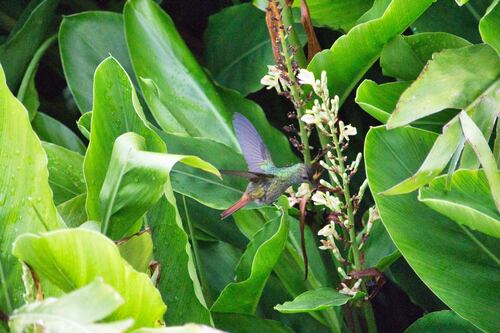
ハイバラエメラルドハチドリ (Amazilia tzacatl) ハイバラエメラルドハチドリ
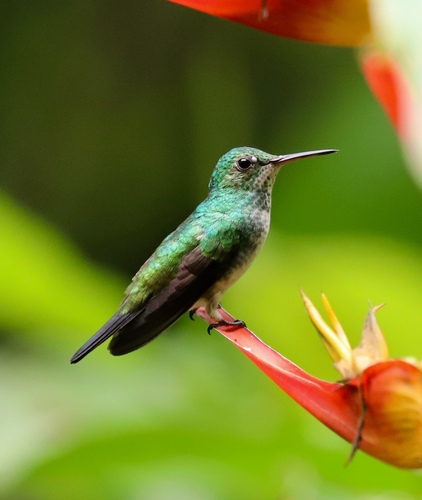
エメラルドハチドリ (Polyerata amabilis) エメラルドハチドリ

メディア

読み込み中…

要点

ルフーステイルハチドリとエメラルドハチドリを区別する最も信頼できるフィールドマークは尾です:ルフーステイルは常に主にルフース(栗色)の尾を示し、先端と外側の羽毛に限られた緑しかありませんが、エメラルドハチドリははるかに暗い尾を持ち、広範なルフースが欠けています。すべての羽色において、ルフーステイルは上尾覆いと下尾覆いにより多くのルフースを示し、下部は灰色または白っぽい腹部でより淡いですが、エメラルドはより均一な緑がかったまたは青がかった下側を持っています。幼鳥のルフーステイルハチドリは下胸部と尾羽にシナモンの洗いが見られることがありますが、エメラルドにはそれがありません。嘴の色と構造も微妙に異なります。これらのマークは止まっているときと飛んでいるときの両方で見えますが、尾の色はすべての年齢で最も一貫した区別要因です。

識別のコツ

  1. 尾の色は唯一の最良のフィールドマークです: ルフーステイルハチドリは常に主にルフース(栗色)の尾を示し、止まっているときと飛んでいるときの両方で見えます。エメラルドハチドリの尾ははるかに暗く、広範なルフースが欠けています。
  2. 上尾覆いと下尾覆い: ルフーステイルは栗色の上尾覆いと下尾覆いを持っています;エメラルドは持っていません。鳥が尾を扇いだり位置を変えたりするときにこれらのルフースの斑点を確認してください。
  3. 幼鳥/未成熟の下部: 幼鳥のルフーステイルハチドリは下胸部と側面にシナモンの洗いを示し、シナモンの先端を持つ下背部/尾羽の羽毛があります。エメラルドの幼鳥は下部がより均一で、シナモンの色合いがありません。
  4. 腹部の色: ルフーステイルの成鳥は灰色の下胸部と白い腹部を持ち、緑の上胸部と対照的です。エメラルドは下部がより均一で、下部を通して緑がかったまたは青がかった色合いが広がっています。
  5. 喉の模様: ルフーステイルのオスは薄い白いスカロップ模様のある緑の喉を持ち、メスはより顕著なスカロップ模様を示します。エメラルドの喉はより均一で、このスカロップ模様が欠けています。
  6. 嘴の色: ルフーステイルは二色の嘴(赤い基部、黒い先端)を持ち、特に近距離で明らかです。エメラルドの嘴は通常全体的に暗いです。
  7. 生息地の文脈: 開けた場所、庭、給餌器では、ルフーステイルがより可能性が高いです。湿った森林の内部や大きく劣化した元の森林では、エメラルドがより可能性が高いですが、エッジでは重複が発生します。
  8. 給餌器での行動: ルフーステイルは給餌器で特に攻撃的で支配的であり、他のハチドリを追いかけることがよくあります。エメラルドはそれほど攻撃的ではありません。
  9. 止まっている姿勢: ルフーステイルはしばしば開けた場所に目立って止まり、尾を少し扇いだり傾けたりしてルフースの色を見せます。エメラルドはより密なカバーに止まる可能性が高いです。
  10. 鳴き声: 硬くてパチンとした「チキチキ」やガラガラとした「チルーrr-rr-rr-rr-rr」を聞いたら、ルフーステイルの可能性があります。エメラルドの鳴き声はあまり知られておらず、フィールドで特異ではありません。
  11. 性差: メスのルフーステイルは下部がより淡く、喉のスカロップ模様がより顕著です;エメラルドのメスはより均一です。
  12. 亜種の変異: ルフーステイルは嘴の色と尾の模様に地理的な変異を示しますが、常にルフースの尾を重要なマークとして保持します。エメラルドはどの亜種でもこの色合いに近づきません。
  13. 飛行中の視点: 迅速な飛行中の視点でも、ルフーステイルハチドリのルフースの尾は明確にフラッシュし、エメラルドの尾は暗いままです。
  14. 落とし穴: 全体的な緑の色合いやサイズに頼らないでください。両種はこれらの点で似ています。尾と下部の色に焦点を当ててください。
  15. マークが失敗したとき: 光が悪いとき、ルフーステイルのルフースの尾は暗く見えることがありますが、エメラルドのように均一に暗くなることはありません。ルフーステイルを確認するために、尾や下尾の領域にルフースのヒントがあるかどうかを探してください。

大きさ

ルフーステイルハチドリは中型のハチドリで、長さは9〜11 cm、重さは約5 gです [wikipedia]。エメラルドハチドリはサイズが似ていますが、利用可能なメモには直接比較のための正確な測定が指定されていません。フィールドでは、サイズだけではこれら2種を区別する信頼できる要因ではなく、両者は同じ一般的なサイズクラス内にあり、広範に重複しています。

羽色

行動

ルフーステイルハチドリは給餌器で攻撃的であることで知られており、時には緩いコロニーで巣を作ります。開けた場所、庭、森林のエッジによく出没し、目立って止まることが多いです。エメラルドハチドリはそれほど攻撃的ではなく、より密で湿った森林や劣化した森林に関連しています。両種は典型的なハチドリの方法でホバリングし、餌を取りますが、ルフーステイルは開けた、乱された、または人間によって修正された生息地で見られる可能性が高いです。

生息環境

ルフーステイルハチドリは開けた非森林の生息地を好み、クリアリング、庭、森林のエッジ、若い二次成長などがあります。給餌器や乱された地域で一般的です。エメラルドハチドリは亜熱帯または熱帯の湿った低地森林や大きく劣化した元の森林により結びついています。中米と南米北部では範囲が重複しますが、ルフーステイルは開けたまたはエッジの生息地でより可能性が高く、エメラルドは湿った森林の内部やエッジでより可能性が高いです。

声

ルフーステイルハチドリは多様で高く、細い、きしむような歌と硬くてパチンとした「チキチキ」の呼び声を発し、時にはしつこく繰り返され、乾燥した硬いチップやガラガラとした「チルーrr-rr-rr-rr-rr」の音を出します。提供された情報源にはエメラルドハチドリの詳細な鳴き声のメモがないため、ルフーステイルの特異な呼び声が聞こえない限り、声は信頼できる区別要因ではありません。

より良い説明を送る

比較と同じ項目を使ってください。文章はすぐに公開されます。

The most reliable field mark to separate Rufous-tailed Hummingbird from Blue-chested Hummingbird is the tail: Rufous-tailed always shows a mostly rufous (chestnut-brown) tail with only limited green at the tips and outer webs, while Blue-chested Hummingbird has a tail that is much darker and lacks extensive rufous. In all plumages, Rufous-tailed also shows more rufous on the uppertail coverts and undertail coverts, and its underparts are paler with a grayish or whitish belly, while Blue-chested has a more uniform greenish or bluish underside. Juvenile Rufous-tailed Hummingbirds can show a cinnamon wash on the lower breast and rump, which Blue-chested never has. Bill color and structure also differ subtly. These marks are visible both when perched and in flight, but the tail color is the most consistent separator at all ages.

  1. Tail color is the single best field mark: Rufous-tailed Hummingbird always shows a mostly rufous (chestnut-brown) tail, visible both when perched and in flight. Blue-chested Hummingbird's tail is much darker, lacking extensive rufous.
  2. Uppertail and undertail coverts: Rufous-tailed has chestnut-brown uppertail and undertail coverts; Blue-chested does not. Check for these rufous patches when the bird fans its tail or shifts position.
  3. Juvenile/immature underparts: Juvenile Rufous-tailed Hummingbirds show a cinnamon wash on the lower breast and sides, and cinnamon-tipped lower back/rump feathers. Blue-chested juveniles are more uniform below and lack any cinnamon tones.
  4. Belly color: Rufous-tailed adults have a gray lower breast and white belly, contrasting with the green upper breast. Blue-chested is more uniform below, with greenish or bluish tones extending through the underparts.
  5. Throat pattern: Rufous-tailed males have green throats with thin white scalloping; females show more pronounced scalloping. Blue-chested throats are more uniform and lack this scalloping.
  6. Bill color: Rufous-tailed has a bicolored bill (red base, black tip), especially obvious at close range. Blue-chested's bill is usually darker overall, sometimes appearing all dark.
  7. Habitat context: In open areas, gardens, and at feeders, Rufous-tailed is more likely. In humid forest interiors or heavily degraded former forest, Blue-chested is more likely, though overlap occurs at edges.
  8. Behavior at feeders: Rufous-tailed is notably aggressive and dominant at feeders, often chasing other hummingbirds. Blue-chested is less aggressive.
  9. Perched posture: Rufous-tailed often perches conspicuously in open, with tail slightly fanned or cocked, showing off the rufous color. Blue-chested is more likely to perch in denser cover.
  10. Vocalizations: If you hear a hard, smacking 'tchik-tchik' or a rattling 'chirr-rr-rr-rr-rr,' Rufous-tailed is likely. Blue-chested's vocalizations are less well known and not distinctive in the field.
  11. Sex differences: Female Rufous-taileds are paler below with more pronounced throat scalloping; Blue-chested females are more uniform.
  12. Subspecies variation: Rufous-tailed shows some geographic variation in bill color and tail pattern, but always retains the rufous tail as a key mark. Blue-chested does not approach this coloration in any subspecies.
  13. Flight views: Even in quick flight views, the rufous tail of Rufous-tailed Hummingbird flashes distinctly, while Blue-chested's tail remains dark.
  14. Pitfalls: Do not rely on overall green coloration or size, as both species are similar in these respects. Focus on tail and underpart color.
  15. When marks fail: In poor light, the rufous tail of Rufous-tailed may appear darker, but it will never be as uniformly dark as Blue-chested. Look for any hint of rufous in the tail or undertail region to confirm Rufous-tailed.

Rufous-tailed Hummingbird is a medium-sized hummingbird, 9–11 cm in length and about 5 g in weight [wikipedia]. Blue-chested Hummingbird is similar in size, but the available notes do not specify precise measurements for direct comparison. In the field, size alone is not a reliable separator between these two species, as both are within the same general size class and overlap extensively.

  • Juveniles/immatures: Rufous-tailed Hummingbird juveniles have a distinctive cinnamon wash to the lower breast and sides, and the lower back and rump feathers are tipped cinnamon. This is absent in Blue-chested Hummingbird juveniles, which are more uniform below and lack any cinnamon tones.
  • Tail: At all ages, Rufous-tailed Hummingbird shows a mostly chestnut-brown (rufous) tail with only limited bronze-green on the outer webs and tips. Blue-chested Hummingbird has a much darker tail, lacking the extensive rufous; its tail is more uniformly dark or greenish-black.
  • Underparts: Adult Rufous-tailed Hummingbird males have a green throat and upper breast, gray lower breast, white belly, and chestnut undertail coverts. Females are paler below with more pronounced scalloping on the throat. Blue-chested Hummingbird is more uniform below, with greenish or bluish tones extending through the underparts and lacking the pale gray/white belly and rufous undertail.
  • Uppertail/undertail coverts: Rufous-tailed shows chestnut-brown uppertail and undertail coverts; Blue-chested does not.
  • Bill: Rufous-tailed has a bicolored bill (red base, black tip); Blue-chested's bill is usually darker overall.

Rufous-tailed Hummingbird is known for being aggressive at feeders and sometimes nests in loose colonies. It frequents open areas, gardens, and forest edges, often perching conspicuously. Blue-chested Hummingbird is less aggressive and more associated with denser, moister forests and degraded woodland. Both species hover and feed in typical hummingbird fashion, but Rufous-tailed is more likely to be seen in open, disturbed, or human-modified habitats.

Rufous-tailed Hummingbird prefers open, non-forested habitats such as clearings, gardens, forest edges, and young secondary growth. It is common at feeders and in disturbed areas. Blue-chested Hummingbird is more tied to subtropical or tropical moist lowland forest and heavily degraded former forest. While ranges overlap in Central America and northern South America, Rufous-tailed is more likely in open or edge habitats, while Blue-chested is more likely in humid forest interiors or edges.

Rufous-tailed Hummingbird gives a varied, high, thin, squeaky song and hard, smacking 'tchik-tchik' calls, sometimes repeated insistently, as well as dry, hard chips and rattling 'chirr-rr-rr-rr-rr' notes. There are no detailed vocalization notes for Blue-chested Hummingbird in the provided sources, so voice is not a reliable separator unless Rufous-tailed's distinctive calls are heard.

変更を破棄しますか?

保存していない編集があります。今離れると失われます。

ハイバラエメラルドハチドリ · エメラルドハチドリ · 苦手な鳥