

Roodstaartamazilia vs Blauwborstamazilia
Amazilia tzacatl versus Polyerata amabilis
Speel een quiz met Roodstaartamazilia en Blauwborstamazilia
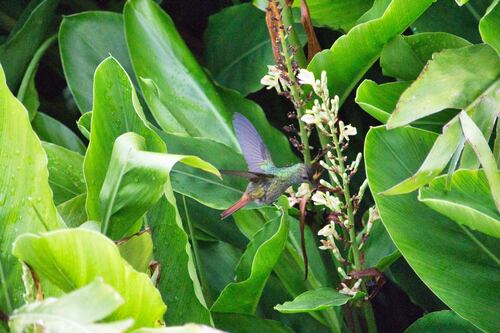 Roodstaartamazilia
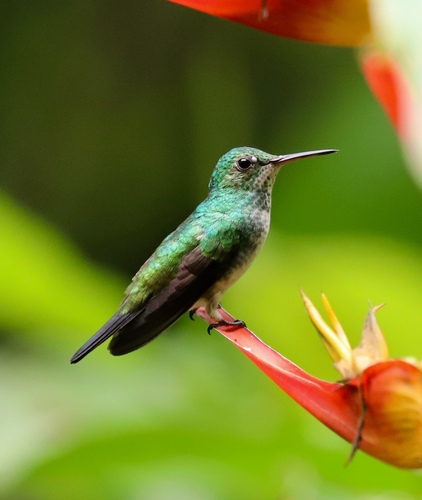 Blauwborstamazilia
Kort gezegd
Het meest betrouwbare veldkenmerk om Roodstaartamazilia van Blauwborstamazilia te scheiden, is de staart: Roodstaartamazilia toont altijd een voornamelijk roestkleurige (kastanjebruine) staart met slechts beperkte groene tips en buitenste webben, terwijl Blauwborstamazilia een staart heeft die veel donkerder is en geen uitgebreide roestkleur vertoont. In alle verenkleedvariaties toont Roodstaartamazilia ook meer roestkleur op de bovenstaartdekkveren en onderstaartdekkveren, en zijn onderzijde is lichter met een grijzige of witte buik, terwijl Blauwborstamazilia een meer uniforme groenachtige of blauwachtige onderzijde heeft. Juveniele Roodstaartamazilia kunnen een kaneelachtige was op de lagere borst en het stuitje vertonen, wat Blauwborstamazilia nooit heeft. De kleur en structuur van de snavel verschillen ook subtiel. Deze kenmerken zijn zichtbaar zowel wanneer ze zitten als in de vlucht, maar de kleur van de staart is de meest consistente scheiding bij alle leeftijden.
Herkenningstips
- Staartkleur is het beste veldkenmerk: Roodstaartamazilia toont altijd een voornamelijk roestkleurige (kastanjebruine) staart, zichtbaar zowel wanneer hij zit als in de vlucht. De staart van Blauwborstamazilia is veel donkerder, mist uitgebreide roestkleur.
- Bovenstaart- en onderstaartdekkveren: Roodstaartamazilia heeft kastanjebruine bovenstaart- en onderstaartdekkveren; Blauwborstamazilia niet. Controleer op deze roestkleurige vlekken wanneer de vogel zijn staart opent of van positie verandert.
- Juveniele/onvolwassen onderzijde: Juveniele Roodstaartamazilia vertonen een kaneelachtige was op de lagere borst en zijkanten, en kaneelgetipte onderrug/stuitveren. Juveniele Blauwborstamazilia zijn meer uniform onder en missen enige kaneeltinten.
- Buik kleur: Volwassen Roodstaartamazilia hebben een grijze lagere borst en een witte buik, wat contrasteert met de groene bovenborst. Blauwborstamazilia is meer uniform onder, met groenachtige of blauwachtige tinten die door de onderzijde lopen.
- Keelpatroon: Mannelijke Roodstaartamazilia hebben groene kelen met dunne witte scalloping; vrouwelijke Roodstaartamazilia vertonen meer uitgesproken scalloping. De kelen van Blauwborstamazilia zijn meer uniform en missen deze scalloping.
- Snavelkleur: Roodstaartamazilia heeft een bicolore snavel (rode basis, zwarte punt), vooral duidelijk van dichtbij. De snavel van Blauwborstamazilia is meestal donkerder in het algemeen, soms lijkt hij helemaal donker.
- Habitatcontext: In open gebieden, tuinen en bij voeders is Roodstaartamazilia waarschijnlijker. In vochtige bosinterieurs of zwaar gedegradeerde voormalige bossen is Blauwborstamazilia waarschijnlijker, hoewel er overlap optreedt aan de randen.
- Gedrag bij voeders: Roodstaartamazilia is opmerkelijk agressief en dominant bij voeders, vaak andere kolibries achtervolgend. Blauwborstamazilia is minder agressief.
- Zittende houding: Roodstaartamazilia zit vaak opvallend in het open veld, met de staart iets geopend of gekanteld, en toont de roestkleur. Blauwborstamazilia zit waarschijnlijker in dichtere dekking.
- Vocalisaties: Als je een harde, klappende 'tchik-tchik' of een ratelende 'chirr-rr-rr-rr-rr' hoort, is Roodstaartamazilia waarschijnlijk. De vocalisaties van Blauwborstamazilia zijn minder goed bekend en niet onderscheidend in het veld.
- Seksverschillen: Vrouwelijke Roodstaartamazilia zijn lichter onder met meer uitgesproken keel scalloping; vrouwelijke Blauwborstamazilia zijn meer uniform.
- Subspecies variatie: Roodstaartamazilia vertoont enige geografische variatie in snavelkleur en staartpatroon, maar behoudt altijd de roestkleurige staart als een belangrijk kenmerk. Blauwborstamazilia benadert deze kleur niet in enige subspecies.
- Vluchtweergaven: Zelfs in snelle vluchtweergaven flitst de roestkleurige staart van Roodstaartamazilia duidelijk, terwijl de staart van Blauwborstamazilia donker blijft.
- Valstrikken: Vertrouw niet op de algemene groene kleur of grootte, aangezien beide soorten in deze opzichten vergelijkbaar zijn. Focus op de kleur van de staart en onderzijde.
- Wanneer kenmerken falen: In slecht licht kan de roestkleurige staart van Roodstaartamazilia donkerder lijken, maar hij zal nooit zo uniform donker zijn als Blauwborstamazilia. Zoek naar enige hint van roestkleur in de staart of onderstaartregio om Roodstaartamazilia te bevestigen.
Grootte
Roodstaartamazilia is een middelgrote kolibrie, 9–11 cm lang en ongeveer 5 g zwaar [wikipedia]. Blauwborstamazilia is vergelijkbaar in grootte, maar de beschikbare notities specificeren geen precieze metingen voor directe vergelijking. In het veld is grootte alleen geen betrouwbare scheiding tussen deze twee soorten, aangezien beide binnen dezelfde algemene grootteklasse vallen en uitgebreid overlappen.
Verenkleed
- Juvenielen/onvolwassenen: Juveniele Roodstaartamazilia hebben een kenmerkende kaneelachtige was op de lagere borst en zijkanten, en de onderrug- en stuitveren zijn kaneelgetipt. Dit ontbreekt bij juveniele Blauwborstamazilia, die meer uniform onder zijn en geen kaneeltinten hebben.
- Staart: Op alle leeftijden toont Roodstaartamazilia een voornamelijk kastanjebruine (roestkleurige) staart met slechts beperkte bronsgroene op de buitenste webben en tips. Blauwborstamazilia heeft een veel donkerdere staart, zonder de uitgebreide roestkleur; zijn staart is meer uniform donker of groenachtig zwart.
- Onderzijde: Volwassen Roodstaartamazilia mannetjes hebben een groene keel en bovenborst, grijze lagere borst, witte buik en kastanjebruine onderstaartdekkveren. Vrouwen zijn lichter onder met meer uitgesproken scalloping op de keel. Blauwborstamazilia is meer uniform onder, met groenachtige of blauwachtige tinten die door de onderzijde lopen en mist de lichte grijze/witte buik en roestkleurige onderstaart.
- Bovenstaart/onderstaartdekkveren: Roodstaartamazilia toont kastanjebruine bovenstaart- en onderstaartdekkveren; Blauwborstamazilia niet.
- Snavel: Roodstaartamazilia heeft een bicolore snavel (rode basis, zwarte punt); de snavel van Blauwborstamazilia is meestal donkerder in het algemeen.
Gedrag
Roodstaartamazilia staat bekend om zijn agressiviteit bij voeders en nestelt soms in losse kolonies. Het komt voor in open gebieden, tuinen en bosranden, vaak opvallend zittend. Blauwborstamazilia is minder agressief en meer geassocieerd met dichtere, vochtiger bossen en gedegradeerd bos. Beide soorten zweven en voeden zich op de typische kolibrie manier, maar Roodstaartamazilia is waarschijnlijker te zien in open, verstoorde of door mensen aangepaste habitats.
Habitat
Roodstaartamazilia geeft de voorkeur aan open, niet-bosrijke habitats zoals open plekken, tuinen, bosranden en jonge secundaire groei. Het is gebruikelijk bij voeders en in verstoorde gebieden. Blauwborstamazilia is meer gebonden aan subtropische of tropische vochtige laaglandbossen en zwaar gedegradeerde voormalige bossen. Hoewel de gebieden overlappen in Midden-Amerika en het noorden van Zuid-Amerika, is Roodstaartamazilia waarschijnlijker in open of randhabitats, terwijl Blauwborstamazilia waarschijnlijker is in vochtige bosinterieurs of randen.
Geluid
Roodstaartamazilia geeft een gevarieerd, hoog, dun, piepend lied en harde, klappende 'tchik-tchik' roepen, soms herhaaldelijk, evenals droge, harde chips en ratelende 'chirr-rr-rr-rr-rr' noten. Er zijn geen gedetailleerde vocalisatie notities voor Blauwborstamazilia in de verstrekte bronnen, dus de stem is geen betrouwbare scheiding tenzij de kenmerkende roepen van Roodstaartamazilia worden gehoord.
Roodstaartamazilia · Blauwborstamazilia · Mijn lastige vogels