

Amazilia Tzacatl vs Amazilia Amable
Amazilia tzacatl frente a Polyerata amabilis
Juega un quiz con Amazilia Tzacatl y Amazilia Amable
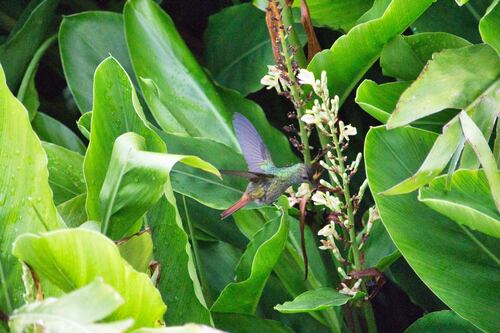 Amazilia Tzacatl
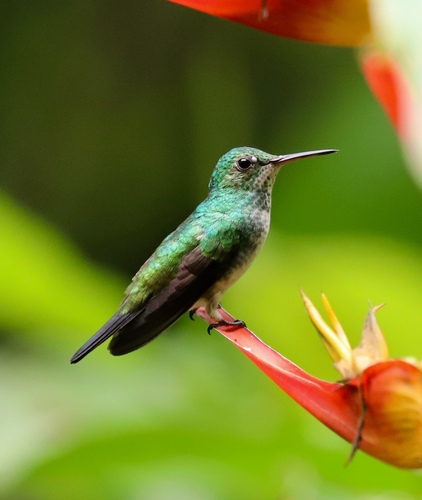 Amazilia Amable
En breve
La marca de campo más confiable para separar Amazilia Tzacatl de Amazilia Amable es la cola: Amazilia Tzacatl siempre muestra una cola mayormente rufa (marrón castaño) con solo un verde limitado en las puntas y las plumas exteriores, mientras que Amazilia Amable tiene una cola que es mucho más oscura y carece de rufos extensos. En todos los plumajes, Amazilia Tzacatl también muestra más rufos en las coberturas de la cola superior y las coberturas de la cola inferior, y sus partes inferiores son más pálidas con un vientre grisáceo o blanquecino, mientras que Amazilia Amable tiene un lado inferior más uniforme verdoso o azulado. Los juveniles de Amazilia Tzacatl pueden mostrar un lavado canela en el pecho inferior y el rabadilla, lo cual Amazilia Amable nunca tiene. El color y la estructura del pico también difieren sutilmente. Estas marcas son visibles tanto cuando están posados como en vuelo, pero el color de la cola es el separador más consistente en todas las edades.
Consejos de identificación
- El color de la cola es la mejor marca de campo: Amazilia Tzacatl siempre muestra una cola mayormente rufa (marrón castaño), visible tanto cuando está posado como en vuelo. La cola de Amazilia Amable es mucho más oscura, careciendo de rufos extensos.
- Coberturas de la cola superior e inferior: Amazilia Tzacatl tiene coberturas de la cola superior e inferior marrón castaño; Amazilia Amable no. Verifica estas manchas rufas cuando el ave abre su cola o cambia de posición.
- Partes inferiores juveniles/inmaduras: Los juveniles de Amazilia Tzacatl muestran un lavado canela en el pecho inferior y los lados, y plumas de la parte inferior de la espalda/rabadilla con puntas canela. Los juveniles de Amazilia Amable son más uniformes por debajo y carecen de tonos canela.
- Color del vientre: Los adultos de Amazilia Tzacatl tienen un pecho inferior gris y un vientre blanco, contrastando con el pecho superior verde. Amazilia Amable es más uniforme por debajo, con tonos verdosos o azulados que se extienden a través de las partes inferiores.
- Patrón de la garganta: Los machos de Amazilia Tzacatl tienen gargantas verdes con un delgado escallón blanco; las hembras muestran un escallón más pronunciado. Las gargantas de Amazilia Amable son más uniformes y carecen de este escallón.
- Color del pico: Amazilia Tzacatl tiene un pico bicolor (base roja, punta negra), especialmente obvio a corta distancia. El pico de Amazilia Amable es generalmente más oscuro en general, a veces apareciendo completamente oscuro.
- Contexto del hábitat: En áreas abiertas, jardines y en comederos, es más probable ver a Amazilia Tzacatl. En interiores de bosques húmedos o antiguos bosques muy degradados, es más probable ver a Amazilia Amable, aunque hay superposición en los bordes.
- Comportamiento en comederos: Amazilia Tzacatl es notablemente agresiva y dominante en los comederos, a menudo persiguiendo a otros colibríes. Amazilia Amable es menos agresiva.
- Postura posada: Amazilia Tzacatl a menudo se posa de manera conspicua en áreas abiertas, con la cola ligeramente abierta o levantada, mostrando el color rufa. Amazilia Amable es más probable que se pose en una cobertura más densa.
- Vocalizaciones: Si escuchas un sonido duro y chasqueante 'tchik-tchik' o un 'chirr-rr-rr-rr-rr' rítmico, es probable que sea Amazilia Tzacatl. Las vocalizaciones de Amazilia Amable son menos conocidas y no son distintivas en el campo.
- Diferencias sexuales: Las hembras de Amazilia Tzacatl son más pálidas por debajo con un escallón de garganta más pronunciado; las hembras de Amazilia Amable son más uniformes.
- Variación de subespecies: Amazilia Tzacatl muestra cierta variación geográfica en el color del pico y el patrón de la cola, pero siempre retiene la cola rufa como una marca clave. Amazilia Amable no se aproxima a esta coloración en ninguna subespecie.
- Vistas de vuelo: Incluso en vistas rápidas de vuelo, la cola rufa de Amazilia Tzacatl destella distintivamente, mientras que la cola de Amazilia Amable permanece oscura.
- Trampas: No te fíes del color verde general o del tamaño, ya que ambas especies son similares en estos aspectos. Concéntrate en el color de la cola y las partes inferiores.
- Cuando las marcas fallan: En luz pobre, la cola rufa de Amazilia Tzacatl puede parecer más oscura, pero nunca será tan uniformemente oscura como la de Amazilia Amable. Busca cualquier indicio de rufos en la cola o la región de la cola inferior para confirmar Amazilia Tzacatl.
Tamaño
Amazilia Tzacatl es un colibrí de tamaño mediano, de 9 a 11 cm de longitud y aproximadamente 5 g de peso [wikipedia]. Amazilia Amable es similar en tamaño, pero las notas disponibles no especifican medidas precisas para una comparación directa. En el campo, el tamaño por sí solo no es un separador confiable entre estas dos especies, ya que ambas están dentro de la misma clase de tamaño general y se superponen extensamente.
Plumaje
- Juveniles/inmaduras: Los juveniles de Amazilia Tzacatl tienen un lavado canela distintivo en el pecho inferior y los lados, y las plumas de la parte inferior de la espalda y el rabadilla están tipadas de canela. Esto está ausente en los juveniles de Amazilia Amable, que son más uniformes por debajo y carecen de tonos canela.
- Cola: A todas las edades, Amazilia Tzacatl muestra una cola mayormente marrón castaño (rufa) con solo un verde bronce limitado en las plumas exteriores y puntas. Amazilia Amable tiene una cola mucho más oscura, careciendo de rufos extensos; su cola es más uniformemente oscura o verde-negra.
- Partes inferiores: Los machos adultos de Amazilia Tzacatl tienen una garganta y un pecho superior verdes, un pecho inferior gris, un vientre blanco y coberturas de la cola inferior castañas. Las hembras son más pálidas por debajo con un escallón de garganta más pronunciado. Amazilia Amable es más uniforme por debajo, con tonos verdosos o azulados que se extienden a través de las partes inferiores y careciendo del vientre gris/blanco pálido y la cola inferior rufa.
- Coberturas de la cola superior/inferior: Amazilia Tzacatl muestra coberturas de la cola superior e inferior marrón castaño; Amazilia Amable no.
- Pico: Amazilia Tzacatl tiene un pico bicolor (base roja, punta negra); el pico de Amazilia Amable es generalmente más oscuro en general.
Comportamiento
Amazilia Tzacatl es conocida por ser agresiva en los comederos y a veces anida en colonias sueltas. Frecuenta áreas abiertas, jardines y bordes de bosques, a menudo posándose de manera conspicua. Amazilia Amable es menos agresiva y más asociada con bosques densos y húmedos y bosques degradados. Ambas especies flotan y se alimentan de manera típica de colibrí, pero es más probable que se vea a Amazilia Tzacatl en hábitats abiertos, perturbados o modificados por humanos.
Hábitat
Amazilia Tzacatl prefiere hábitats abiertos y no forestales como claros, jardines, bordes de bosques y crecimiento secundario joven. Es común en comederos y en áreas perturbadas. Amazilia Amable está más vinculada a bosques húmedos de tierras bajas subtropicales o tropicales y antiguos bosques muy degradados. Si bien los rangos se superponen en América Central y el norte de América del Sur, es más probable que Amazilia Tzacatl se encuentre en hábitats abiertos o de borde, mientras que Amazilia Amable es más probable que se encuentre en interiores de bosques húmedos o bordes.
Voz
Amazilia Tzacatl emite una canción variada, alta, delgada y chirriante, y llamadas duras y chasqueantes 'tchik-tchik', a veces repetidas insistentemente, así como chips secos y duros y notas de 'chirr-rr-rr-rr-rr'. No hay notas de vocalización detalladas para Amazilia Amable en las fuentes proporcionadas, por lo que la voz no es un separador confiable a menos que se escuchen las llamadas distintivas de Amazilia Tzacatl.