

andorinha-de-peito-ruivo vs south african swallow
Cecropis semirufa versus Petrochelidon spilodera
Jogue um quiz com andorinha-de-peito-ruivo e south african swallow
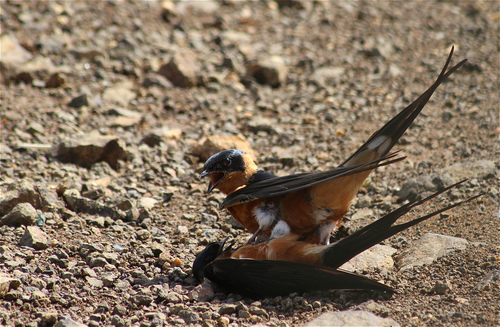 andorinha-de-peito-ruivo
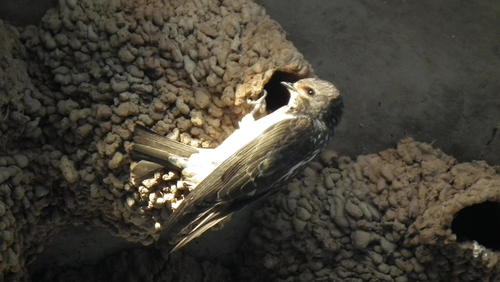 south african swallow
Em resumo
A marca de campo mais confiável para separar a andorinha-de-peito-ruivo da south african swallow é a ausência de branco na parte inferior da asa em todas as idades da andorinha-de-peito-ruivo, em comparação com a south african swallow, que normalmente apresenta coberturas brancas na parte inferior da asa. A andorinha-de-peito-ruivo também tem uma coroa azul que se estende abaixo do olho e um rabo e partes inferiores ruivas, enquanto a south african swallow é geralmente mais clara por baixo e não possui os tons ruivos profundos. As andorinhas-de-peito-ruivo juvenis mostram azul na lateral da cabeça (não vermelho opaco), o que é um ponto chave se você suspeitar de um jovem pássaro. Ambas as espécies são semelhantes em tamanho e estrutura, mas o comprimento das penas da cauda e a cor da parte inferior da asa são as pistas de campo mais rápidas. A sobreposição de habitat é possível sob pontes e estruturas humanas, mas a andorinha-de-peito-ruivo é mais solitária e prefere áreas abertas, enquanto a south african swallow é mais colonial e frequentemente encontrada em grupos maiores.
Dicas de identificação
- Cor da parte inferior da asa em voo: A andorinha-de-peito-ruivo sempre carece de branco na parte inferior da asa, enquanto a south african swallow apresenta coberturas brancas na parte inferior da asa. Esta é a maneira mais rápida de separá-las em voo ou quando o pássaro está se esticando/limpando.
- Comprimento das penas da cauda: A andorinha-de-peito-ruivo tem penas da cauda mais longas, dando uma aparência de cauda mais profundamente bifurcada. A cauda da south african swallow é mais curta e menos profundamente bifurcada. Esta marca é mais confiável em adultos empoleirados, mas pode ser vista em voo.
- Coroa e padrão da cabeça: A coroa azul da andorinha-de-peito-ruivo se estende abaixo do olho, criando uma aparência de cabeça mais escura. A south african swallow não mostra essa extensão; sua coroa é menos extensa e não chega abaixo do olho.
- Cor do rabo e partes inferiores: A andorinha-de-peito-ruivo tem um rabo ruivo e partes inferiores ruivas, enquanto a south african swallow é mais clara por baixo e carece dos tons ruivos profundos. Isso é especialmente óbvio em boa luz.
- Cor da cabeça juvenil: A andorinha-de-peito-ruivo juvenil mostra azul na lateral da cabeça (não vermelho opaco), que é uma marca sutil, mas importante, se você suspeitar de um jovem pássaro. Os juvenis da south african swallow não são descritos em detalhes nas notas, mas não mostram esse azul.
- Comportamento de empoleiramento: A andorinha-de-peito-ruivo é mais propensa a empoleirar-se sozinha ou em pares em fios ou galhos, enquanto a south african swallow é frequentemente vista em grupos, especialmente perto de locais de nidificação.
- Hábitos de nidificação: A andorinha-de-peito-ruivo constrói ninhos de barro fechados com entradas tubulares, frequentemente sozinha ou em pares soltos sob pontes ou em cavidades. A south african swallow nidifica colonialmente, com muitos ninhos de barro agrupados sob pontes ou beirais.
- Estilo de voo: A andorinha-de-peito-ruivo tem um voo lento e flutuante, o que pode ajudar a distingui-la da south african swallow, que voa de maneira mais errática e rápida, especialmente em bandos mistos de andorinhas.
- Contexto de habitat: Se você encontrar uma andorinha solitária ou em par em campo aberto ou em um fio longe de grandes colônias, a andorinha-de-peito-ruivo é mais provável. Se você ver muitas andorinhas nidificando ou voando juntas sob uma ponte ou edifício, a south african swallow é mais provável.
- Presença sazonal: A andorinha-de-peito-ruivo é migratória no sul da África (presente de julho a março), enquanto a south african swallow é mais residente ou localmente migratória. O tempo do ano pode ajudar, mas há sobreposição.
- Confusão com outras andorinhas: A andorinha-de-peito-ruivo é semelhante à andorinha-do-senegal, mas é menor e tem penas da cauda mais longas. A south african swallow é menos propensa a ser confundida com a andorinha-do-senegal devido às partes inferiores mais claras e cauda mais curta.
- Sem diferenças vocais conhecidas: As notas não fornecem diferenças de vocalização, então não confie em chamadas ou canções para separação.
- Diferenças sexuais: Nenhum dimorfismo sexual é descrito para ambas as espécies, então todas as marcas se aplicam a ambos os sexos.
- Armadilhas: Cuidado com as condições de iluminação que podem obscurecer a cor da parte inferior da asa ou o comprimento das penas da cauda. Pássaros imaturos podem ser especialmente complicados; concentre-se na cor da parte inferior da asa e da cabeça para melhores resultados.
- Quando em dúvida: Priorize a cor da parte inferior da asa em voo e o comprimento das penas da cauda quando empoleiradas. Se você não puder ver esses, use o habitat e o tamanho do grupo como pistas secundárias.
Tamanho
Ambas as espécies são semelhantes em tamanho e estrutura geral, sendo andorinhas de tamanho médio da região. A andorinha-de-peito-ruivo é ligeiramente menor que a andorinha-do-senegal semelhante, mas não há comparação direta de tamanho com a south african swallow nas notas. Ambas têm corpos aerodinâmicos e asas longas, mas a andorinha-de-peito-ruivo tem penas da cauda mais longas, o que pode ser uma marca sutil, mas útil, quando vista bem. Nenhuma diferença significativa em massa ou comprimento é documentada entre essas duas.
Plumagem
- Pássaros juvenis/imaturos: A andorinha-de-peito-ruivo juvenil mostra azul na lateral da cabeça (não vermelho opaco), o que a distingue de andorinhas semelhantes, mas não é diretamente comparada com os juvenis da south african swallow. O diagnóstico chave para todas as idades é a parte inferior da asa: a andorinha-de-peito-ruivo não possui branco na parte inferior da asa, enquanto a south african swallow apresenta coberturas brancas na parte inferior da asa, especialmente visíveis em voo ou quando se limpando.
- Adultos: A andorinha-de-peito-ruivo tem uma coroa e manto azuis, rabo e partes inferiores ruivas, e a coroa azul se estende abaixo do olho. A south african swallow é mais clara por baixo, carece das partes inferiores ruivas profundas e não mostra a coroa azul se estendendo abaixo do olho. As penas da cauda são mais longas na andorinha-de-peito-ruivo, dando uma impressão de cauda mais profundamente bifurcada quando empoleirada ou em voo. Ambas as espécies têm um pouco de azul nas partes superiores, mas o contraste com o rabo ruivo é mais forte na andorinha-de-peito-ruivo.
Comportamento
A andorinha-de-peito-ruivo é geralmente solitária ou encontrada em pares, raramente nidificando em grupos, e é mais propensa a empoleirar-se em fios ou galhos. Seu voo é descrito como lento e flutuante. A south african swallow é mais colonial, frequentemente nidificando em grupos sob pontes ou beirais, e é mais provável de ser vista em bandos. Ambas as espécies se alimentam quase exclusivamente de insetos aéreos e raramente pousam no chão. A andorinha-de-peito-ruivo é mais migratória, especialmente no sul da África, enquanto a south african swallow é mais residente ou localmente migratória.
Habitat
A andorinha-de-peito-ruivo é uma ave de campo aberto seco, embora possa entrar em florestas tropicais durante a estação chuvosa. Ela usa estruturas artificiais para nidificação, mas é menos provável de ser encontrada em áreas florestais, onde a andorinha-do-senegal a substitui. A south african swallow está fortemente associada a estruturas humanas, especialmente pontes e cabanas, e é mais provável de ser encontrada nidificando em grandes grupos sob essas. Ambas podem ser encontradas perto de água ou áreas abertas, mas a andorinha-de-peito-ruivo é mais solitária e menos ligada a colônias densas ou grandes agregações.
andorinha-de-peito-ruivo · south african swallow · Minhas aves difíceis