

rufous-cheeked nightjar vs freckled nightjar
Caprimulgus rufigena versus Caprimulgus tristigma
Jogue um quiz com rufous-cheeked nightjar e freckled nightjar
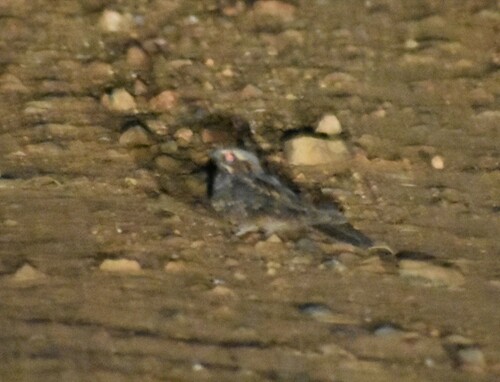 rufous-cheeked nightjar
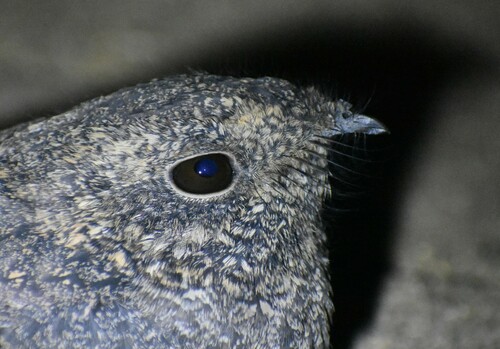 freckled nightjar
Em resumo
A marca de campo mais confiável entre o rufous-cheeked nightjar e o freckled nightjar é o padrão de branco nas asas e na cauda dos adultos em voo: os machos de rufous-cheeked nightjar apresentam branco extenso nas primárias e algum nas pontas da cauda, enquanto os machos de freckled nightjar têm apenas pequenas manchas brancas nas primárias externas e pontas brancas nas penas da cauda externa. As fêmeas de ambas as espécies têm menos branco, mas as fêmeas de freckled nightjar não têm branco na cauda. Estruturalmente, o freckled nightjar é visivelmente maior e mais robusto, com asas mais longas e cauda mais curta, e parece muito mais escuro e menos distintamente marcado à distância. Ambas as espécies estão bem camufladas, mas o freckled nightjar se mistura a substratos rochosos, enquanto o rufous-cheeked nightjar é mais claro com manchas ruivas e um colar menos distinto. O habitat e o contexto podem ajudar: o freckled nightjar está fortemente associado a afloramentos rochosos, enquanto o rufous-cheeked nightjar prefere solo aberto e é um migrante em grande parte de sua área de distribuição.
Dicas de identificação
- Machos em voo: Procure a extensão de branco nas primárias e na cauda. Os machos de rufous-cheeked nightjar têm mais branco extenso nas primárias e algum nas pontas da cauda; os machos de freckled nightjar têm apenas pequenas manchas brancas nas quatro primárias externas e pontas brancas nas duas penas externas da cauda.
- Fêmeas em voo: As fêmeas de freckled nightjar têm 3–4 pequenas manchas brancas nas primárias externas e nenhuma branca na cauda; as fêmeas de rufous-cheeked nightjar têm marcas cor de canela (não brancas), mas menos extensas do que em freckled.
- Pássaros empoleirados: Em repouso, ambas as espécies escondem suas manchas brancas nas asas/cauda, mas a cor geral difere: o rufous-cheeked nightjar é mais claro com manchas ruivas e um colar menos distinto, enquanto o freckled nightjar é cinza escuro ou quase preto com pequenas manchas brancas visíveis apenas de perto.
- Jizz geral: O freckled nightjar é mais robusto, com asas mais longas e cauda mais curta, e se senta mais ereto em rochas. O rufous-cheeked nightjar é menor e mais compacto.
- Habitat: O freckled nightjar é quase sempre encontrado em afloramentos rochosos, rochas ou solo pedregoso; o rufous-cheeked nightjar prefere solo aberto, arenoso ou gramado e evita áreas rochosas.
- Camuflagem: A plumagem do freckled nightjar é adaptada a substratos rochosos, tornando-o quase invisível em pedras; o rufous-cheeked nightjar se mistura à litter de folhas ou solo arenoso.
- Partes inferiores: O freckled nightjar tem partes inferiores marrons escuras com listras brancas/caneladas; o rufous-cheeked nightjar é mais claro e mais ruivo embaixo.
- Tamanho: Se vistos juntos ou com experiência, o freckled nightjar é visivelmente maior e mais pesado que o rufous-cheeked nightjar.
- Dimorfismo sexual: Ambas as espécies mostram mais branco nas asas/cauda dos machos, mas o padrão e a extensão diferem como acima; verifique se há branco na cauda para separar os machos.
- Juvenis: Nenhuma marca de voo distintiva é descrita para imaturos; os filhotes de ambas as espécies estão extremamente bem camuflados, mas o habitat e a associação com adultos são melhores pistas.
- Vocalização: Apenas a canção do rufous-cheeked nightjar é descrita (longa e contínua à noite); a falta de canção não é diagnóstica para o freckled.
- Estação: O rufous-cheeked nightjar é migratório e pode estar ausente do sul da África fora da estação de reprodução; o freckled nightjar é residente com forte fidelidade ao local.
- Comportamento: O freckled nightjar frequentemente se empoleira em rochas expostas e desliza de volta para o mesmo local após forragear; o rufous-cheeked nightjar é mais propenso a levantar voo do solo aberto.
- Visão à distância: À distância, o freckled nightjar parece muito mais escuro e menos padronizado do que o rufous-cheeked nightjar.
- Armadilha: O branco nas primárias está presente em ambos, mas a quantidade e a presença/ausência na cauda são fundamentais—sempre tente ver tanto o padrão da asa quanto o da cauda em voo para uma identificação confiante.
Tamanho
O freckled nightjar é significativamente mais pesado (massa adulta ~79g [wikidata]) e é descrito como grande e robusto, com asas longas e cauda relativamente curta. O rufous-cheeked nightjar é menor (macho 48–65g, fêmea 46–66g [wikipedia]), com um silhueta de nightjar mais típica. No campo, o freckled nightjar parecerá mais robusto e com asas mais longas, especialmente em voo, enquanto o rufous-cheeked nightjar é mais compacto.
Plumagem
- Adultos em voo: O macho de rufous-cheeked nightjar mostra mais branco extenso nas primárias e algum branco nas pontas da cauda; a fêmea tem cor de canela em vez de branco, mas menos extenso do que em freckled. Os machos de freckled nightjar têm apenas pequenas manchas brancas nas quatro primárias externas e pontas brancas nas duas penas externas da cauda; as fêmeas têm 3–4 pequenas manchas brancas nas primárias externas e nenhuma branca na cauda. Quando empoleirados, as manchas brancas geralmente estão escondidas em ambas as espécies.
- Coloração geral: O rufous-cheeked nightjar é mais claro, com corpo marrom escuro e manchas ruivas, e um colar ruivo menos distinto. O freckled nightjar parece cinza escuro ou quase preto à distância, com pequenas manchas brancas, caneladas e de cor canela visíveis apenas de perto. As partes inferiores do freckled nightjar são marrons escuras com listras brancas e caneladas, enquanto o rufous-cheeked nightjar é em geral mais claro e com tonalidade ruiva.
- Juvenis: Os filhotes de ambas as espécies estão extremamente bem camuflados, mas os juvenis de rufous-cheeked nightjar têm plumagem de contra-sombreamento disruptivo, enquanto os filhotes de freckled nightjar se misturam com as rochas. Nenhum padrão de asa superior juvenil distintivo é descrito para qualquer uma das espécies.
- Dimorfismo sexual: Ambas as espécies mostram mais branco nas asas/cauda dos machos, mas o padrão e a extensão diferem como acima.
Comportamento
O freckled nightjar está fortemente associado a poleiros rochosos e é frequentemente visto sentado em rochas ou margens rochosas, forrageando com curtas investidas para insetos e deslizando de volta para seu poleiro. É mais provável ser visto em paisagens rochosas abertas e é menos ativo no inverno. O rufous-cheeked nightjar é um migrante intra-africano, reproduzindo-se nas partes sul de sua área de distribuição, e é mais provável ser encontrado em solo aberto do que em rochas. Ambas as espécies são crepusculares/nocturnas e se alimentam de insetos voadores, mas o estilo de forrageio do freckled nightjar está mais ligado a terrenos rochosos.
Habitat
O freckled nightjar é um especialista em afloramentos rochosos, campos de pedras e encostas pedregosas, onde sua plumagem proporciona excelente camuflagem. É raramente encontrado longe de tais habitats. O rufous-cheeked nightjar prefere solo aberto e não está ligado a áreas rochosas; ele se reproduz no sul da África e migra para o norte na estação não reprodutiva. O contexto do habitat é frequentemente uma forte pista: um nightjar em um afloramento rochoso nu é mais provável ser um freckled, enquanto um em solo arenoso ou gramado aberto é mais provável ser um rufous-cheeked.
Voz
Os machos de rufous-cheeked nightjar emitem uma longa canção contínua à noite durante a estação de reprodução, que para quando a lua está obscurecida ou durante trocas de ninho. As vocalizações do freckled nightjar não são descritas nas notas fornecidas, então a voz não é um separador confiável com base nas informações disponíveis.
rufous-cheeked nightjar · freckled nightjar · Minhas aves difíceis