

retz's helmetshrike vs picanço-pintadinho
Prionops retzii versus Nilaus afer
Jogue um quiz com retz's helmetshrike e picanço-pintadinho
 retz's helmetshrike
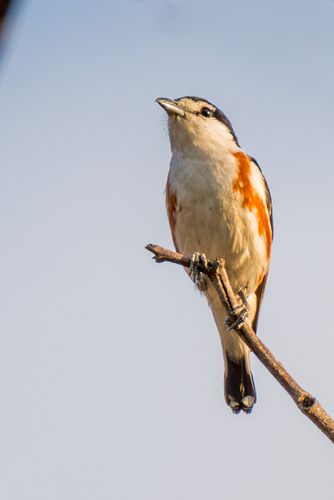 picanço-pintadinho
Em resumo
A marca de campo mais confiável para separar o picanço-pintadinho do retz's helmetshrike é o padrão de cabeça distinto do picanço-pintadinho: uma coroa preta ousada, supercílios brancos e uma faixa ocular preta em machos adultos, com uma mancha no ombro em tom de canela ou branca, dependendo da subespécie. Os picanços-pintadinhos juvenis são marrons e canela manchados por cima, com partes inferiores listradas, enquanto o retz's helmetshrike não possui essas características e, em vez disso, apresenta uma aparência mais uniforme e com 'capacete'. O picanço-pintadinho é um pássaro menor e mais esguio, frequentemente solitário ou em pares, enquanto o retz's helmetshrike é tipicamente visto em grupos barulhentos e coesos. Em voo ou empoleirado, concentre-se nos marcadores contrastantes da cabeça e das asas do picanço-pintadinho em comparação com a aparência mais simples e escura do helmetshrike.
Dicas de identificação
- Picanço-pintadinho juvenil: Procure por um padrão superior manchado de marrom, canela e branco, com asas e cauda com bordas em canela, e partes inferiores esbranquiçadas com listras marrons. Os juvenis do retz's helmetshrike não apresentam essa mancha e listras.
- Padrão de cabeça do picanço-pintadinho adulto: A combinação de uma coroa preta, supercílios brancos e faixa ocular preta é única entre os dois. O retz's helmetshrike tem uma cabeça escura e com 'capacete' sem um supercílio forte.
- Mancha no ombro: O picanço-pintadinho apresenta uma faixa no ombro em tom de canela ou branca (dependendo da subespécie), que se destaca na asa preta. O retz's helmetshrike não possui essa marca distinta no ombro.
- Padrão da cauda: O picanço-pintadinho tem uma cauda preta com pontas e bordas brancas nas penas externas, visíveis quando empoleirado ou em voo. A cauda do helmetshrike é mais uniformemente escura.
- Partes inferiores: Os adultos do picanço-pintadinho têm partes inferiores brancas com flancos ruivos (menos ruivos e mais listrados nas fêmeas). O retz's helmetshrike é mais uniforme por baixo, sem os flancos ruivos.
- Crista/capacete: O retz's helmetshrike frequentemente apresenta uma crista proeminente ou forma de 'capacete' na cabeça, especialmente em adultos, o que o picanço-pintadinho nunca apresenta.
- Cor do bico: O retz's helmetshrike pode apresentar um bico vermelho (em algumas subespécies), enquanto o bico do picanço-pintadinho é escuro e esguio.
- Tamanho do grupo: O picanço-pintadinho é geralmente solitário ou em pares; os helmetshrikes estão quase sempre em grupos barulhentos.
- Comportamento: O picanço-pintadinho é silencioso e discreto, frequentemente alto na copa das árvores. Os helmetshrikes são conspícuos, barulhentos e se movem juntos de forma coordenada.
- Habitat: Ambos utilizam florestas, mas o picanço-pintadinho está mais ligado a grandes árvores maduras e possui um território maior. Os helmetshrikes podem ser encontrados em uma gama mais ampla de habitats florestais.
- Vocalizações: Ouça o suave dueto do picanço-pintadinho ('prrrrruuu' e 'eeeu'); os helmetshrikes são mais raucosos e orientados a grupos em seus chamados.
- Variação de sexo/idade: A fêmea do picanço-pintadinho é mais apagada, marrons e menos ruiva que o macho, com algumas listras abaixo. O picanço-pintadinho juvenil é muito mais manchado e listrado do que qualquer helmetshrike.
- Visões em voo: O picanço-pintadinho mostra um contraste marcante na cauda e na mancha do ombro; o helmetshrike é mais uniforme e não possui esses painéis claros.
- Risco de confusão: O picanço-pintadinho imaturo pode ser confundido com o helmetshrike devido às cores mais apagadas, mas as partes superiores manchadas e as partes inferiores listradas ainda são distintas.
- Quando as marcas falham: Em luz fraca ou à distância, confie no tamanho do grupo e no comportamento—pássaros solitários ou em pares, silenciosos, são provavelmente picanços-pintadinhos; festas barulhentas e gregárias são helmetshrikes.
Tamanho
O picanço-pintadinho é um pequeno passeriforme, medindo 12–15 cm de comprimento [wikipedia], e é notavelmente mais pequeno e esguio do que o retz's helmetshrike, que é um pássaro mais robusto e volumoso (medidas exatas não fornecidas, mas os helmetshrikes são geralmente maiores). A construção delicada do picanço-pintadinho e sua cauda relativamente longa podem ser aparentes quando vistos lado a lado com o helmetshrike mais robusto e de cauda curta. Use o tamanho com cautela, a menos que ambas as espécies sejam vistas juntas, pois os helmetshrikes podem parecer menores em folhagem densa.
Plumagem
- Picanço-pintadinho juvenil/imaturo: Manchado de marrom, canela e branco por cima, com bordas em canela nas penas das asas e da cauda; as partes inferiores são esbranquiçadas com listras marrons. Este padrão é único entre os dois, pois os juvenis do retz's helmetshrike não mostram esse grau de mancha ou listras.
- Picanço-pintadinho adulto macho (nominal): Coroa preta, supercílios e testa brancos, faixa ocular preta, costas pretas com uma faixa canela, cauda preta com pontas/bordas brancas, asas pretas com uma faixa no ombro em tom de canela ou branca (dependendo da subespécie), partes inferiores brancas com flancos ruivos. As fêmeas são mais apagadas, marrons e menos ruivas, com algumas listras nas partes inferiores.
- Retz's Helmetshrike: Não possui o padrão de cabeça ousado e o painel de asas do picanço-pintadinho. Em vez disso, tem uma cabeça escura mais uniforme com uma crista proeminente em forma de 'capacete', um bico vermelho (em algumas subespécies) e plumagem geralmente mais escura e uniforme, sem o supercílio forte ou a mancha no ombro. A aparência de capacete é distinta em adultos, mas pode ser sutil em imaturos.
- Visões em voo: O picanço-pintadinho mostra um forte contraste na asa e na cauda, especialmente a cauda com pontas brancas e a mancha do ombro; o helmetshrike é mais uniforme e não possui esses painéis claros.
Comportamento
O picanço-pintadinho é tipicamente solitário ou em pares, movendo-se inquieto, mas silenciosamente pela copa das árvores. É discreto e frequentemente difícil de avistar, raramente se juntando a grupos, exceto em bandos de espécies mistas fora da temporada de reprodução. O retz's helmetshrike, por outro lado, é altamente social, geralmente encontrado em grupos familiares barulhentos e coesos que se movem juntos pelas árvores. Essa diferença no comportamento social pode ser uma forte pista: um pássaro solitário é provavelmente um picanço-pintadinho, enquanto uma festa tagarela é provavelmente helmetshrikes.
Habitat
O picanço-pintadinho requer grandes árvores e é encontrado em florestas e savanas na maior parte da África subsaariana, frequentemente ocupando territórios maiores do que o esperado para seu tamanho devido ao seu estilo de forrageamento. O retz's helmetshrike também habita bordas de florestas e florestas, mas é frequentemente mais tolerante ao crescimento secundário e é mais propenso a ser encontrado em grupos se movendo através de uma variedade de habitats florestais. Ambos podem sobrepor-se em alcance, mas o picanço-pintadinho é mais seletivo por árvores maduras.
Voz
A canção do picanço-pintadinho é um dueto: o macho emite um suave chamado 'prrrrruuu', frequentemente respondido pelo 'eeeu' da fêmea. Este dueto é distintivo e pode ajudar a separá-lo dos helmetshrikes, que são geralmente mais barulhentos e variados em seus chamados, frequentemente tagarelando como um grupo. Se você ouvir um dueto suave e pareado, pense em picanço-pintadinho; se ouvir um coro barulhento e misto, suspeite de helmetshrikes.
retz's helmetshrike · picanço-pintadinho · Minhas aves difíceis