

Retz's Helmetshrike vs Brubru
Prionops retzii contro Nilaus afer
Fai un quiz con Retz's Helmetshrike e Brubru
 Retz's Helmetshrike
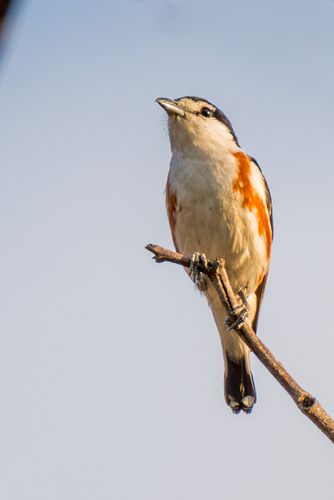 Brubru
In breve
Il segno di campo più affidabile per separare il Brubru dal Retz's Helmetshrike è il distintivo motivo della testa del Brubru: una corona nera audace, un sopracciglio bianco e una striscia nera sugli occhi nei maschi adulti, con una macchia sulla spalla color crema o bianca a seconda della sottospecie. I giovani Brubru sono marroni e color crema maculati sopra con parti inferiori barrate, mentre il Retz's Helmetshrike manca di queste caratteristiche e mostra invece un aspetto più uniforme e con elmo. Il Brubru è un uccello più piccolo e snello, spesso solitario o in coppie, mentre il Retz's Helmetshrike è tipicamente visto in gruppi rumorosi e coesi. In volo o posato, concentrati sui contrasti della testa e delle marcature alari del Brubru rispetto all'aspetto più semplice e scuro del helmetshrike.
Consigli di identificazione
- Giovane Brubru: Cerca un motivo superiore maculato marrone, color crema e bianco con ali e coda bordate di color crema, e parti inferiori biancastre con barrature marroni. I giovani Retz's Helmetshrike mancano di questa maculatura e barratura.
- Motivo della testa del Brubru adulto: La combinazione di una corona nera, un sopracciglio bianco e una striscia nera sugli occhi è unica tra questi due. Il Retz's Helmetshrike ha una testa più scura e con elmo senza un forte sopracciglio.
- Macchia sulla spalla: Il Brubru mostra una striscia sulla spalla color crema o bianca (a seconda della sottospecie), che spicca sull'ala nera. Il Retz's Helmetshrike manca di questo segno distintivo sulla spalla.
- Motivo della coda: Il Brubru ha una coda nera con punte e bordi bianchi sulle piume esterne, visibili quando è posato o in volo. La coda del helmetshrike è più uniformemente scura.
- Parti inferiori: Gli adulti del Brubru hanno parti inferiori bianche con fianchi rufous (meno rufous e più striati nelle femmine). Il Retz's Helmetshrike è più uniforme sotto, mancando dei fianchi rufous.
- Cresta/elmo: Il Retz's Helmetshrike mostra spesso una cresta prominente o una forma di 'elmo' sulla testa, specialmente negli adulti, che il Brubru non mostra mai.
- Colore del becco: Il Retz's Helmetshrike può mostrare un becco rosso (in alcune sottospecie), mentre il becco del Brubru è scuro e snello.
- Dimensione del gruppo: Il Brubru è solitamente solitario o in coppie; i helmetshrikes sono quasi sempre in gruppi rumorosi.
- Comportamento: Il Brubru è silenzioso e discreto, spesso in alto nella chioma. I helmetshrikes sono appariscenti, rumorosi e si muovono insieme in modo coordinato.
- Habitat: Entrambi utilizzano boschi, ma il Brubru è più legato a grandi alberi maturi e ha un territorio più ampio. I helmetshrikes possono essere trovati in una gamma più ampia di habitat boschivi.
- Vocalizzazioni: Ascolta il dolce duetto del Brubru ('prrrrruuu' e 'eeeu'); i helmetshrikes sono più raucous e orientati al gruppo nelle loro chiamate.
- Variazione sesso/età: La femmina del Brubru è più opaca, marrone e meno rufous del maschio, con alcune striature sotto. Il giovane Brubru è molto più maculato e barrato di qualsiasi helmetshrike.
- Viste in volo: Il Brubru mostra un contrasto bianco nella coda e nella macchia sulla spalla; il helmetshrike è più uniforme e manca di questi pannelli chiari.
- Rischio di confusione: I Brubru immaturi possono essere scambiati per helmetshrike a causa dei colori più opachi, ma le parti superiori maculate e le parti inferiori barrate sono ancora distintive.
- Quando i segni falliscono: In scarsa luce o a distanza, fai affidamento sulla dimensione del gruppo e sul comportamento: gli uccelli solitari o in coppie, silenziosi sono probabilmente Brubru; le feste rumorose e gregarie sono helmetshrikes.
Taglia
Il Brubru è un piccolo passeriforme, che misura 12–15 cm di lunghezza [wikipedia], ed è notevolmente più piccolo e snello del Retz's Helmetshrike, che è un uccello più massiccio e robusto (misure esatte non fornite, ma i helmetshrikes sono generalmente più grandi). La costruzione delicata del Brubru e la coda relativamente lunga possono essere evidenti quando visti fianco a fianco con il helmetshrike più tozzo e dalla coda corta. Usa la dimensione con cautela a meno che entrambe le specie non siano viste insieme, poiché i helmetshrikes possono apparire più piccoli in una vegetazione densa.
Piumaggio
- Giovane/immaturo Brubru: Maculato marrone, color crema e bianco sopra, con bordature color crema sulle piume delle ali e della coda; le parti inferiori sono biancastre con barrature marroni. Questo motivo è unico tra i due, poiché i giovani Retz's Helmetshrike non mostrano questo grado di maculatura o barratura.
- Maschio adulto Brubru (nominate): Corona nera, sopracciglio e fronte bianchi, striscia nera sugli occhi, dorso nero con una striscia color fulvo, coda nera con punte/bordi bianchi, ali nere con una striscia sulla spalla color crema o bianca (a seconda della sottospecie), parti inferiori bianche con fianchi rufous. Le femmine sono più opache, marroni e meno rufous, con alcune striature nelle parti inferiori.
- Retz's Helmetshrike: Manca del motivo audace della testa e del pannello alare del Brubru. Invece, ha una testa scura più uniforme con una prominente cresta a forma di 'elmo', un becco rosso (in alcune sottospecie) e una plumage generalmente più scura e uniforme senza un forte sopracciglio o macchia sulla spalla. L'aspetto con elmo è distintivo negli adulti ma può essere sottile negli immaturi.
- Viste in volo: Il Brubru mostra un forte contrasto nell'ala e nella coda, specialmente la coda con punte bianche e la macchia sulla spalla; il helmetshrike è più uniforme e manca di questi pannelli chiari.
Comportamento
Il Brubru è tipicamente solitario o in coppie, muovendosi inquieto ma silenzioso attraverso la chioma. È discreto e spesso difficile da individuare, raramente si unisce a gruppi se non in stormi misti di specie al di fuori della stagione riproduttiva. Il Retz's Helmetshrike, al contrario, è altamente sociale, solitamente trovato in gruppi familiari rumorosi e coesi che si muovono insieme tra gli alberi. Questa differenza nel comportamento sociale può essere un forte indizio: un uccello solitario è probabilmente un Brubru, mentre una festa chiacchierona è probabilmente helmetshrikes.
Habitat
Il Brubru richiede grandi alberi ed è trovato in boschi e savane in gran parte dell'Africa subsahariana, occupando spesso territori più ampi di quanto ci si aspetterebbe per le sue dimensioni a causa del suo stile di foraggiamento. Il Retz's Helmetshrike abita anche boschi e margini forestali ma è spesso più tollerante alla crescita secondaria ed è più probabile incontrarlo in gruppi che si muovono attraverso una varietà di habitat boschivi. Entrambi possono sovrapporsi nel loro areale, ma il Brubru è più selettivo per gli alberi maturi.
Voce
Il canto del Brubru è un duetto: il maschio emette una chiamata dolce 'prrrrruuu', spesso risposto dal 'eeeu' della femmina. Questo duetto è distintivo e può aiutare a separarlo dai helmetshrikes, che sono generalmente più rumorosi e vari nei loro richiami, spesso chiacchierando come gruppo. Se senti un dolce duetto abbinato, pensa al Brubru; se senti un coro rumoroso e misto, sospetta i helmetshrikes.