

Motmot

アカメメガネモズ 対 ヒメヤブモズ

Prionops retzii 対 Nilaus afer

アカメメガネモズとヒメヤブモズのクイズ

アカメメガネモズ (Prionops retzii) アカメメガネモズ
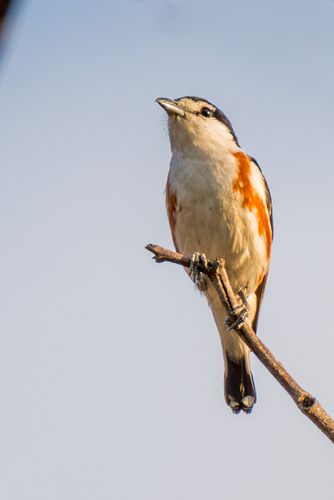
ヒメヤブモズ (Nilaus afer) ヒメヤブモズ

メディア

読み込み中…

要点

ヒメヤブモズとアカメメガネモズを区別する最も信頼できるフィールドマークは、ヒメヤブモズの特徴的な頭の模様です:成鳥のオスは大胆な黒い冠、白い眉斑、黒い目のストライプを持ち、亜種によってはバフまたは白い肩の斑点があります。幼鳥のヒメヤブモズは、上面がまだらの茶色とバフで、下面には縞模様がありますが、アカメメガネモズはこれらの特徴がなく、より均一でヘルメットのような外観を示します。ヒメヤブモズは小さく、より細身の鳥で、しばしば単独またはペアで見られますが、アカメメガネモズは通常、騒がしく、まとまりのある群れで見られます。飛んでいるときや止まっているときには、ヒメヤブモズの対照的な頭と翼の模様に注目し、ヘルメットシュライクのより地味で暗い外観と比較してください。

識別のコツ

  1. Juvenile ヒメヤブモズ: まだらの茶色、バフ、白の上面パターンを探し、バフの縁取りのある翼と尾、茶色の縞模様のある白っぽい下面を確認してください。アカメメガネモズの幼鳥はこのまだら模様と縞模様がありません。
  2. Adult ヒメヤブモズ head pattern: 黒い冠、白い眉斑、黒い目のストライプの組み合わせは、この2種の中でユニークです。アカメメガネモズは、強い眉斑のない暗いヘルメットのような頭を持っています。
  3. Shoulder patch: ヒメヤブモズはバフまたは白の肩のストライプを示し(亜種によって異なる)、それが黒い翼の中で際立っています。アカメメガネモズはこの明確な肩のマークがありません。
  4. Tail pattern: ヒメヤブモズは白い先端と外羽の縁を持つ黒い尾を持ち、止まっているときや飛んでいるときに見えます。ヘルメットシュライクの尾はより均一に暗いです。
  5. Underparts: ヒメヤブモズの成鳥は白い下面に赤褐色の側面を持っています(雌は赤褐色が少なく、より縞模様があります)。アカメメガネモズは、下面がより均一で、赤褐色の側面がありません。
  6. Crest/helmet: アカメメガネモズは、特に成鳥において、頭に目立つ冠または「ヘルメット」形状を示すことが多く、ヒメヤブモズはこれを示しません。
  7. Bill color: アカメメガネモズは赤いくちばしを示すことがあります(いくつかの亜種で)、一方ヒメヤブモズのくちばしは暗くて細いです。
  8. Group size: ヒメヤブモズは通常単独またはペアで、ヘルメットシュライクはほぼ常に騒がしい群れで見られます。
  9. Behavior: ヒメヤブモズは静かで目立たず、しばしば樹冠の高いところにいます。ヘルメットシュライクは目立ち、騒がしく、協調して動きます。
  10. Habitat: 両者は森林を利用しますが、ヒメヤブモズは大きな成熟した木により依存し、より大きなテリトリーを持っています。ヘルメットシュライクは、より広範囲の森林生息地で見られることが多いです。
  11. Vocalizations: ヒメヤブモズの柔らかいデュエット(「prrrrruuu」と「eeeu」)を聞いてください;ヘルメットシュライクはより騒がしく、群れ志向の呼び声を持っています。
  12. Sex/age variation: 雌のヒメヤブモズは雄よりも鈍く、茶色で、赤褐色が少なく、下面にいくつかの縞模様があります。幼鳥のヒメヤブモズは、どのヘルメットシュライクよりもはるかにまだらで縞模様があります。
  13. Flight views: ヒメヤブモズは尾と肩の斑点に対照的な白を示します;ヘルメットシュライクはより均一で、これらの淡いパネルがありません。
  14. Confusion risk: 未成熟のヒメヤブモズは鈍い色のためにヘルメットシュライクと間違えられることがありますが、まだらの上面と縞模様のある下面は依然として特徴的です。
  15. When marks fail: 照明が悪い場合や距離がある場合は、群れのサイズと行動に頼ってください—単独またはペアで静かな鳥はおそらくヒメヤブモズであり、騒がしく社交的な集団はヘルメットシュライクです。

大きさ

ヒメヤブモズは小型のスズメ目で、長さは12〜15 cmです [wikipedia]。アカメメガネモズよりも明らかに小さく、細身の鳥です(正確な測定値は提供されていませんが、ヘルメットシュライクは一般的に大きいです)。ヒメヤブモズの繊細な体型と比較的長い尾は、よりずんぐりした短尾のヘルメットシュライクと並べて見ると明らかです。両種が一緒に見られない限り、サイズを注意して使用してください。ヘルメットシュライクは密な葉の中で小さく見えることがあります。

羽色

行動

ヒメヤブモズは通常単独またはペアで、樹冠の中を静かに落ち着きなく移動します。目立たず、しばしば見つけるのが難しく、繁殖期以外の混合種の群れに参加することはほとんどありません。対照的に、アカメメガネモズは非常に社交的で、通常は騒がしく、まとまりのある家族群で見られ、木の中を一緒に移動します。この社会的行動の違いは強い手がかりとなることがあります:孤独な鳥はおそらくヒメヤブモズであり、騒がしい集団はおそらくヘルメットシュライクです。

生息環境

ヒメヤブモズは大きな木を必要とし、サハラ以南のアフリカの森林やサバンナに生息し、採餌スタイルのためにそのサイズに対して予想以上に大きなテリトリーを占めることがよくあります。アカメメガネモズも森林や森林の縁に生息しますが、二次成長に対してより寛容であり、さまざまな森林生息地を移動する群れで見られることが多いです。両者は範囲が重なることがありますが、ヒメヤブモズは成熟した木に対してより選択的です。

声

ヒメヤブモズの歌はデュエットです:オスは柔らかい「prrrrruuu」と呼び、しばしばメスの「eeeu」で応えます。このデュエットは特徴的で、ヘルメットシュライクと区別するのに役立ちます。ヘルメットシュライクは一般的に騒がしく、呼び声が多様で、しばしば群れでおしゃべりします。柔らかいペアのデュエットを聞いたら、ヒメヤブモズを思い出してください;騒がしい混合合唱を聞いたら、ヘルメットシュライクを疑ってください。

より良い説明を送る

比較と同じ項目を使ってください。文章はすぐに公開されます。

The most reliable field mark to separate Brubru from Retz's Helmetshrike is the Brubru's distinctive head pattern: a bold black crown, white supercilium, and black eyestripe in adult males, with a buff or white shoulder patch depending on subspecies. Juvenile Brubru are mottled brown and buff above with barred underparts, while Retz's Helmetshrike lacks these features and instead shows a more uniform, helmeted appearance. Brubru is a smaller, more slender bird, often solitary or in pairs, while Retz's Helmetshrike is typically seen in noisy, cohesive groups. In flight or perched, focus on the Brubru's contrasting head and wing markings versus the helmetshrike's plainer, darker look.

  1. Juvenile Brubru: Look for a mottled brown, buff, and white upperpart pattern with buff-edged wings and tail, and whitish underparts with brown barring. Retz's Helmetshrike juveniles lack this mottling and barring.
  2. Adult Brubru head pattern: The combination of a black crown, white supercilium, and black eyestripe is unique among these two. Retz's Helmetshrike has a darker, helmeted head without a strong supercilium.
  3. Shoulder patch: Brubru shows a buff or white shoulder stripe (depending on subspecies), which stands out on the otherwise black wing. Retz's Helmetshrike lacks this distinct shoulder mark.
  4. Tail pattern: Brubru has a black tail with white tips and edges to the outer feathers, visible when perched or in flight. Helmetshrike's tail is more uniformly dark.
  5. Underparts: Brubru adults have white underparts with rufous flanks (less rufous and more streaked in females). Retz's Helmetshrike is more uniform below, lacking the rufous flanks.
  6. Crest/helmet: Retz's Helmetshrike often shows a prominent crest or 'helmet' shape to the head, especially in adults, which Brubru never shows.
  7. Bill color: Retz's Helmetshrike may show a red bill (in some subspecies), while Brubru's bill is dark and slender.
  8. Group size: Brubru is usually solitary or in pairs; helmetshrikes are almost always in noisy groups.
  9. Behavior: Brubru is quiet and unobtrusive, often high in the canopy. Helmetshrikes are conspicuous, noisy, and move together in a coordinated fashion.
  10. Habitat: Both use woodland, but Brubru is more tied to large, mature trees and has a larger territory. Helmetshrikes can be found in a wider range of wooded habitats.
  11. Vocalizations: Listen for Brubru's soft duet ('prrrrruuu' and 'eeeu'); helmetshrikes are more raucous and group-oriented in their calls.
  12. Sex/age variation: Female Brubru is duller, browner, and less rufous than the male, with some streaking below. Juvenile Brubru is much more mottled and barred than any helmetshrike.
  13. Flight views: Brubru shows contrasting white in the tail and shoulder patch; helmetshrike is more uniform and lacks these pale panels.
  14. Confusion risk: Immature Brubru may be mistaken for helmetshrike due to duller colors, but the mottled upperparts and barred underparts are still distinctive.
  15. When marks fail: In poor light or at distance, rely on group size and behavior—solitary or paired, quiet birds are likely Brubru; noisy, gregarious parties are helmetshrikes.

Brubru is a small passerine, measuring 12–15 cm in length [wikipedia], and is notably more petite and slender than Retz's Helmetshrike, which is a bulkier, more robust bird (exact measurements not supplied, but helmetshrikes are generally larger). The Brubru's delicate build and relatively long tail can be apparent when seen side by side with the chunkier, short-tailed helmetshrike. Use size with caution unless both species are seen together, as helmetshrikes can appear smaller in dense foliage.

  • Juvenile/immature Brubru: Mottled brown, buff, and white above, with buff edgings to wing and tail feathers; underparts are whitish with brown barring. This pattern is unique among the two, as Retz's Helmetshrike juveniles do not show this degree of mottling or barring.
  • Adult male Brubru (nominate): Black crown, white supercilium and forehead, black eyestripe, black back with a tawny strip, black tail with white tips/edges, black wings with a buff or white shoulder stripe (subspecies dependent), white underparts with rufous flanks. Females are duller, browner, and less rufous, with some underpart streaking.
  • Retz's Helmetshrike: Lacks the Brubru's bold head pattern and wing panel. Instead, it has a more uniform dark head with a prominent 'helmet' crest, a red bill (in some subspecies), and generally darker, more uniform plumage without the strong supercilium or shoulder patch. The helmeted look is distinctive in adults but can be subtle in immatures.
  • Flight views: Brubru shows strong contrast in the wing and tail, especially the white-tipped tail and shoulder patch; helmetshrike is more uniform and lacks these pale panels.

Brubru is typically solitary or in pairs, moving restlessly but quietly through the canopy. It is unobtrusive and often difficult to spot, rarely joining groups except in mixed-species flocks outside the breeding season. Retz's Helmetshrike, by contrast, is highly social, usually found in noisy, cohesive family groups that move together through the trees. This difference in social behavior can be a strong clue: a lone bird is likely a Brubru, while a chattering party is probably helmetshrikes.

Brubru requires large trees and is found in woodland and savanna across most of sub-Saharan Africa, often occupying larger territories than expected for its size due to its foraging style. Retz's Helmetshrike also inhabits woodland and forest edges but is often more tolerant of secondary growth and is more likely to be encountered in groups moving through a variety of wooded habitats. Both can overlap in range, but Brubru is more selective for mature trees.

Brubru's song is a duet: the male gives a soft 'prrrrruuu' call, often answered by the female's 'eeeu'. This duet is distinctive and can help separate it from helmetshrikes, which are generally noisier and more varied in their calls, often chattering as a group. If you hear a soft, paired duet, think Brubru; if you hear a noisy, mixed chorus, suspect helmetshrikes.

変更を破棄しますか?

保存していない編集があります。今離れると失われます。

アカメメガネモズ · ヒメヤブモズ · 苦手な鳥