

purple-throated carib vs andorinha-do-caribe
Eulampis jugularis versus Progne dominicensis
Jogue um quiz com purple-throated carib e andorinha-do-caribe
 purple-throated carib
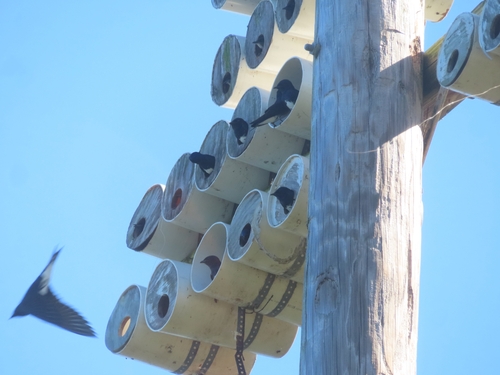 andorinha-do-caribe
Em resumo
A marca de campo mais confiável para separar o purple-throated carib do andorinha-do-caribe é a estrutura geral e a plumagem: o carib é um beija-flor compacto e de cauda curta, com um bico curvado e cores brilhantes e iridescentes, enquanto a andorinha é uma grande andorinha de asas longas, com cauda bifurcada e partes inferiores brancas. Os purple-throated caribs imaturos apresentam uma garganta laranja distinta com manchas vermelhas, diferente de qualquer andorinha. Em voo, as andorinhas têm asas largas e são semelhantes a andorinhas, enquanto os caribs têm batidas de asas rápidas, no estilo dos beija-flores, e pairam. A forma do bico e a estrutura da cauda são indicadores instantâneos se vistos bem. A confusão é mais provável ao ver um pássaro escuro em voo rápido ou à distância, mas a atenção cuidadosa à forma e à cor resolverá a identificação.
Dicas de identificação
- Tamanho e forma: A andorinha-do-caribe é muito maior e mais robusta do que o purple-throated carib. Se o pássaro parecer do tamanho de uma andorinha ou maior, é uma andorinha; se for pequeno e com forma de beija-flor, é um carib.
- Forma do bico: O carib tem um bico de comprimento médio e curvado (mais nas fêmeas), especializado para a alimentação de néctar. A andorinha tem um bico curto, largo e plano, típico das andorinhas. A forma do bico é diagnóstica à curta distância.
- Forma da cauda: A andorinha tem uma cauda distintamente bifurcada, especialmente óbvia em voo ou quando empoleirada. A cauda do carib é curta e quadrada ou ligeiramente arredondada, nunca bifurcada.
- Estilo de voo: O carib paira e faz voos rápidos e ágeis entre as flores; a andorinha desliza, planando e fazendo ataques aéreos para insetos, raramente pairando.
- Plumagem - garganta e peito: O carib adulto tem uma garganta e peito vermelho-púrpura ardente (iridescente), enquanto a andorinha nunca mostra vermelho ou púrpura na garganta. O carib imaturo tem uma garganta laranja com manchas vermelhas, uma marca única não vista nas andorinhas.
- Plumagem - partes inferiores: A andorinha sempre mostra partes inferiores e subcauda brancas, mesmo em fêmeas e juvenis mais apagados. O carib é escuro por baixo com cor iridescente, nunca branca.
- Plumagem - costas e asas: As costas do carib são de um preto aveludado com asas verde-douradas brilhantes; a andorinha é azul-preta brilhante por cima, sem tons verdes ou dourados.
- Diferenças sexuais: Tanto o macho quanto a fêmea dos caribs se parecem, mas a fêmea tem um bico mais longo e mais curvado. Nas andorinhas, os machos são azul-preto brilhante, enquanto as fêmeas/juvenis são mais apagados com tons mais acastanhados.
- Contexto de habitat: O carib é geralmente visto em flores em áreas florestadas ou semi-abertas; a andorinha é frequentemente encontrada em áreas abertas, perto da água, ou empoleirada em fios/prédios.
- Comportamento de empoleiramento: A andorinha empoleira-se verticalmente em fios ou galhos expostos, frequentemente em grupos. O carib empoleira-se mais horizontalmente, geralmente sozinho ou em associação solta com flores.
- Comportamento alimentar: O carib se alimenta em flores (néctar) e às vezes captura insetos; a andorinha é exclusivamente um insetívoro aéreo, nunca vista se alimentando em flores.
- Vocalizações: A andorinha emite um chamado gorgolejante de chew-chew; o carib, se ouvido, emitiria chips ou trilos agudos, não sons semelhantes aos das andorinhas.
- Contexto sazonal: Ambas as espécies estão presentes no Caribe, mas as andorinhas podem ser mais prováveis em áreas abertas ou urbanas, especialmente perto de locais de nidificação.
- Possíveis armadilhas: À distância, uma andorinha em luz forte pode parecer escura e compacta, mas a cauda bifurcada, o ventre branco e as asas largas a separarão do carib. A garganta manchada de laranja do carib imaturo é única e diagnóstica.
- Quando em dúvida: Concentre-se na forma do bico, na estrutura da cauda e na cor das partes inferiores. Essas são as maneiras mais rápidas e confiáveis de separar os dois em campo.
Tamanho
O purple-throated carib é muito menor, medindo 11–12 cm de comprimento e pesando 7–12 g [wikipedia]. A andorinha-do-caribe é uma grande andorinha, com cerca de 18,5 cm de comprimento e pesando 40 g [wikipedia]. A andorinha é quase duas vezes mais longa e várias vezes mais pesada, com um corpo muito mais robusto e asas e cauda mais longas. Mesmo à distância, o tamanho e as proporções da andorinha são notavelmente maiores e mais alongados do que o carib compacto e de cauda curta.
Plumagem
- Contraste imaturo/juvenil: Os purple-throated caribs imaturos têm uma garganta e peito laranja com manchas vermelhas, que é única e não vista em nenhuma idade da andorinha-do-caribe. Juvenis e fêmeas de andorinhas são mais apagados do que os machos adultos, com peito e flancos cinza-acastanhados e partes inferiores brancas, mas nunca mostram gargantas laranja ou manchadas.
- Contraste adulto: Os purple-throated caribs adultos de ambos os sexos têm uma coroa e costas pretas aveludadas, garganta e peito vermelho-púrpura ardente, asas verde-douradas brilhantes e uma cauda verde-azulada metálica. O macho adulto da andorinha é azul-preto brilhante por cima com partes inferiores brancas; fêmeas e juvenis são mais apagados, mas sempre mostram branco na barriga e sob a cauda. O carib nunca mostra partes inferiores brancas, e a andorinha nunca mostra plumagem iridescente vermelha ou verde.
- Padrão das asas: Nenhum painel distinto na parte superior das asas ou marcas na borda traseira são descritos para qualquer uma das espécies, mas as asas da andorinha são largas e adequadas para deslizar, enquanto as do carib são mais estreitas e adaptadas para pairar.
Comportamento
O purple-throated carib se comporta como um típico beija-flor: paira nas flores, se alimenta de néctar e ocasionalmente captura pequenos artrópodes em voo ou da folhagem. Os machos defendem territórios de flores. A andorinha-do-caribe é uma andorinha clássica, caçando insetos em voo com um forte voo planador e frequentemente vista em bandos. Ela nunca paira ou se alimenta em flores. Empoleirada, a andorinha senta-se verticalmente em fios ou galhos, enquanto o carib empoleira-se mais horizontalmente e é frequentemente visto dartando entre flores.
Habitat
O purple-throated carib é encontrado em árvores floridas desde os níveis médios até as copas, frequentemente em áreas florestadas ou semi-abertas onde o néctar está disponível. A andorinha-do-caribe nidifica em cavidades em barrancos, edifícios ou buracos de pica-pau antigos, e é frequentemente vista em áreas abertas, perto da água ou em torno de assentamentos humanos. A andorinha é mais provável de ser encontrada em áreas abertas ou urbanas, enquanto o carib geralmente está em habitats mais vegetados e ricos em flores.
Voz
A andorinha-do-caribe emite um chamado gorgolejante de chew-chew, típico das andorinhas. Nenhuma vocalização é descrita para o purple-throated carib nessas notas, mas os beija-flores geralmente emitem chips ou trilos agudos, muito diferentes dos chamados semelhantes a andorinhas da andorinha.
purple-throated carib · andorinha-do-caribe · Minhas aves difíceis