

Motmot

オウギハチドリ 対 シロハラムラサキツバメ

Eulampis jugularis 対 Progne dominicensis

オウギハチドリとシロハラムラサキツバメのクイズ

オウギハチドリ (Eulampis jugularis) オウギハチドリ
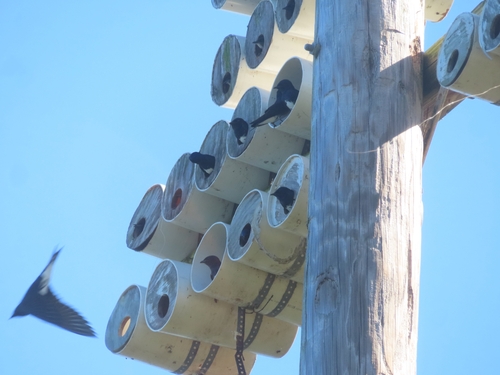
シロハラムラサキツバメ (Progne dominicensis) シロハラムラサキツバメ

メディア

読み込み中…

要点

紫喉ハチドリとシロハラムラサキツバメを区別する最も信頼できるフィールドマークは、全体的な構造と羽毛です:ハチドリは、湾曲したくちばしと輝く虹色の色を持つ、コンパクトで短い尾のハチドリであり、一方でツバメは、大きく、長い翼を持ち、分岐した尾と白い腹部を持つツバメです。未成熟の紫喉ハチドリは、赤い斑点のある特徴的なオレンジ色の喉を示し、ツバメとは異なります。飛行中、ツバメは広い翼を持ち、ツバメのように飛びますが、ハチドリは急速でハチドリスタイルの羽ばたきでホバリングします。くちばしの形と尾の構造は、よく見ればすぐにわかります。暗い鳥を速い飛行で見たり、遠くから見たりすると混乱する可能性がありますが、形と色に注意を払うことで識別が解決されます。

識別のコツ

  1. サイズと形: シロハラムラサキツバメは紫喉ハチドリよりもはるかに大きく、がっしりとしています。鳥がツバメサイズまたはそれ以上に見える場合はツバメです。小さくてハチドリの形をしている場合はハチドリです。
  2. くちばしの形: ハチドリは中程度の長さの湾曲したくちばしを持ち(特に雌において)、蜜を吸うために特化しています。ツバメは短く、広く、平らなくちばしを持ち、ツバメに典型的です。くちばしの形は近距離で診断的です。
  3. 尾の形: ツバメは明確に分岐した尾を持ち、特に飛行中または止まっているときに明らかです。ハチドリの尾は短く、四角またはわずかに丸みを帯びており、決して分岐していません。
  4. 飛行スタイル: ハチドリはホバリングし、花の間を急速に飛び回ります。ツバメは滑空し、上昇し、昆虫のために広範囲に空中で急降下しますが、ホバリングすることはほとんどありません。
  5. 羽毛 - 喉と胸: 成熟したハチドリは、炎のような紫がかった赤の喉と胸(虹色)を持ち、ツバメは喉に赤や紫を示しません。未成熟のハチドリは、赤い斑点のあるオレンジ色の喉を持ち、ツバメには見られない独特のマークです。
  6. 羽毛 - 腹部: ツバメは常に白い下腹部と尾の下部を示し、鈍い雌や幼鳥でもそうです。ハチドリは下側が暗く、虹色の色を持ち、決して白くありません。
  7. 羽毛 - 背中と翼: ハチドリの背中はビロードのような黒で、明るい金色の緑の翼を持っています。ツバメは上面が光沢のある青黒で、緑や金の色調はありません。
  8. 性差: オスとメスのハチドリは似ていますが、メスはより長く、湾曲したくちばしを持っています。ツバメでは、オスは光沢のある青黒で、メスや幼鳥は鈍く、より茶色の色調を持っています。
  9. 生息地の文脈: ハチドリは通常、森林や半開放的な地域の花の近くで見られます。ツバメはしばしば開けた国や水の近く、または電線や建物に止まっているのが見られます。
  10. 止まり方: ツバメは電線や露出した枝に直立して止まり、しばしば群れで見られます。ハチドリはより水平に止まり、通常は一人で、または花との緩やかな関連で見られます。
  11. 餌の取り方: ハチドリは花で餌を取り(蜜)、時々昆虫を捕まえます。ツバメは完全に空中の昆虫食で、花で餌を取ることは決してありません。
  12. 鳴き声: ツバメはゴロゴロとしたチュー・チューという鳴き声を出します。ハチドリは、もし聞こえれば、高音のチップやトリルを出し、ツバメのような音ではありません。
  13. 季節的文脈: 両種はカリブ海に存在しますが、ツバメは特に巣作りの近くで、開けた地域や都市部にいる可能性が高いです。
  14. 潜在的な落とし穴: 遠くから見ると、強い光の中のツバメは暗くてコンパクトに見えるかもしれませんが、分岐した尾、白い腹部、広い翼がハチドリと区別します。未成熟のハチドリのオレンジ色の斑点のある喉は独特で診断的です。
  15. 疑わしい場合: くちばしの形、尾の構造、腹部の色に焦点を当ててください。これらは、フィールドで両者を区別する最も迅速で信頼できる方法です。

大きさ

紫喉ハチドリははるかに小さく、長さは11〜12 cm、体重は7〜12 gです [wikipedia]。シロハラムラサキツバメは大きなツバメで、約18.5 cmの長さと40 gの体重です [wikipedia]。ツバメはほぼ2倍の長さで、数倍重く、はるかに頑丈な体と長い翼と尾を持っています。遠くからでも、ツバメのサイズと比率は、コンパクトで短い尾のハチドリよりも明らかに大きく、より細長いです。

羽色

行動

紫喉ハチドリは典型的なハチドリのように振る舞います:花でホバリングし、蜜を吸い、時々小さな節足動物を翼で捕まえたり、葉から捕まえたりします。オスは花のテリトリーを守ります。シロハラムラサキツバメは典型的なツバメで、強い滑空飛行で空中で昆虫を狩り、しばしば群れで見られます。ホバリングしたり、花で餌を取ったりすることはありません。止まっているとき、ツバメは電線や枝に直立して座り、ハチドリはより水平に止まり、しばしば花の間を急いで移動しているのが見られます。

生息環境

紫喉ハチドリは、蜜が利用可能な森林や半開放的な地域の中層から樹冠の花が咲く木に見られます。シロハラムラサキツバメは、銀行、建物、または古いキツツキの穴の中で繁殖し、しばしば開けた国や水の近く、人間の集落の周りで見られます。ツバメは開けた地域や都市部にいる可能性が高く、ハチドリは通常、より植生が豊かで花が豊富な生息地にいます。

声

シロハラムラサキツバメは、ツバメに典型的なゴロゴロとしたチュー・チューという鳴き声を出します。これらのメモには紫喉ハチドリの鳴き声は記載されていませんが、ハチドリは一般的に高音のチップやトリルを出し、ツバメのような鳴き声とは非常に異なります。

より良い説明を送る

比較と同じ項目を使ってください。文章はすぐに公開されます。

The most reliable field mark to separate Purple-throated Carib from Caribbean Martin is overall structure and plumage: the carib is a compact, short-tailed hummingbird with a decurved bill and brilliant, iridescent colors, while the martin is a large, long-winged swallow with a forked tail and white underparts. Immature Purple-throated Caribs show a distinctive orange throat with red speckles, unlike any martin. In flight, martins are broad-winged and swallow-like, while caribs have rapid, hummingbird-style wingbeats and hover. Bill shape and tail structure are instant giveaways if seen well. Confusion is most likely when seeing a dark bird in fast flight or at a distance, but careful attention to shape and color will resolve the ID.

  1. Size and shape: Caribbean Martin is much larger and bulkier than Purple-throated Carib. If the bird looks swallow-sized or larger, it's a martin; if it's tiny and hummingbird-shaped, it's a carib.
  2. Bill shape: Carib has a medium-length, decurved bill (more so in females), specialized for nectar feeding. Martin has a short, broad, flat bill typical of swallows. Bill shape is diagnostic at close range.
  3. Tail shape: Martin has a distinctly forked tail, especially obvious in flight or when perched. Carib's tail is short and square or slightly rounded, never forked.
  4. Flight style: Carib hovers and makes rapid, darting flights between flowers; martin glides, soars, and makes sweeping aerial sallies for insects, rarely if ever hovering.
  5. Plumage - throat and chest: Adult carib has a fiery purplish-red throat and chest (iridescent), while martin never shows red or purple on the throat. Immature carib has an orange throat with red speckles, a unique mark not seen in martins.
  6. Plumage - underparts: Martin always shows white lower underparts and undertail, even in duller females and juveniles. Carib is dark below with iridescent color, never white.
  7. Plumage - back and wings: Carib's back is velvety black with bright golden green wings; martin is glossy blue-black above, lacking green or gold tones.
  8. Sex differences: Both male and female caribs look alike, but female has a longer, more curved bill. In martins, males are glossier blue-black, females/juveniles are duller with more brownish tones.
  9. Habitat context: Carib is usually seen at flowers in forested or semi-open areas; martin is often in open country, near water, or perched on wires/buildings.
  10. Perching behavior: Martin perches upright on wires or exposed branches, often in groups. Carib perches more horizontally, usually alone or in loose association with flowers.
  11. Feeding behavior: Carib feeds at flowers (nectar) and sometimes catches insects; martin is exclusively aerial insectivore, never seen feeding at flowers.
  12. Vocalizations: Martin gives a gurgly chew-chew call; carib, if heard, would give high-pitched chips or trills, not swallow-like sounds.
  13. Seasonal context: Both species are present in the Caribbean, but martins may be more likely in open or urban areas, especially near nesting sites.
  14. Potential pitfalls: At a distance, a martin in strong light may look dark and compact, but the forked tail, white belly, and broad wings will separate it from the carib. Immature carib's orange-speckled throat is unique and diagnostic.
  15. When in doubt: Focus on bill shape, tail structure, and underpart color. These are the fastest and most reliable ways to separate the two in the field.

Purple-throated Carib is much smaller, measuring 11–12 cm in length and weighing 7–12 g [wikipedia]. Caribbean Martin is a large swallow, about 18.5 cm long and weighing 40 g [wikipedia]. The martin is nearly twice as long and several times heavier, with a much more robust body and longer wings and tail. Even at a distance, the martin's size and proportions are noticeably larger and more elongated than the compact, short-tailed carib.

  • Immature/juvenile contrast: Immature Purple-throated Caribs have an orange throat and chest with red speckles, which is unique and not seen in any age of Caribbean Martin. Juvenile and female martins are duller than adult males, with grey-brown breast and flanks and white lower underparts, but never show orange or speckled throats.
  • Adult contrast: Adult Purple-throated Caribs of both sexes have a velvety black crown and back, fiery purplish-red throat and chest, bright golden green wings, and a metallic greenish-blue tail. The martin adult male is glossy blue-black above with white lower underparts; females and juveniles are duller but always show white on the belly and under the tail. The carib never shows white underparts, and the martin never shows iridescent red or green plumage.
  • Wing pattern: No distinctive upperwing panels or trailing edge marks are described for either species, but the martin's wings are broad and suited for gliding, while the carib's are narrower and adapted for hovering.

Purple-throated Carib behaves like a typical hummingbird: it hovers at flowers, feeds on nectar, and occasionally catches small arthropods on the wing or from foliage. Males defend flower territories. Caribbean Martin is a classic swallow, hunting insects on the wing with strong, gliding flight and often seen in flocks. It never hovers or feeds at flowers. Perched, the martin sits upright on wires or branches, while the carib perches more horizontally and is often seen darting between flowers.

Purple-throated Carib is found in flowering trees from mid-levels to treetops, often in forested or semi-open areas where nectar is available. Caribbean Martin breeds in cavities in banks, buildings, or old woodpecker holes, and is often seen in open country, near water, or around human settlements. The martin is more likely in open or urban areas, while the carib is usually in more vegetated, flower-rich habitats.

Caribbean Martin gives a gurgly chew-chew call, typical of swallows. No vocalization is described for Purple-throated Carib in these notes, but hummingbirds generally give high-pitched chips or trills, very different from the martin's swallow-like calls.

変更を破棄しますか?

保存していない編集があります。今離れると失われます。

オウギハチドリ · シロハラムラサキツバメ · 苦手な鳥