

Purple-throated Carib vs Caribbean Martin
Eulampis jugularis contro Progne dominicensis
Fai un quiz con Purple-throated Carib e Caribbean Martin
 Purple-throated Carib
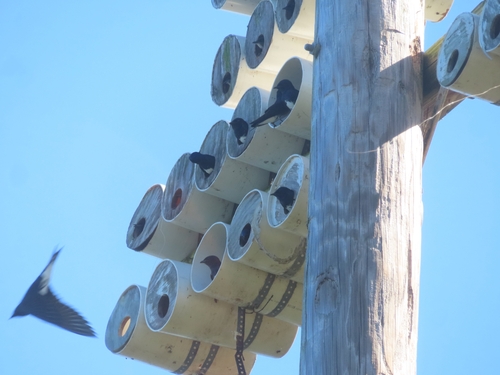 Caribbean Martin
In breve
Il segno distintivo più affidabile per separare il Purple-throated Carib dal Caribbean Martin è la struttura complessiva e il piumaggio: il carib è un colibrì compatto e dalla coda corta con un becco ricurvo e colori brillanti e iridescenti, mentre il martin è una grande rondine dalle ali lunghe con una coda forked e parti inferiori bianche. I Purple-throated Caribs immaturi mostrano una gola arancione distintiva con macchie rosse, a differenza di qualsiasi martin. In volo, i martins hanno ali larghe e un aspetto da rondine, mentre i caribs hanno battiti d'ali rapidi, in stile colibrì, e si librano. La forma del becco e la struttura della coda sono indizi immediati se visti bene. La confusione è più probabile quando si osserva un uccello scuro in volo veloce o a distanza, ma un'attenta attenzione alla forma e al colore risolverà l'identificazione.
Consigli di identificazione
- Dimensione e forma: Il Caribbean Martin è molto più grande e massiccio del Purple-throated Carib. Se l'uccello sembra delle dimensioni di una rondine o più grande, è un martin; se è piccolo e dalla forma di un colibrì, è un carib.
- Forma del becco: Il carib ha un becco di lunghezza media e ricurvo (di più nelle femmine), specializzato per l'alimentazione al nettare. Il martin ha un becco corto, largo e piatto tipico delle rondini. La forma del becco è diagnostica a distanza ravvicinata.
- Forma della coda: Il martin ha una coda nettamente forked, particolarmente evidente in volo o quando è posato. La coda del carib è corta e quadrata o leggermente arrotondata, mai forked.
- Stile di volo: Il carib si libra e compie voli rapidi e fulminei tra i fiori; il martin plana, si libra e compie ampie scorribande aeree per gli insetti, raramente se mai si libra.
- Piumaggio - gola e petto: Il carib adulto ha una gola e un petto rosso purpureo infuocato (iridescente), mentre il martin non mostra mai rosso o viola sulla gola. Il carib immaturo ha una gola arancione con macchie rosse, un segno unico non visto nei martins.
- Piumaggio - parti inferiori: Il martin mostra sempre parti inferiori e sottocoda bianche, anche nelle femmine e nei giovani più opachi. Il carib è scuro sotto con colore iridescente, mai bianco.
- Piumaggio - schiena e ali: La schiena del carib è nera vellutata con ali di un brillante verde dorato; il martin è blu-nerastro lucido sopra, privo di toni verdi o dorati.
- Differenze sessuali: Sia i maschi che le femmine di carib si somigliano, ma la femmina ha un becco più lungo e più ricurvo. Nei martins, i maschi sono blu-nerastri lucidi, le femmine/giovani sono più opachi con toni più marroni.
- Contesto dell'habitat: Il carib è solitamente visto sui fiori in aree forestali o semiaperte; il martin è spesso in campagna aperta, vicino all'acqua, o posato su fili/edifici.
- Comportamento di posizionamento: Il martin si posiziona eretto su fili o rami esposti, spesso in gruppi. Il carib si posiziona più orizzontalmente, di solito da solo o in associazione libera con i fiori.
- Comportamento alimentare: Il carib si nutre di fiori (nettare) e a volte cattura insetti; il martin è esclusivamente un insettiere aereo, mai visto nutrirsi di fiori.
- Vocalizzazioni: Il martin emette un richiamo gorgogliante chew-chew; il carib, se udito, darebbe chip o trilli acuti, non suoni simili a quelli delle rondini.
- Contesto stagionale: Entrambe le specie sono presenti nei Caraibi, ma i martins potrebbero essere più probabili in aree aperte o urbane, specialmente vicino ai siti di nidificazione.
- Possibili insidie: A distanza, un martin in forte luce può sembrare scuro e compatto, ma la coda forked, il ventre bianco e le ali larghe lo separeranno dal carib. La gola macchiata di arancione del carib immaturo è unica e diagnostica.
- Quando in dubbio: Concentrati sulla forma del becco, sulla struttura della coda e sul colore delle parti inferiori. Questi sono i modi più rapidi e affidabili per separare i due sul campo.
Taglia
Il Purple-throated Carib è molto più piccolo, misurando 11–12 cm di lunghezza e pesando 7–12 g [wikipedia]. Il Caribbean Martin è una grande rondine, lunga circa 18,5 cm e pesante 40 g [wikipedia]. Il martin è quasi due volte più lungo e diverse volte più pesante, con un corpo molto più robusto e ali e coda più lunghe. Anche a distanza, la dimensione e le proporzioni del martin sono notevolmente più grandi e più allungate rispetto al carib compatto e dalla coda corta.
Piumaggio
- Contrasto immaturo/giovanile: I Purple-throated Caribs immaturi hanno una gola e un petto arancioni con macchie rosse, che è unico e non visto in nessuna età del Caribbean Martin. I martins giovanili e femminili sono più opachi rispetto ai maschi adulti, con petto e fianchi grigio-marroni e parti inferiori bianche, ma non mostrano mai gole arancioni o macchiate.
- Contrasto adulto: I Purple-throated Caribs adulti di entrambi i sessi hanno una corona e una schiena nere vellutate, una gola e un petto rosso purpureo infuocato, ali di un brillante verde dorato e una coda metallica verde-blu. Il martin maschio adulto è blu-nerastro lucido sopra con parti inferiori bianche; le femmine e i giovani sono più opachi ma mostrano sempre bianco sul ventre e sotto la coda. Il carib non mostra mai parti inferiori bianche, e il martin non mostra mai piumaggio iridescente rosso o verde.
- Schema delle ali: Non sono descritti pannelli distintivi delle ali superiori o segni del bordo posteriore per nessuna delle due specie, ma le ali del martin sono larghe e adatte per planare, mentre quelle del carib sono più strette e adattate per librarsi.
Comportamento
Il Purple-throated Carib si comporta come un tipico colibrì: si libra sui fiori, si nutre di nettare e occasionalmente cattura piccoli artropodi in volo o dalla vegetazione. I maschi difendono i territori floreali. Il Caribbean Martin è una rondine classica, che caccia insetti in volo con un forte volo planato ed è spesso visto in gruppi. Non si libra mai o si nutre di fiori. Posato, il martin si siede eretto su fili o rami, mentre il carib si posiziona più orizzontalmente ed è spesso visto sfrecciare tra i fiori.
Habitat
Il Purple-throated Carib si trova in alberi fioriti da livelli medi fino alle cime degli alberi, spesso in aree forestali o semiaperte dove è disponibile il nettare. Il Caribbean Martin nidifica in cavità in banchi, edifici o vecchi buchi di picchio, ed è spesso visto in campagna aperta, vicino all'acqua, o attorno agli insediamenti umani. Il martin è più probabile in aree aperte o urbane, mentre il carib è solitamente in habitat più vegetati e ricchi di fiori.
Voce
Il Caribbean Martin emette un richiamo gorgogliante chew-chew, tipico delle rondini. Nessuna vocalizzazione è descritta per il Purple-throated Carib in queste note, ma i colibrì generalmente emettono chip o trilli acuti, molto diversi dai richiami simili a quelli delle rondini del martin.
Purple-throated Carib · Caribbean Martin · I miei uccelli difficili