

purple-throated carib vs antillean crested hummingbird
Eulampis jugularis versus Orthorhyncus cristatus
Jogue um quiz com purple-throated carib e antillean crested hummingbird
 purple-throated carib
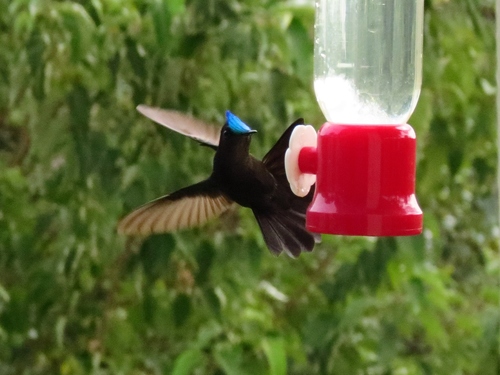 antillean crested hummingbird
Em resumo
A marca de campo mais confiável é a presença de uma crista proeminente verde ou com ponta azul no macho do antillean crested hummingbird—completamente ausente no purple-throated carib de qualquer idade ou sexo. Os purple-throated caribs imaturos apresentam uma garganta laranja com manchas vermelhas, enquanto os imaturos do antillean crested hummingbird não têm isso e, em vez disso, se assemelham a versões mais apagadas dos adultos. O carib é visivelmente maior e mais robusto, com um bico mais longo e mais curvado (especialmente nas fêmeas), enquanto o antillean crested hummingbird é menor, mais compacto e tem um bico curto e reto. Em voo ou empoleirado, a coloração da cauda e das asas também difere, mas a crista e o tamanho são as verificações de campo mais rápidas.
Dicas de identificação
- Presença da crista (machos): Apenas os machos do antillean crested hummingbird têm uma crista proeminente verde ou com ponta azul. Se você ver uma crista, não é um purple-throated carib.
- Forma do bico: O purple-throated carib tem um bico mais longo e mais curvado (especialmente nas fêmeas); o bico do antillean crested hummingbird é curto e reto em ambos os sexos.
- Tamanho e robustez: O carib é muito maior e mais pesado; o crested é visivelmente menor e mais compacto. Se você ver ambos juntos, o tamanho é óbvio.
- Cor da garganta (adultos): O carib tem uma garganta e peito vermelho purpúreo ardente; o macho crested tem partes inferiores pretas esfumaçadas, e a fêmea tem partes inferiores cinza claro.
- Garganta juvenil/imatura: O carib imaturo apresenta garganta laranja com manchas vermelhas; os imaturos do crested não têm isso e são geralmente mais apagados com partes inferiores cinza pálido.
- Cor e padrão da cauda: O carib tem uma cauda verde azulada metálica; o crested tem uma cauda arredondada e escura, com fêmeas mostrando pontas amplas cinza-brancas nas penas externas.
- Partes superiores: A coroa e as costas do carib são pretas aveludadas; as partes superiores do crested são verde metálico bronzeado.
- Dimorfismo sexual: Os sexos do carib se parecem, exceto pelo bico; o crested mostra forte dimorfismo sexual—machos com crista e partes inferiores escuras, fêmeas sem crista e com partes inferiores claras.
- Postura empoleirada: O carib parece robusto, com uma aparência pesada e ligeiramente curvada; o crested é mais ereto e delicado.
- Altura de alimentação: O carib frequentemente se alimenta mais alto na copa das árvores; o crested é mais frequentemente visto em níveis mais baixos ou em áreas abertas.
- Vocalização: Se você ouvir chamados repetidos de "tsip" ou "tslee-tslee", suspeite do crested; o carib é menos vocal ou menos distinto.
- Contexto do habitat: A copa densa da floresta favorece o carib; jardins, bordas e florestas abertas favorecem o crested.
- Confusão de fêmeas: O bico mais longo e mais curvado da fêmea do carib e a falta de pontas claras na cauda ajudam a separá-la da fêmea do crested.
- Cor da crista das subespécies: Se você ver uma crista com pontas azuis, douradas ou violetas, é sempre um crested, mas cuidado com a variação local na cor da crista.
- Sem crista, mas pequeno: Se o pássaro for muito pequeno, compacto e não tiver crista, verifique outras características do crested—fêmeas e machos jovens podem não ter cristas óbvias, mas ainda serão muito menores que o carib.
Tamanho
O purple-throated carib é substancialmente maior (11–12 cm, 7–12 g) em comparação com o antillean crested hummingbird (nenhuma medição direta dada aqui, mas universalmente descrito como muito menor e mais leve [wikipedia]). O carib é robusto e pesado para um beija-flor, enquanto o antillean crested é compacto e leve. Essa diferença de tamanho é geralmente óbvia se ambas as espécies forem vistas na mesma área ou no mesmo alimentador.
Plumagem
- Juvenil/Imaturo: Os purple-throated caribs imaturos têm uma garganta e peito laranja com manchas vermelhas—único entre os beija-flores locais e não encontrado no antillean crested hummingbird de qualquer idade. Os imaturos do antillean crested hummingbird não têm crista e têm partes inferiores cinza claro e uma coroa e partes superiores verde bronzeado, com as penas externas da cauda amplamente pontuadas de cinza claro nas fêmeas.
- Adulto Macho: Os machos e fêmeas do purple-throated carib são semelhantes: coroa e costas pretas aveludadas, garganta e peito vermelho purpúreo ardente, asas verde dourado brilhante, cauda verde azul metálica. Os machos do antillean crested hummingbird têm um bico preto curto e reto, uma crista proeminente verde ou com ponta azul, partes superiores verde metálico bronzeado opaco, partes inferiores pretas esfumaçadas e uma cauda arredondada preta. A garganta do carib é muito mais colorida e extensa do que a preta esfumaçada do crested.
- Adulto Fêmea: A fêmea do carib é como o macho, mas com um bico mais longo e mais curvado. A fêmea do antillean crested hummingbird não tem crista, tem partes superiores verde metálico bronzeado, partes inferiores cinza claro e uma cauda com pontas amplas cinza-brancas nas penas externas.
- Cauda: A cauda do carib é verde azul metálica, enquanto a cauda do antillean crested hummingbird é escura, arredondada, e nas fêmeas, as penas externas são pontuadas de forma clara.
Comportamento
Ambas as espécies são territoriais e agressivas em flores, mas o antillean crested hummingbird é notado por um comportamento especialmente ousado, até mesmo antagônico, não apenas em relação a outros beija-flores, mas também a aves não competidoras, répteis e insetos. Os machos do purple-throated carib defendem territórios de flores durante todo o ano, enquanto as fêmeas apenas fora da temporada de reprodução. O comportamento de alimentação é semelhante, mas o carib frequentemente se alimenta mais alto na copa das árvores. O crested é mais propenso a ser visto ziguezagueando em vegetação mais baixa e até atacando lagartos ou insetos.
Habitat
Ambas as espécies são encontradas em toda a Pequena Antilhas e podem se sobrepor em alcance. O purple-throated carib é mais frequentemente associado aos níveis médios até as copas das árvores de árvores floridas, enquanto o antillean crested hummingbird é mais flexível, ocorrendo em jardins e florestas abertas até bordas de florestas e até parques urbanos. Se visto em uma copa densa e alta, o carib é mais provável; em habitats abertos, arbustivos ou de borda, o crested é mais provável.
Voz
O antillean crested hummingbird emite notas curtas e agudas de "tsip" ou "tzip" e uma série repetida de "tslee-tslee-tslee". Nenhuma vocalização distinta é descrita para o purple-throated carib nas notas fornecidas, então a voz é mais útil para confirmar o crested do que para descartar o carib.
purple-throated carib · antillean crested hummingbird · Minhas aves difíceis