

Motmot

オウギハチドリ 対 アンチルカンムリハチドリ

Eulampis jugularis 対 Orthorhyncus cristatus

オウギハチドリとアンチルカンムリハチドリのクイズ

オウギハチドリ (Eulampis jugularis) オウギハチドリ
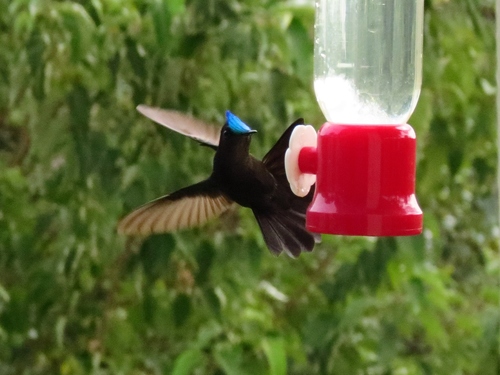
アンチルカンムリハチドリ (Orthorhyncus cristatus) アンチルカンムリハチドリ

メディア

読み込み中…

要点

最も信頼できるフィールドマークは、アンチルカンムリハチドリのオスに見られる目立つ緑または青い先端の冠の存在であり、年齢や性別に関係なくオウギハチドリには完全に欠如しています。未熟なオウギハチドリは赤い斑点のあるオレンジ色の喉を示しますが、アンチルカンムリハチドリの未熟個体はこれを欠き、代わりに成鳥の鈍いバージョンに似ています。オウギハチドリは明らかに大きくてずんぐりしており、特にメスではより長く、より曲がったくちばしを持っていますが、アンチルカンムリハチドリは小さく、よりコンパクトで、短くてまっすぐなくちばしを持っています。飛んでいるときや止まっているときでも、尾と翼の色合いも異なりますが、冠とサイズが最も迅速なフィールドチェックです。

識別のコツ

  1. Crest presence (males): アンチルカンムリハチドリのオスだけが目立つ緑または青い先端の冠を持っています。冠が見えたら、それはオウギハチドリではありません。
  2. Bill shape: オウギハチドリはより長く、より曲がったくちばしを持っています(特にメスの場合);アンチルカンムリハチドリのくちばしは両性ともに短くてまっすぐです。
  3. Size and bulk: オウギハチドリははるかに大きくて重い体を持っています;クレストは明らかに小さくてコンパクトです。両方を一緒に見ると、サイズは明らかです。
  4. Throat color (adults): オウギハチドリは炎のような紫がかった赤の喉と胸を持っています;クレストのオスはすす黒い腹部を持ち、メスは明るい灰色の腹部を持っています。
  5. Juvenile/immature throat: 未熟なオウギハチドリは赤い斑点のあるオレンジ色の喉を示します;クレストの未熟個体はこれを欠き、一般的に鈍い色合いで薄い灰色の腹部を持っています。
  6. Tail color and pattern: オウギハチドリは金属的な緑がかった青の尾を持っています;クレストは黒っぽく、丸みを帯びた尾を持ち、メスは外側の羽に広い白っぽい灰色の先端を示します。
  7. Upperparts: オウギハチドリの冠と背中はビロードのような黒です;クレストの上面は金属的な青銅色の緑です。
  8. Sexual dimorphism: オウギハチドリの性別はくちばしを除いて似ています;クレストは強い性差を示し、オスは冠と暗い腹部を持ち、メスは冠がなく薄い腹部を持っています。
  9. Perched jizz: オウギハチドリは頑丈に見え、重く、やや丸まった外観を持っています;クレストはより直立していて優雅です。
  10. Feeding height: オウギハチドリはしばしば樹冠の高い位置で餌を取ります;クレストはより低いレベルや開けた場所で見られることが多いです。
  11. Vocalization: 繰り返し「tsip」または「tslee-tslee」と呼ぶ声を聞いたら、クレストを疑ってください;オウギハチドリはあまり声を出さないか、特徴が少ないです。
  12. Habitat context: 密な森林の樹冠はオウギハチドリを好みます;庭、エッジ、開けた森林はクレストを好みます。
  13. Female confusion: メスのオウギハチドリのより長く、より曲がったくちばしと薄い尾の先端の欠如は、メスのクレストと区別するのに役立ちます。
  14. Subspecies crest color: 青、金、または紫の先端を持つ冠が見えたら、それは常にクレストですが、冠の色の地域的な変異に注意してください。
  15. No crest, but small size: 鳥が非常に小さく、コンパクトで冠がない場合は、他のクレストの特徴を確認してください—メスや若いオスは明らかな冠を欠くことがありますが、オウギハチドリよりもはるかに小さいです。

大きさ

オウギハチドリはアンチルカンムリハチドリ(ここでは直接の測定は示されていませんが、普遍的にはるかに小さく、軽いと説明されています [wikipedia])と比較してかなり大きい(11–12 cm、7–12 g)です。オウギハチドリはハチドリとしては頑丈で重い体を持っていますが、アンチルカンムリハチドリはコンパクトで軽いです。このサイズの違いは、両種が同じ地域または同じフィーダーで見られる場合には通常明らかです。

羽色

行動

両種は花に対して領土的で攻撃的ですが、アンチルカンムリハチドリは他のハチドリだけでなく、競争相手でない鳥、爬虫類、昆虫に対しても特に大胆で敵対的な行動が見られます。オウギハチドリのオスは年間を通じて花の領土を守り、メスは繁殖期以外では守りません。餌を取る行動は似ていますが、オウギハチドリはしばしば樹冠の高い位置で餌を取ります。クレストはより低い植生の周りを飛び回ったり、トカゲや昆虫を攻撃したりするのが見られることが多いです。

生息環境

両種は小アンティル諸島全体に分布しており、範囲が重なることがあります。オウギハチドリは花の木の中層から樹冠に関連付けられることが多いですが、アンチルカンムリハチドリはより柔軟で、庭や開けた森林から森林のエッジ、さらには都市公園にまで生息しています。密で高い樹冠で見られる場合、オウギハチドリの方が可能性が高く、開けた低木やエッジの生息地ではクレストの方が可能性が高いです。

声

アンチルカンムリハチドリは短く鋭い「tsip」または「tzip」の音と繰り返される「tslee-tslee-tslee」のシリーズを出します。提供されたメモにはオウギハチドリのための特徴的な声は記載されていないため、声はクレストを確認するのに役立ち、オウギハチドリを除外するのにはあまり役立ちません。

より良い説明を送る

比較と同じ項目を使ってください。文章はすぐに公開されます。

The most reliable field mark is the presence of a prominent green or blue-tipped crest on the Antillean Crested Hummingbird male—completely absent in Purple-throated Carib of any age or sex. Immature Purple-throated Caribs show an orange throat with red speckles, while Antillean Crested Hummingbird immatures lack this and instead resemble duller versions of adults. The Carib is noticeably larger and bulkier, with a longer, more decurved bill (especially in females), while the Antillean Crested Hummingbird is smaller, more compact, and has a short, straight bill. In flight or perched, tail and wing coloration also differ, but the crest and size are the quickest field checks.

  1. Crest presence (males): Only Antillean Crested Hummingbird males have a prominent green or blue-tipped crest. If you see a crest, it's not a Purple-throated Carib.
  2. Bill shape: Purple-throated Carib has a longer, more decurved bill (especially in females); Antillean Crested Hummingbird's bill is short and straight in both sexes.
  3. Size and bulk: Carib is much larger and heavier-bodied; Crested is noticeably smaller and more compact. If you see both together, size is obvious.
  4. Throat color (adults): Carib has a fiery purplish red throat and chest; Crested male has sooty black underparts, and female has light grey underparts.
  5. Juvenile/immature throat: Immature Carib shows orange throat with red speckles; Crested immatures lack this and are generally duller with pale grey underparts.
  6. Tail color and pattern: Carib has a metallic greenish blue tail; Crested has a blackish, rounded tail, with females showing broad whitish-grey tips on outer feathers.
  7. Upperparts: Carib's crown and back are velvety black; Crested's upperparts are metallic bronzy-green.
  8. Sexual dimorphism: Carib sexes look alike except for bill; Crested shows strong sexual dimorphism—males with crest and dark underparts, females without crest and with pale underparts.
  9. Perched jizz: Carib appears robust, with a heavy, slightly hunched look; Crested is more upright and dainty.
  10. Feeding height: Carib often feeds higher in the canopy; Crested is more often at lower levels or in open areas.
  11. Vocalization: If you hear repeated "tsip" or "tslee-tslee" calls, suspect Crested; Carib is less vocal or less distinctive.
  12. Habitat context: Dense forest canopy favors Carib; gardens, edges, and open woodlands favor Crested.
  13. Female confusion: Female Carib's longer, more decurved bill and lack of pale tail tips help separate from female Crested.
  14. Subspecies crest color: If you see a crest with blue, gold, or violet tips, it's always Crested, but beware local variation in crest color.
  15. No crest, but small size: If the bird is very small, compact, and lacks a crest, check for other Crested features—female and young males can lack obvious crests but will still be much smaller than Carib.

Purple-throated Carib is substantially larger (11–12 cm, 7–12 g) compared to the Antillean Crested Hummingbird (no direct measurement given here, but universally described as much smaller and lighter [wikipedia]). Carib is robust and heavy-bodied for a hummingbird, while Antillean Crested is compact and light. This size difference is usually obvious if both species are seen in the same area or at the same feeder.

  • Juvenile/Immature: Immature Purple-throated Caribs have an orange throat and chest with red speckles—unique among local hummingbirds and not found in Antillean Crested Hummingbird of any age. Immature Antillean Crested Hummingbirds lack a crest and have light grey underparts and a bronzy-green crown and upperparts, with the outer tail feathers broadly tipped whitish grey in females.
  • Adult Male: Purple-throated Carib males and females are similar: velvety black crown and back, fiery purplish red throat and chest, bright golden green wings, metallic greenish blue tail. Antillean Crested Hummingbird males have a short, straight black bill, a prominent green or blue-tipped crest, dull metallic bronze-green upperparts, sooty black underparts, and a black rounded tail. The Carib's throat is much more colorful and extensive than the Crested's sooty black.
  • Adult Female: Female Carib is like the male but with a longer, more decurved bill. Female Antillean Crested Hummingbird lacks a crest, has metallic bronzy-green upperparts, light grey underparts, and a tail with broad whitish-grey tips on the outer feathers.
  • Tail: Carib tail is metallic greenish blue, while Antillean Crested Hummingbird tail is blackish, rounded, and in females, the outer feathers are tipped pale.

Both species are territorial and aggressive at flowers, but the Antillean Crested Hummingbird is noted for especially bold, even antagonistic, behavior towards not only other hummingbirds but also non-competitor birds, reptiles, and insects. Purple-throated Carib males defend flower territories year-round, females only outside breeding season. Feeding behavior is similar, but the Carib often feeds higher in the canopy. The Crested is more likely to be seen darting around lower vegetation and even attacking lizards or insects.

Both species are found throughout the Lesser Antilles and can overlap in range. Purple-throated Carib is more often associated with mid-levels to treetops of flowering trees, while Antillean Crested Hummingbird is more flexible, occurring from gardens and open woodlands to forest edges and even urban parks. If seen in dense, high canopy, Carib is more likely; in open, shrubby, or edge habitats, Crested is more likely.

Antillean Crested Hummingbird gives short, sharp "tsip" or "tzip" notes and a repeated "tslee-tslee-tslee" series. No distinctive vocalizations are described for Purple-throated Carib in the provided notes, so voice is more helpful for confirming Crested than for ruling out Carib.

変更を破棄しますか?

保存していない編集があります。今離れると失われます。

オウギハチドリ · アンチルカンムリハチドリ · 苦手な鳥