

Purple-throated Carib vs Antillean Crested Hummingbird
Eulampis jugularis contro Orthorhyncus cristatus
Fai un quiz con Purple-throated Carib e Antillean Crested Hummingbird
 Purple-throated Carib
 Antillean Crested Hummingbird
In breve
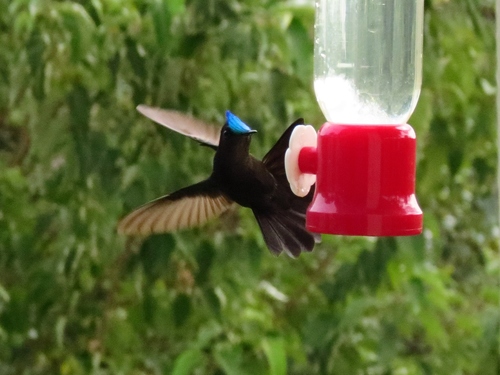
Il segno distintivo più affidabile è la presenza di una cresta prominente verde o blu sulla testa del maschio di Antillean Crested Hummingbird—completamente assente nel Purple-throated Carib di qualsiasi età o sesso. I Purple-throated Caribs immaturi mostrano una gola arancione con macchie rosse, mentre gli immaturi di Antillean Crested Hummingbird non hanno questa caratteristica e assomigliano invece a versioni più opache degli adulti. Il Carib è notevolmente più grande e robusto, con un becco più lungo e ricurvo (soprattutto nelle femmine), mentre l'Antillean Crested Hummingbird è più piccolo, più compatto e ha un becco corto e dritto. In volo o posato, anche la colorazione della coda e delle ali differisce, ma la cresta e le dimensioni sono i controlli più rapidi sul campo.
Consigli di identificazione
- Crest presence (males): Solo i maschi di Antillean Crested Hummingbird hanno una cresta prominente verde o blu. Se vedi una cresta, non è un Purple-throated Carib.
- Bill shape: Il Purple-throated Carib ha un becco più lungo e ricurvo (soprattutto nelle femmine); il becco dell'Antillean Crested Hummingbird è corto e dritto in entrambi i sessi.
- Size and bulk: Il Carib è molto più grande e pesante; il Crested è notevolmente più piccolo e compatto. Se vedi entrambi insieme, le dimensioni sono ovvie.
- Throat color (adults): Il Carib ha una gola e un petto rosso purpureo infuocato; il maschio Crested ha parti inferiori nere fuligginose, e la femmina ha parti inferiori grigie chiare.
- Juvenile/immature throat: Il Carib immaturo mostra una gola arancione con macchie rosse; gli immaturi Crested non hanno questa caratteristica e sono generalmente più opachi con parti inferiori grigie chiare.
- Tail color and pattern: Il Carib ha una coda blu verdastra metallica; il Crested ha una coda nerastra e arrotondata, con le femmine che mostrano punte grigie chiare sulle piume esterne.
- Upperparts: La corona e la schiena del Carib sono nere vellutate; le parti superiori del Crested sono di un verde bronzo metallico.
- Sexual dimorphism: I sessi del Carib si somigliano tranne che per il becco; il Crested mostra un forte dimorfismo sessuale—i maschi con cresta e parti inferiori scure, le femmine senza cresta e con parti inferiori chiare.
- Perched jizz: Il Carib appare robusto, con un aspetto pesante e leggermente curvo; il Crested è più eretto e delicato.
- Feeding height: Il Carib si nutre spesso più in alto nella chioma degli alberi; il Crested è più spesso a livelli più bassi o in aree aperte.
- Vocalization: Se senti ripetuti richiami "tsip" o "tslee-tslee", sospetta il Crested; il Carib è meno vocale o meno distintivo.
- Habitat context: La densa chioma forestale favorisce il Carib; giardini, bordi e boschi aperti favoriscono il Crested.
- Female confusion: Il becco più lungo e ricurvo della femmina Carib e la mancanza di punte chiare sulla coda aiutano a separarla dalla femmina Crested.
- Subspecies crest color: Se vedi una cresta con punte blu, dorate o viola, è sempre Crested, ma fai attenzione alla variazione locale nel colore della cresta.
- No crest, but small size: Se l'uccello è molto piccolo, compatto e privo di cresta, controlla altre caratteristiche del Crested—le femmine e i giovani maschi possono mancare di creste evidenti ma saranno comunque molto più piccoli del Carib.
Taglia
Il Purple-throated Carib è sostanzialmente più grande (11–12 cm, 7–12 g) rispetto all'Antillean Crested Hummingbird (non è fornita qui una misura diretta, ma è universalmente descritto come molto più piccolo e leggero [wikipedia]). Il Carib è robusto e pesante per un colibrì, mentre l'Antillean Crested è compatto e leggero. Questa differenza di dimensioni è solitamente ovvia se entrambe le specie vengono viste nella stessa area o allo stesso mangiatoio.
Piumaggio
- Juvenile/Immature: I Purple-throated Caribs immaturi hanno una gola e un petto arancioni con macchie rosse—unico tra i colibrì locali e non trovato nell'Antillean Crested Hummingbird di qualsiasi età. Gli immaturi di Antillean Crested Hummingbird non hanno una cresta e hanno parti inferiori grigie chiare e una corona e parti superiori verde bronzo, con le piume esterne della coda ampiamente punteggiate di grigio chiaro nelle femmine.
- Adult Male: I maschi e le femmine di Purple-throated Carib sono simili: corona e schiena nere vellutate, gola e petto rossi purpurei infuocati, ali verdi dorate brillanti, coda blu verdastra metallica. I maschi di Antillean Crested Hummingbird hanno un becco corto e dritto nero, una cresta prominente verde o blu, parti superiori di bronzo metallico opaco, parti inferiori nere fuligginose e una coda nera arrotondata. La gola del Carib è molto più colorata ed estesa rispetto a quella nera fuligginosa del Crested.
- Adult Female: La femmina Carib è simile al maschio ma con un becco più lungo e ricurvo. La femmina di Antillean Crested Hummingbird manca di cresta, ha parti superiori di bronzo metallico, parti inferiori grigie chiare e una coda con punte ampie grigie chiare sulle piume esterne.
- Tail: La coda del Carib è blu verdastra metallica, mentre la coda dell'Antillean Crested Hummingbird è nerastra, arrotondata, e nelle femmine, le piume esterne sono punteggiate di chiaro.
Comportamento
Entrambe le specie sono territoriali e aggressive sui fiori, ma l'Antillean Crested Hummingbird è noto per un comportamento particolarmente audace, persino antagonista, non solo verso altri colibrì ma anche verso uccelli non competitivi, rettili e insetti. I maschi di Purple-throated Carib difendono i territori floreali tutto l'anno, le femmine solo al di fuori della stagione di riproduzione. Il comportamento alimentare è simile, ma il Carib si nutre spesso più in alto nella chioma. Il Crested è più probabile che venga visto sfrecciare tra la vegetazione bassa e persino attaccare lucertole o insetti.
Habitat
Entrambe le specie si trovano in tutto il Lesser Antilles e possono sovrapporsi nel loro areale. Il Purple-throated Carib è più spesso associato ai livelli medi fino alle cime degli alberi fioriti, mentre l'Antillean Crested Hummingbird è più flessibile, presente in giardini e boschi aperti fino ai bordi delle foreste e persino nei parchi urbani. Se visto in una chioma densa e alta, è più probabile che sia un Carib; in habitat aperti, cespugliosi o ai bordi, è più probabile che sia un Crested.
Voce
L'Antillean Crested Hummingbird emette note brevi e acute "tsip" o "tzip" e una serie ripetuta "tslee-tslee-tslee". Non sono descritte vocalizzazioni distintive per il Purple-throated Carib nelle note fornite, quindi la voce è più utile per confermare il Crested che per escludere il Carib.
Purple-throated Carib · Antillean Crested Hummingbird · I miei uccelli difficili