

Colibrí Caribeño Gorjimorado vs Colibrí Crestado
Eulampis jugularis frente a Orthorhyncus cristatus
Juega un quiz con Colibrí Caribeño Gorjimorado y Colibrí Crestado
 Colibrí Caribeño Gorjimorado
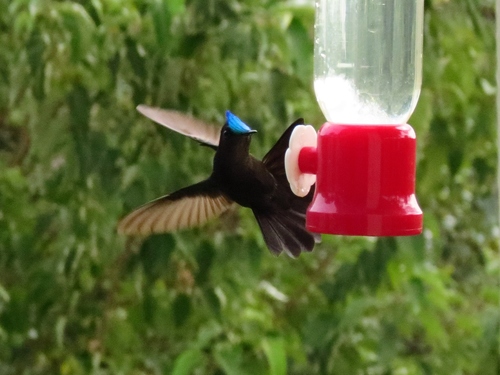 Colibrí Crestado
En breve
La marca de campo más confiable es la presencia de una prominente cresta verde o con punta azul en el macho de Colibrí Crestado—completamente ausente en Colibrí Caribeño Gorjimorado de cualquier edad o sexo. Los Colibríes Caribeños inmaduros muestran una garganta naranja con manchas rojas, mientras que los inmaduros de Colibrí Crestado carecen de esto y en su lugar se asemejan a versiones más apagadas de los adultos. El Carib es notablemente más grande y robusto, con un pico más largo y más curvado (especialmente en las hembras), mientras que el Colibrí Crestado es más pequeño, más compacto y tiene un pico corto y recto. En vuelo o posado, la coloración de la cola y las alas también difiere, pero la cresta y el tamaño son las verificaciones de campo más rápidas.
Consejos de identificación
- Presencia de cresta (machos): Solo los machos de Colibrí Crestado tienen una prominente cresta verde o con punta azul. Si ves una cresta, no es un Colibrí Caribeño Gorjimorado.
- Forma del pico: El Colibrí Caribeño Gorjimorado tiene un pico más largo y más curvado (especialmente en las hembras); el pico del Colibrí Crestado es corto y recto en ambos sexos.
- Tamaño y robustez: El Carib es mucho más grande y de cuerpo más pesado; el Crestado es notablemente más pequeño y más compacto. Si ves ambos juntos, el tamaño es obvio.
- Color de la garganta (adultos): El Carib tiene una garganta y pecho de un rojo purpúreo ardiente; el macho Crestado tiene partes inferiores negras cenicientas, y la hembra tiene partes inferiores gris claro.
- Garganta juvenil/inmadura: El Colibrí Caribeño inmaduro muestra una garganta naranja con manchas rojas; los Crestados inmaduros carecen de esto y son generalmente más apagados con partes inferiores gris pálido.
- Color y patrón de la cola: El Carib tiene una cola verde azul metálica; el Crestado tiene una cola negra redondeada, con las hembras mostrando puntas anchas gris blanquecino en las plumas externas.
- Partes superiores: La corona y la espalda del Carib son de un negro aterciopelado; las partes superiores del Crestado son de un verde bronce metálico.
- Dimorfismo sexual: Los sexos del Carib se parecen excepto por el pico; el Crestado muestra un fuerte dimorfismo sexual—los machos con cresta y partes inferiores oscuras, las hembras sin cresta y con partes inferiores pálidas.
- Postura posada: El Carib parece robusto, con un aspecto pesado y ligeramente encorvado; el Crestado es más erguido y delicado.
- Altura de alimentación: El Carib a menudo se alimenta más alto en el dosel; el Crestado se encuentra más a menudo a niveles más bajos o en áreas abiertas.
- Vocalización: Si escuchas llamados repetidos de "tsip" o "tslee-tslee", sospecha del Crestado; el Carib es menos vocal o menos distintivo.
- Contexto de hábitat: El dosel denso del bosque favorece al Carib; los jardines, bordes y bosques abiertos favorecen al Crestado.
- Confusión de hembras: El pico más largo y más curvado de la hembra del Carib y la falta de puntas de cola pálidas ayudan a separarla de la hembra del Crestado.
- Color de cresta de subespecies: Si ves una cresta con puntas azules, doradas o violetas, siempre es Crestado, pero ten cuidado con la variación local en el color de la cresta.
- Sin cresta, pero tamaño pequeño: Si el ave es muy pequeña, compacta y carece de cresta, verifica otras características del Crestado—las hembras y los machos jóvenes pueden carecer de crestas obvias pero aún serán mucho más pequeños que el Carib.
Tamaño
El Colibrí Caribeño Gorjimorado es sustancialmente más grande (11–12 cm, 7–12 g) en comparación con el Colibrí Crestado (no se proporciona medición directa aquí, pero se describe universalmente como mucho más pequeño y ligero [wikipedia]). El Carib es robusto y de cuerpo pesado para un colibrí, mientras que el Colibrí Crestado es compacto y ligero. Esta diferencia de tamaño es generalmente obvia si ambas especies se ven en la misma área o en el mismo comedero.
Plumaje
- Juvenil/Inmaduro: Los Colibríes Caribeños inmaduros tienen una garganta y pecho naranja con manchas rojas—único entre los colibríes locales y no encontrado en el Colibrí Crestado de ninguna edad. Los Colibríes Crestados inmaduros carecen de cresta y tienen partes inferiores gris claro y una corona y partes superiores verde bronce, con las plumas externas de la cola ampliamente puntadas de gris blanquecino en las hembras.
- Adulto Macho: Los machos y hembras del Colibrí Caribeño Gorjimorado son similares: corona y espalda de un negro aterciopelado, garganta y pecho de un rojo purpúreo ardiente, alas de un verde dorado brillante, cola verde azul metálica. Los machos de Colibrí Crestado tienen un pico negro corto y recto, una prominente cresta verde o con punta azul, partes superiores de un bronce verde metálico apagado, partes inferiores negras cenicientas y una cola redondeada negra. La garganta del Carib es mucho más colorida y extensa que la negra cenicienta del Crestado.
- Adulto Hembra: La hembra del Carib es como el macho pero con un pico más largo y más curvado. La hembra del Colibrí Crestado carece de cresta, tiene partes superiores de un verde bronce metálico, partes inferiores gris claro y una cola con puntas anchas gris blanquecino en las plumas externas.
- Cola: La cola del Carib es verde azul metálica, mientras que la cola del Colibrí Crestado es negra, redondeada, y en las hembras, las plumas externas están puntadas de pálido.
Comportamiento
Ambas especies son territoriales y agresivas en las flores, pero el Colibrí Crestado es conocido por su comportamiento especialmente audaz, incluso antagónico, no solo hacia otros colibríes sino también hacia aves no competidoras, reptiles e insectos. Los machos del Colibrí Caribeño Gorjimorado defienden territorios de flores durante todo el año, las hembras solo fuera de la temporada de cría. El comportamiento de alimentación es similar, pero el Carib a menudo se alimenta más alto en el dosel. El Crestado es más probable que se vea moviéndose rápidamente entre la vegetación baja e incluso atacando lagartijas o insectos.
Hábitat
Ambas especies se encuentran en toda las Antillas Menores y pueden superponerse en su rango. El Colibrí Caribeño Gorjimorado se asocia más a menudo con niveles intermedios hasta las copas de los árboles de flores, mientras que el Colibrí Crestado es más flexible, ocurriendo desde jardines y bosques abiertos hasta bordes de bosques e incluso parques urbanos. Si se ve en un dosel denso y alto, es más probable que sea el Carib; en hábitats abiertos, arbustivos o de borde, es más probable que sea el Crestado.
Voz
El Colibrí Crestado emite notas cortas y agudas de "tsip" o "tzip" y una serie repetida de "tslee-tslee-tslee". No se describen vocalizaciones distintivas para el Colibrí Caribeño Gorjimorado en las notas proporcionadas, por lo que la voz es más útil para confirmar el Crestado que para descartar el Carib.
Colibrí Caribeño Gorjimorado · Colibrí Crestado · Mis aves difíciles