
pink-necked green-pigeon vs yellow-footed green-pigeon
Treron vernans versus Treron phoenicopterus
Jogue um quiz com pink-necked green-pigeon e yellow-footed green-pigeon
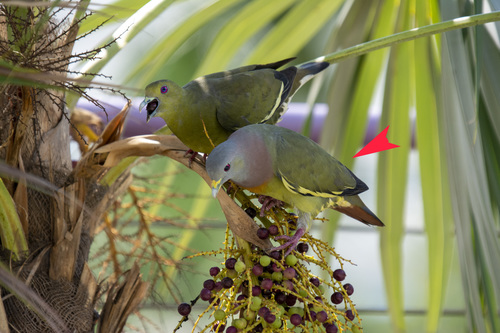 pink-necked green-pigeon
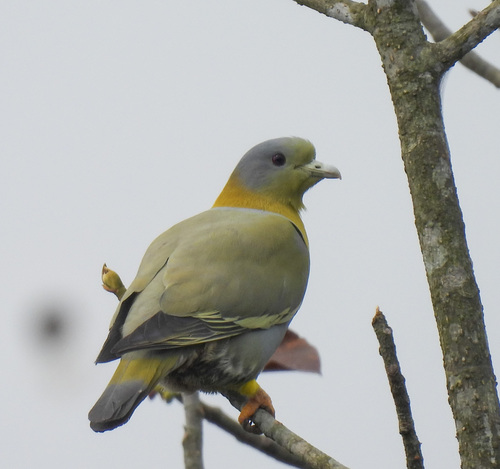 yellow-footed green-pigeon
Em resumo
A marca de campo mais confiável entre o pink-necked green-pigeon e o yellow-footed green-pigeon é o pescoço rosa único e o peito laranja do macho pink-necked, que nunca é exibido pelo yellow-footed. Em voo, o pink-necked de todas as idades mostra uma barra amarela distinta na asa, enquanto o yellow-footed não possui essa característica. Fêmeas e imaturos são mais complicados: ambos são esverdeados, mas o pink-necked é menor e tem uma barriga e rosto amarelados, enquanto o yellow-footed é mais robusto, com pernas e pés amarelos marcantes. Se você ver bem as pernas, o amarelo brilhante do yellow-footed é diagnóstico. Ambos são pombos verdes, mas suas distribuições se sobrepõem apenas em partes do Sudeste Asiático, então a localização pode ajudar. Diferenças de estrutura e plumagem sutis podem confirmar a identificação mesmo quando o clássico macho pink-necked não está presente.
Dicas de identificação
- O pescoço rosa e o peito laranja do macho pink-necked são únicos: Se você ver um pombo com pescoço rosa e peito inferior laranja, é um macho pink-necked. O yellow-footed nunca mostra essas cores no pescoço ou peito.
- Barra amarela na asa (em voo): Todas as idades e sexos do pink-necked mostram uma barra amarela na asa (das tertiais com bordas amarelas) em voo. O yellow-footed nunca mostra essa barra; suas asas são mais uniformemente verdes.
- Cor das pernas (pombos empoleirados): O yellow-footed tem pernas e pés amarelo brilhante ou amarelo-alaranjado, muito óbvios quando empoleirados e diagnósticos se vistos bem. As pernas do pink-necked são rosas ou avermelhadas, nunca amarelas.
- Tamanho e estrutura: O yellow-footed é maior e mais robusto, com um corpo e cauda mais longos. O pink-necked é menor, mais compacto e mais leve.
- Confusão entre fêmeas e imaturos: As fêmeas e os juvenis do pink-necked são esverdeados com uma barriga, garganta e rosto amarelados, e uma coroa/nuca esverdeada. Os juvenis são mais cinzentos acima. As fêmeas e imaturos do yellow-footed são mais verdes uniformes acima e abaixo, e sempre têm pernas amarelas.
- Padrão da cauda: O pink-necked tem uma cauda cinza com uma faixa terminal preta e coberturas superiores castanhas. A cauda do yellow-footed é menos distintamente marcada.
- Cor da cabeça: O macho pink-necked tem uma cabeça cinza; a fêmea pink-necked tem uma coroa e nuca esverdeadas. Os adultos do yellow-footed têm uma coroa e nuca azuladas ou cinzentas, e uma testa e garganta amarelo-esverdeadas.
- Habitat e distribuição: Se estiver na Índia ou no oeste do Sudeste Asiático, especialmente em habitats mais secos ou mais arborizados, o yellow-footed é mais provável. Na Península Malaia, Grandes Sundas ou nas Filipinas, especialmente em jardins ou parques urbanos, o pink-necked é o padrão.
- Comportamento: Ambas as espécies costumam estar em pequenos bandos e se alimentam de frutas, portanto, o comportamento não é um separador forte.
- Cor do bico: O bico do pink-necked é branco, azul-esverdeado pálido ou cinza; a cor do bico do yellow-footed não é diagnóstica aqui.
- Voz: Ambas são silenciosas, mas o pink-necked pode emitir um assobio tri-silábico que termina em um coo; não é uma marca de campo confiável.
- Dimorfismo sexual: Apenas o pink-necked mostra forte dimorfismo sexual (machos com rosa/laranja, fêmeas esverdeadas); o yellow-footed é menos dimórfico, com ambos os sexos semelhantes.
- Armadilhas: O imaturo pink-necked pode parecer muito semelhante às fêmeas do yellow-footed, mas verifique o tamanho, a barra amarela na asa (em voo) e a cor das pernas.
- Quando as marcas falham: Se você não conseguir ver as pernas ou o pássaro estiver em pouca luz, concentre-se no tamanho, na barra da asa em voo e em qualquer indício de rosa/laranja no peito ou pescoço.
- Abundância local: Em parques urbanos e jardins no Sudeste Asiático, o pink-necked é frequentemente abundante e acessível; o yellow-footed é mais provável em ambientes menos urbanos e arborizados.
Tamanho
O yellow-footed green-pigeon é visivelmente maior, atingindo cerca de 33 cm de comprimento, enquanto o pink-necked é de tamanho médio, com 25–30 cm. Essa diferença de tamanho é aparente em comparação direta, com o yellow-footed parecendo mais robusto e com cauda mais longa. O pink-necked também é mais leve (105–160 g) em comparação com o yellow-footed (não especificado aqui, mas consistentemente descrito como maior e mais pesado no gênero).
Plumagem
- Juvenil/Imaturo/Fêmea: Ambas as espécies são esverdeadas, mas o pink-necked (especialmente fêmeas e juvenis) é menor, com uma barriga, garganta e rosto amarelados, e uma coroa e nuca esverdeadas. Os juvenis do pink-necked são mais cinzentos acima do que os adultos. O yellow-footed é mais verde uniforme acima, mas a característica mais marcante são suas pernas e pés amarelo brilhante ou amarelo-alaranjado, visíveis quando empoleirados ou às vezes em voo.
- Macho Adulto: O macho pink-necked é inconfundível com uma cabeça cinza, pescoço rosa e peito superior rosa, e peito inferior laranja, além de uma barra amarela na asa em voo. Os machos do yellow-footed não têm rosa ou laranja no pescoço ou peito, mostrando em vez disso uma coroa/nuca azulada-cinza, testa/garganta amarelo-esverdeadas e um colar amarelo ou amarelo-oliva largo.
- Padrão da Asa (todas as idades): O pink-necked mostra uma barra amarela na asa (das tertiais com bordas amarelas) em voo, que o yellow-footed não possui. Ambos têm asas verdes, mas as do yellow-footed são mais uniformes, sem a barra amarela.
- Cauda: O pink-necked tem uma cauda cinza com uma faixa terminal preta e coberturas superiores castanhas; a cauda do yellow-footed é menos distintamente marcada.
Comportamento
Ambas as espécies são geralmente vistas em pequenos grupos ou bandos, frequentemente se alimentando de frutas em árvores. O pink-necked é mais provável de ser visto em áreas abertas, jardins e parques da cidade, enquanto o yellow-footed é frequentemente encontrado em habitats florestais ou de borda de floresta. Ambas podem ser acessíveis e não são particularmente tímidas. Nenhuma diferença comportamental significativa é diagnóstica em campo.
Habitat
O pink-necked green-pigeon é amplamente distribuído no Sudeste Asiático, preferindo florestas de planície, bordas de floresta, manguezais, jardins, plantações e até parques urbanos. O yellow-footed green-pigeon é comum no subcontinente indiano e em partes do Sudeste Asiático, geralmente em habitats florestais, bordas de floresta e bosques, mas menos frequentemente em áreas urbanas densas. Se você estiver na Índia ou no oeste do Sudeste Asiático, o yellow-footed é mais provável; na Península Malaia, Grandes Sundas ou nas Filipinas, o pink-necked predomina.
Voz
Ambas as espécies são geralmente silenciosas e não muito vocais. O pink-necked green-pigeon produz um chamado assobiado tri-silábico que termina em um coo, e às vezes um "krrak krrak" áspero; não é conhecido por coos persistentes. Os chamados do yellow-footed não são descritos em detalhes aqui, mas não são uma marca de campo primária para separação.
pink-necked green-pigeon · yellow-footed green-pigeon · Minhas aves difíceis