
Pink-necked Green-Pigeon vs Yellow-footed Green-Pigeon
Treron vernans contro Treron phoenicopterus
Fai un quiz con Pink-necked Green-Pigeon e Yellow-footed Green-Pigeon
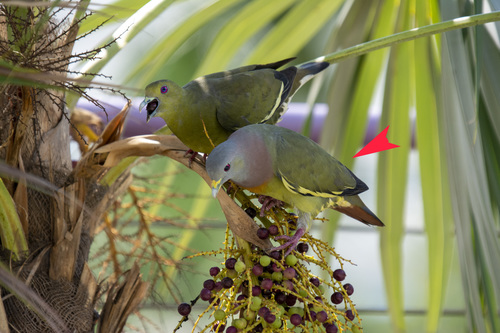 Pink-necked Green-Pigeon
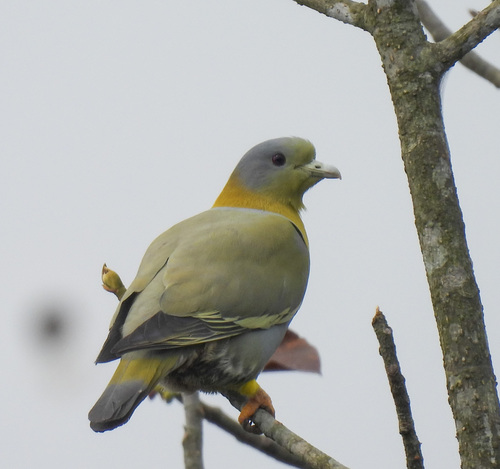 Yellow-footed Green-Pigeon
In breve
Il segno distintivo più affidabile tra Pink-necked e Yellow-footed Green-Pigeon è il collo rosa unico e il petto arancione del maschio Pink-necked, che non è mai mostrato da Yellow-footed. In volo, Pink-necked di tutte le età mostra una barra gialla distintiva attraverso l'ala, mentre Yellow-footed manca di questa caratteristica. Le femmine e gli immaturi sono più complicati: entrambi sono verdastri, ma Pink-necked è più piccolo e ha un ventre e un volto giallastri, mentre Yellow-footed è più robusto con gambe e piedi gialli sorprendenti. Se vedi bene le gambe, il giallo brillante di Yellow-footed è diagnostico. Entrambi sono piccioni verdi, ma i loro areali si sovrappongono solo in alcune parti del sud-est asiatico, quindi la posizione può aiutare. Differenze di struttura e piumaggio sottili possono confermare l'identificazione anche quando il classico maschio Pink-necked non è presente.
Consigli di identificazione
- Il collo rosa e il petto arancione del maschio Pink-necked sono unici: Se vedi un piccione con un collo rosa e un petto inferiore arancione, è un maschio Pink-necked. Yellow-footed non mostra mai questi colori sul collo o sul petto.
- Barra gialla attraverso l'ala (in volo): Tutte le età e i sessi di Pink-necked mostrano una barra gialla attraverso l'ala (da terziali con bordi gialli) in volo. Yellow-footed non mostra mai questa barra; le sue ali sono più uniformemente verdi.
- Colore delle gambe (uccelli in perching): Yellow-footed ha gambe e piedi giallo brillante o giallo-arancione, molto evidenti quando è in perching e diagnostici se visti bene. Le gambe di Pink-necked sono rosa o rossastre, mai gialle.
- Dimensione e struttura: Yellow-footed è più grande e robusto, con un corpo e una coda più lunghi. Pink-necked è più piccolo, più compatto e più leggero.
- Confusione tra femmine e immaturi: Le femmine e i giovani Pink-necked sono verdastri con un ventre, una gola e un volto giallastri, e una corona/nuca verdastra. I giovani sono più grigi sopra. Le femmine e gli immaturi di Yellow-footed sono di un verde più uniforme sopra e sotto, e hanno sempre gambe gialle.
- Schema della coda: Pink-necked ha una coda grigia con una banda terminale nera e copritrici superiori castagne. La coda di Yellow-footed è meno distintamente marcata.
- Colore della testa: Il maschio Pink-necked ha una testa grigia; la femmina Pink-necked ha una corona e una nuca verdastre. Gli adulti di Yellow-footed hanno una corona e una nuca blu-grigia o grigia, e una fronte e una gola giallo-verde.
- Habitat e areale: Se sei in India o nel sud-est asiatico occidentale, specialmente in habitat più secchi o boschivi, Yellow-footed è più probabile. Nella penisola malese, nelle Grandi Isole della Sonda o nelle Filippine, specialmente in giardini o parchi urbani, Pink-necked è il default.
- Comportamento: Entrambe le specie sono spesso in piccoli stormi e si nutrono di frutta, quindi il comportamento non è un forte separatore.
- Colore del becco: Il becco di Pink-necked è bianco, blu-verde pallido o grigio; il colore del becco di Yellow-footed non è diagnostico qui.
- Voce: Entrambi sono silenziosi, ma Pink-necked può emettere un fischio trisillabico che termina in un coo; non è un segno distintivo affidabile.
- Dimorfismo sessuale: Solo Pink-necked mostra un forte dimorfismo sessuale (maschi con rosa/arancione, femmine verdastre); Yellow-footed è meno dimorfico, con entrambi i sessi simili.
- Trappole: Gli immaturi di Pink-necked possono sembrare molto simili alle femmine di Yellow-footed, ma controlla la dimensione, la barra gialla dell'ala (in volo) e il colore delle gambe.
- Quando i segni falliscono: Se non riesci a vedere le gambe o l'uccello è in scarsa luce, concentrati sulla dimensione, sulla barra dell'ala in volo e su qualsiasi accenno di rosa/arancione sul petto o sul collo.
- Abbondanza locale: Nei parchi urbani e nei giardini del sud-est asiatico, Pink-necked è spesso abbondante e avvicinabile; Yellow-footed è più probabile in ambienti boschivi meno urbani.
Taglia
Yellow-footed Green-Pigeon è notevolmente più grande, raggiungendo circa 33 cm di lunghezza, mentre Pink-necked è di dimensioni medie a 25–30 cm. Questa differenza di dimensione è evidente nel confronto diretto, con Yellow-footed che appare più robusto e con una coda più lunga. Pink-necked è anche più leggero (105–160 g) rispetto a Yellow-footed (non specificato qui, ma costantemente descritto come più grande e pesante nel genere).
Piumaggio
- Giovanile/Immaturi/Femmina: Entrambe le specie sono verdastre, ma Pink-necked (soprattutto femmine e giovani) è più piccolo, con un ventre, una gola e un volto giallastri, e una corona e una nuca verdastre. I giovani Pink-necked sono più grigi sopra rispetto agli adulti. Yellow-footed è di un verde più uniforme sopra, ma la caratteristica più sorprendente sono le sue gambe e piedi gialli o giallo-arancioni brillanti, visibili quando è in perching o a volte in volo.
- Maschio adulto: Il maschio Pink-necked è inconfondibile con una testa grigia, collo rosa e petto superiore rosa, e petto inferiore arancione, oltre a una barra gialla attraverso l'ala in volo. I maschi di Yellow-footed non mostrano alcun rosa o arancione sul collo o sul petto, mostrando invece una corona/nuca blu-grigia, fronte/gola giallo-verde e un ampio collare giallo o giallo-oliva.
- Schema dell'ala (tutte le età): Pink-necked mostra una barra gialla attraverso l'ala (da terziali con bordi gialli) in volo, che Yellow-footed manca. Entrambi hanno ali verdi, ma quelle di Yellow-footed sono più uniformi senza la barra gialla.
- Coda: Pink-necked ha una coda grigia con una banda terminale nera e copritrici superiori castagne; la coda di Yellow-footed è meno distintamente marcata.
Comportamento
Entrambe le specie sono solitamente viste in piccoli gruppi o stormi, spesso nutrendosi di frutta sugli alberi. Pink-necked è più probabile da vedere in aree aperte, giardini e parchi cittadini, mentre Yellow-footed è spesso in habitat boschivi o ai margini delle foreste. Entrambi possono essere avvicinabili e non sono particolarmente timidi. Non ci sono differenze comportamentali significative diagnostiche sul campo.
Habitat
Pink-necked Green-Pigeon è diffuso nel sud-est asiatico, preferendo foreste di pianura, margini forestali, mangrovie, giardini, piantagioni e persino parchi urbani. Yellow-footed Green-Pigeon è comune nel subcontinente indiano e in alcune parti del sud-est asiatico, di solito in habitat boschivi, margini forestali e boschetti, ma meno spesso in aree urbane dense. Se sei in India o nel sud-est asiatico occidentale, Yellow-footed è più probabile; nella penisola malese, nelle Grandi Isole della Sonda o nelle Filippine, Pink-necked predomina.
Voce
Entrambe le specie sono generalmente silenziose e non molto vocali. Pink-necked Green-Pigeon produce un richiamo fischiante trisillabico che termina in un coo, e a volte un raschiante "krrak krrak"; non è noto per un coo persistente. I richiami di Yellow-footed non sono descritti in dettaglio qui, ma non sono un segno distintivo primario per la separazione.
Pink-necked Green-Pigeon · Yellow-footed Green-Pigeon · I miei uccelli difficili