

pink-necked green-pigeon vs mindanao jungle flycatcher
Treron vernans versus Vauriella goodfellowi
Jogue um quiz com pink-necked green-pigeon e mindanao jungle flycatcher
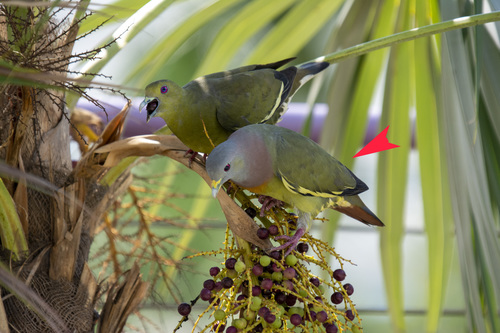 pink-necked green-pigeon
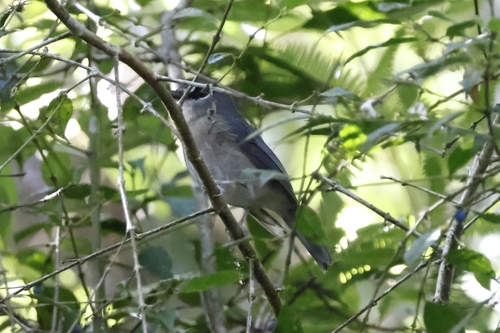 mindanao jungle flycatcher
Em resumo
A marca de campo mais confiável para separar o pink-necked green-pigeon do mindanao jungle flycatcher é a estrutura e cor geral: o pombo é um pássaro robusto, de tamanho médio, com plumagem verde e um bico grosso e, nos machos, um impressionante pescoço rosa, enquanto o flycatcher é muito menor, esguio e acinzentado com um ventre claro, óculos brancos e um bico fino e curvado. Em voo, o pombo exibe uma barra amarela na asa (proveniente das tertiais com bordas amarelas), que nunca está presente no flycatcher. Pombos juvenis podem não ter o pescoço rosa do macho, mas permanecem mais volumosos e verdes do que o flycatcher. As duas espécies diferem dramaticamente em comportamento, habitat e voz, com o pombo frequentemente em áreas abertas de planície e o flycatcher restrito às florestas montanhosas de Mindanao.
Dicas de identificação
- Tamanho e forma: O pink-necked green-pigeon é muito maior e mais volumoso do que o mindanao jungle flycatcher. Mesmo uma fêmea ou um pombo juvenil é visivelmente mais robusto do que o flycatcher, que é esguio e ereto.
- Forma do bico: O pombo tem um bico grosso e claro (branco, azul-esverdeado ou cinza), enquanto o flycatcher tem um bico pequeno e preto com uma ponta curvada. A cor e a forma do bico são visíveis a curta distância.
- Cor das pernas: Ambas as espécies podem apresentar pernas rosadas, mas isso não é um separador forte. Concentre-se em outras marcas.
- Masculino pink-necked green-pigeon: Apenas o macho do pombo tem um pescoço rosa e peito superior com peito inferior laranja—nunca visto no flycatcher. Se você vê rosa ou laranja no pescoço/peito, é o pombo.
- Fêmea/juvenil pombo vs flycatcher: Fêmeas e pombos juvenis não têm o rosa/laranja, mas ainda são esverdeados acima e amarelados abaixo, com uma barra amarela na asa em voo. O flycatcher é sempre cinza-marrom acima e claro abaixo, sem verde ou amarelo.
- Padrão da asa em voo: O pombo mostra uma barra amarela na asa (proveniente das tertiais com bordas amarelas) e primárias pretas—isso é visível em todas as idades e sexos. O flycatcher tem asas marrons simples, sem barras ou painéis.
- Padrão facial: O flycatcher tem óculos brancos e testa, anel ocular escuro e lore, e uma aparência geralmente 'mascarada'. O pombo não tem branco no rosto; os machos têm cabeça cinza e pescoço rosa, as fêmeas são esverdeadas/amareladas.
- Padrão da cauda: O pombo tem uma cauda cinza com uma faixa terminal preta e coberturas superiores castanhas, visíveis quando empoleirado ou em voo. O flycatcher tem uma cauda simples, sem padrão forte.
- Tons de plumagem: O pombo é sempre esverdeado (mesmo em juvenis), com amarelo e às vezes rosa/laranja. O flycatcher é sempre em tons terrosos (cinza-marrom, claro abaixo), sem verde/amarelo/rosa.
- Habitat: O pombo é encontrado em habitats de planície, abertos ou de borda, frequentemente perto de humanos. O flycatcher é restrito às florestas montanhosas de Mindanao—nunca em jardins ou plantações de planície.
- Comportamento: O pombo empoleira-se ereto em galhos expostos, às vezes em grupos, alimentando-se de frutas. O flycatcher é solitário, forrageia baixo em florestas densas e faz curtas investidas para insetos.
- Voz: O pombo emite chamados profundos, assobiantes ou raspantes, raramente vocalizando exceto em dormidas ou quando se alimenta. O flycatcher emite notas rápidas, agudas, que aceleram e desaceleram.
- Distribuição: Se você não está em Mindanao em floresta montanhosa, você quase certamente não está vendo o mindanao jungle flycatcher. O pombo é amplamente distribuído pelo Sudeste Asiático e Filipinas.
- Dimorfismo sexual: Apenas o pombo é sexualmente dimórfico (macho com rosa/laranja, fêmea mais verde/amarela). O flycatcher apresenta pouca ou nenhuma diferença sexual na plumagem.
- Armadilhas: Fêmeas e pombos juvenis podem ser confundidos com outros pombos verdes, mas não com o flycatcher se você verificar o tamanho, a barra da asa e a cor geral. O flycatcher nunca é verde ou amarelo e não tem barra na asa.
Tamanho
O pink-necked green-pigeon é significativamente maior, com 25–30 cm de comprimento e 105–160 g de peso [wikipedia], em comparação com o mindanao jungle flycatcher, que mede 17–18 cm de comprimento e é muito mais leve [wikipedia]. O pombo é robusto e volumoso, com um pescoço grosso e asas largas, enquanto o flycatcher é esguio, com uma postura típica de Muscicapidae, de bico fino e ereto. Mesmo uma fêmea ou um pombo juvenil ofusca o flycatcher em volume e comprimento.
Plumagem
- Comparação juvenil/imatura: Os pombos juvenis pink-necked green-pigeons se assemelham às fêmeas, sendo esverdeados acima e amarelados abaixo, mas geralmente são mais cinzentos nas partes superiores. Eles ainda mostram as asas verdes com primárias pretas e uma barra amarela na asa em voo (proveniente das bordas amarelas das tertiais). Os juvenis do mindanao jungle flycatcher não são descritos em detalhes, mas todas as idades são acinzentadas acima, claras abaixo e não apresentam tons verdes ou amarelos.
- Adulto macho pink-necked green-pigeon: Pescoço rosa impressionante e peito superior, peito inferior laranja, costas verde-oliva, asas verdes com primárias pretas e bordas amarelas nas tertiais (criando uma barra amarela em voo), ventre amarelado, cauda cinza com faixa terminal preta e coberturas superiores castanhas. A fêmea é semelhante, mas não tem o rosa e o laranja, sendo mais uniformemente esverdeada com um ventre e rosto amarelados.
- Mindanao Jungle Flycatcher (todas as idades/sexos): Cinza-claro acima, ventre e garganta mais claros, óculos brancos e testa, anel ocular escuro e lore, pernas rosas e um bico preto com ponta curvada. Sem tons verdes, amarelos ou rosas em nenhum lugar. O efeito geral é suave e em tons terrosos, com um padrão facial distinto.
- Em voo: Apenas o pombo mostra uma barra amarela na asa; o flycatcher tem asas marrons simples, sem painéis ou barras contrastantes.
Comportamento
O pink-necked green-pigeon é frequentemente visto empoleirado ereto em galhos expostos, às vezes em pequenos bandos, alimentando-se de frutas ou voando com batidas de asa fortes e diretas. Pode ser encontrado em jardins, plantações ou bordas de floresta, e é frequentemente conspícuo devido ao seu tamanho e cor. O mindanao jungle flycatcher é um pássaro solitário, silencioso e discreto, tipicamente forrageando baixo em florestas montanhosas densas, saindo para pegar insetos e depois retornando a um poleiro. Seus movimentos são mais delicados e semelhantes aos do flycatcher, com um voo menos óbvio e mais tempo gasto empoleirado em cobertura.
Habitat
O pink-necked green-pigeon é amplamente distribuído e comum em planícies do Sudeste Asiático, encontrado em uma ampla gama de habitats abertos e de borda, incluindo jardins, plantações, florestas secundárias e manguezais, bem como bordas de florestas até elevações moderadas (até 1200 m em Sulawesi, mas geralmente mais baixo em outros lugares) [wikipedia]. O mindanao jungle flycatcher é estritamente endêmico das florestas montanhosas de Mindanao, Filipinas, e não é encontrado em habitats de planície ou abertos. Assim, o contexto é uma pista forte: um pombo verde em um parque da cidade ou área costeira quase certamente não é um flycatcher de selva.
Voz
O pink-necked green-pigeon é geralmente silencioso, mas os machos podem emitir um chamado assobiado tri-silábico que termina em um coo, ou um raspante 'krrak krrak...' em dormidas comunitárias ou quando se alimentando [wikipedia]. O mindanao jungle flycatcher emite uma série de notas rápidas, agudas e repetidas que aceleram e desaceleram, uma canção típica de flycatcher. Os chamados do pombo são mais profundos e mais semelhantes aos de um pombo, enquanto os do flycatcher são mais agudos e semelhantes aos de insetos.
pink-necked green-pigeon · mindanao jungle flycatcher · Minhas aves difíceis