

Motmot

コアオバト 対 ハイイロミツリンヒタキ

Treron vernans 対 Vauriella goodfellowi

コアオバトとハイイロミツリンヒタキのクイズ
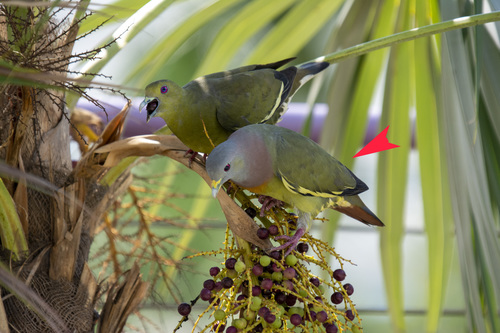
コアオバト (Treron vernans) コアオバト
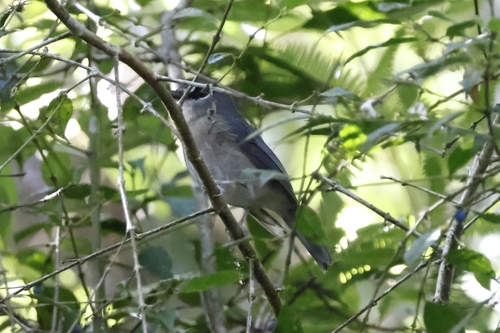
ハイイロミツリンヒタキ (Vauriella goodfellowi) ハイイロミツリンヒタキ

メディア

読み込み中…

要点

ハイイロミツリンヒタキとコアオバトを区別する最も信頼できるフィールドマークは、全体の構造と色です:コアオバトは頑丈で中型の緑色の羽を持つ鳥で、太いくちばしを持ち、オスは目を引くピンクの首を持っています。一方、ハイイロミツリンヒタキはずっと小さく、細身で、茶色がかった灰色で、腹部は淡い色、白い眼鏡模様、細くてフック状のくちばしを持っています。飛行中、コアオバトは翼に黄色のバーを示します(黄色の縁取りのある三次羽から)、これはハイイロミツリンヒタキには決して見られません。幼鳥のコアオバトはオスのピンクの首を欠くことがありますが、ハイイロミツリンヒタキよりもずっとがっしりとして緑色です。これらの2種は、全体的な印象、生息地、声において劇的に異なり、コアオバトはしばしば開けた低地に生息し、ハイイロミツリンヒタキは山地のミンダナオの森に限定されています。

識別のコツ

  1. Size and shape: コアオバトはハイイロミツリンヒタキよりもずっと大きく、がっしりとしています。雌や幼鳥のコアオバトでさえ、細身で直立したハイイロミツリンヒタキよりも明らかに頑丈です。
  2. Bill shape: コアオバトは太く淡い色のくちばし(白、青緑、または灰色)を持ち、ハイイロミツリンヒタキは小さく黒いくちばしを持ち、先端がフック状です。くちばしの色と形は近距離で確認できます。
  3. Leg color: 両種ともにピンクがかった脚を示すことがありますが、これは強い区別要因ではありません。他のマークに注目してください。
  4. Male コアオバト: オスのコアオバトだけがピンクの首とオレンジの下胸を持ち、ハイイロミツリンヒタキには決して見られません。首や胸にピンクやオレンジが見えたら、それはコアオバトです。
  5. Female/juvenile pigeon vs flycatcher: 雌や幼鳥のコアオバトはピンクやオレンジを欠きますが、上面はまだ緑がかり、下面は黄色がかりで、飛行中に翼に黄色のバーがあります。ハイイロミツリンヒタキは常に灰色がかった茶色で、下面は淡い色で、緑や黄色はありません。
  6. Wing pattern in flight: コアオバトは翼に黄色のバーを示し(黄色の縁取りのある三次羽から)、黒い初列風切羽があります—これはすべての年齢と性別で確認できます。ハイイロミツリンヒタキは無地の茶色の翼を持ち、バーやパネルはありません。
  7. Facial pattern: ハイイロミツリンヒタキは白い眼鏡模様と額、暗い眼リングとロア、そして一般的に「マスクされた」外観を持っています。コアオバトは顔に白い部分がなく、オスは灰色の頭とピンクの首を持ち、雌は緑がかりまたは黄色がかりです。
  8. Tail pattern: コアオバトは灰色の尾を持ち、黒い端帯と栗色の上尾羽覆いがあり、止まっているときや飛行中に見えます。ハイイロミツリンヒタキは強いパターンのない無地の尾を持っています。
  9. Plumage tones: コアオバトは常に緑がかりで(幼鳥でも)、黄色や時にはピンク/オレンジがあります。ハイイロミツリンヒタキは常にアーストーン(灰色がかった茶色、下面は淡い色)で、緑や黄色、ピンクはありません。
  10. Habitat: コアオバトは低地の開けた場所やエッジの生息地に見られ、しばしば人間の近くにいます。ハイイロミツリンヒタキはミンダナオの山地の森に限定されており、低地の庭やプランテーションには決して見られません。
  11. Behavior: コアオバトは露出した枝に直立して止まっていることが多く、時には群れで果物を食べています。ハイイロミツリンヒタキは孤独で、密な森の低い位置で餌を探し、昆虫を捕まえるために短い飛び出しを行い、その後止まり木に戻ります。
  12. Voice: コアオバトは深い笛のような音やざらざらした呼び声を出し、群れでの休息時や餌を食べているときにしか声を出しません。ハイイロミツリンヒタキは高音で速い、加速・減速する音を出します。
  13. Range: あなたがミンダナオの山地の森にいない場合、ほぼ確実にハイイロミツリンヒタキを見ていません。コアオバトは東南アジアとフィリピン全体に広がっています。
  14. Sexual dimorphism: コアオバトだけが性的二形性を示します(オスはピンク/オレンジ、雌はより緑/黄色)。ハイイロミツリンヒタキは羽毛において性差がほとんどありません。
  15. Pitfalls: 雌や幼鳥のコアオバトは他の緑色の鳩と間違えられることがありますが、サイズ、翼のバー、全体の色を確認すればハイイロミツリンヒタキとは間違えません。ハイイロミツリンヒタキは決して緑や黄色ではなく、翼のバーもありません。

大きさ

コアオバトは長さ25〜30 cm、体重105〜160 gで、ハイイロミツリンヒタキは長さ17〜18 cmでずっと軽いです [wikipedia]。コアオバトはがっしりとして頑丈で、太い首と広い翼を持ち、ハイイロミツリンヒタキは細身で、Muscicapidaeに典型的な細いくちばしと直立した姿勢を持っています。雌や幼鳥のコアオバトでさえ、体重と長さでハイイロミツリンヒタキを圧倒します。

羽色

行動

コアオバトはしばしば露出した枝に直立して止まっているのが見られ、小さな群れで果物を食べたり、強く直接的な羽ばたきで飛んだりします。庭やプランテーション、または森のエッジに見られ、そのサイズと色のためにしばしば目立ちます。ハイイロミツリンヒタキは孤独で静かで目立たない鳥で、通常は密な山地の森の低い位置で餌を探し、昆虫を捕まえるために飛び出し、その後止まり木に戻ります。その動きはより繊細でハイイロミツリンヒタキのようで、飛行はあまり目立たず、カバーの中で止まっている時間が多いです。

生息環境

コアオバトは東南アジアの低地で広く一般的で、庭、プランテーション、二次林、マングローブ、または中程度の標高(スラウェシでは最大1200 mですが、他の場所ではほとんどが低い)までの森林のエッジを含む広範な開けた場所やエッジの生息地に見られます [wikipedia]。ハイイロミツリンヒタキはミンダナオの山地の森に厳密に特有で、低地や開けた生息地には見られません。したがって、文脈は強い手がかりです:都市公園や沿岸地域にいる緑の鳩は、ほぼ確実にジャングルのハイイロミツリンヒタキではありません。

声

コアオバトは一般的に静かですが、オスは三音節の笛のような呼び声を出し、コーという音で終わることがあります。また、群れでの休息時や餌を食べているときにざらざらした「クラック クラック...」という音を出すこともあります [wikipedia]。ハイイロミツリンヒタキは、高音で速い、繰り返される音のシリーズを出し、加速・減速します。コアオバトの呼び声はより深く、鳩のようなものであり、ハイイロミツリンヒタキの呼び声はより高音で昆虫のようです。

より良い説明を送る

比較と同じ項目を使ってください。文章はすぐに公開されます。

The most reliable field mark to separate Pink-necked Green-Pigeon from Mindanao Jungle Flycatcher is overall structure and color: the pigeon is a robust, medium-sized, green-plumaged bird with a thick bill and, in males, a striking pink neck, while the flycatcher is much smaller, slender, and brownish-gray with a pale belly, white spectacles, and a fine, hooked bill. In flight, the pigeon shows a yellow bar across the wing (from yellow-edged tertials), which is never present on the flycatcher. Juvenile pigeons may lack the male's pink neck but remain bulkier and greener than the flycatcher. The two species differ dramatically in jizz, habitat, and voice, with the pigeon often in open lowland areas and the flycatcher restricted to montane Mindanao forests.

  1. Size and shape: Pink-necked Green-Pigeon is much larger and bulkier than Mindanao Jungle Flycatcher. Even a female or juvenile pigeon is noticeably more robust than the flycatcher, which is slender and upright.
  2. Bill shape: The pigeon has a thick, pale bill (white, blue-green, or grey), while the flycatcher has a small, black bill with a hooked tip. Bill color and shape are visible at close range.
  3. Leg color: Both species may show pinkish legs, but this is not a strong separator. Focus on other marks.
  4. Male Pink-necked Green-Pigeon: Only the male pigeon has a pink neck and upper breast with orange lower breast—never seen in the flycatcher. If you see pink or orange on the neck/breast, it's the pigeon.
  5. Female/juvenile pigeon vs flycatcher: Female and juvenile pigeons lack the pink/orange, but are still greenish above and yellowish below, with a yellow bar across the wing in flight. Flycatcher is always gray-brown above and pale below, with no green or yellow.
  6. Wing pattern in flight: Pigeon shows a yellow bar across the wing (from yellow-edged tertials) and black primaries—this is visible in all ages and sexes. Flycatcher has plain brownish wings with no bars or panels.
  7. Facial pattern: Flycatcher has white spectacles and forehead, dark eyering and lores, and a generally 'masked' look. Pigeon lacks any white on the face; males have a grey head and pink neck, females are greenish/yellowish.
  8. Tail pattern: Pigeon has a grey tail with a black terminal band and chestnut uppertail coverts, visible when perched or in flight. Flycatcher has a plain tail with no strong pattern.
  9. Plumage tones: Pigeon is always greenish (even in juveniles), with yellow and sometimes pink/orange. Flycatcher is always earth-toned (gray-brown, pale below), with no green/yellow/pink.
  10. Habitat: Pigeon is found in lowland, open, or edge habitats, often near humans. Flycatcher is restricted to montane forest on Mindanao—never in lowland gardens or plantations.
  11. Behavior: Pigeon perches upright on exposed branches, sometimes in groups, feeding on fruit. Flycatcher is solitary, forages low in dense forest, and makes short sallies for insects.
  12. Voice: Pigeon gives deep, whistling or rasping calls, rarely vocal except at roosts or when feeding. Flycatcher gives high-pitched, rapid, accelerating/decelerating notes.
  13. Range: If you are not on Mindanao in montane forest, you are almost certainly not seeing Mindanao Jungle Flycatcher. Pigeon is widespread across Southeast Asia and the Philippines.
  14. Sexual dimorphism: Only the pigeon is sexually dimorphic (male with pink/orange, female more green/yellow). Flycatcher shows little to no sex difference in plumage.
  15. Pitfalls: Female and juvenile pigeons can be mistaken for other green pigeons, but not for the flycatcher if you check for size, wing bar, and overall color. Flycatcher is never green or yellow and lacks any wing bar.

Pink-necked Green-Pigeon is significantly larger, at 25–30 cm in length and 105–160 g in weight [wikipedia], compared to the Mindanao Jungle Flycatcher, which is 17–18 cm long and much lighter [wikipedia]. The pigeon is stocky and robust, with a thick neck and broad wings, while the flycatcher is slender, with a fine-billed, upright posture typical of Muscicapidae. Even a female or juvenile pigeon dwarfs the flycatcher in bulk and length.

  • Juvenile/immature comparison: Juvenile Pink-necked Green-Pigeons resemble females, being greenish above and yellowish below, but are generally greyer on the upperparts. They still show the green wings with black primaries and a yellow bar across the wing in flight (from yellow tertial edges). Mindanao Jungle Flycatcher juveniles are not described in detail, but all ages are brownish-gray above, pale below, and lack any green or yellow tones.
  • Adult male Pink-necked Green-Pigeon: Striking pink neck and upper breast, orange lower breast, olive-green back, green wings with black primaries and yellow tertial edges (creating a yellow bar in flight), yellowish belly, grey tail with black terminal band, and chestnut uppertail coverts. Female is similar but lacks the pink and orange, being more uniformly greenish with a yellowish belly and face.
  • Mindanao Jungle Flycatcher (all ages/sexes): Pale gray-brown above, lighter belly and throat, white spectacles and forehead, dark eyering and lores, pink legs, and a black bill with a hooked tip. No green, yellow, or pink tones anywhere. The overall effect is muted and earth-toned, with a distinctive facial pattern.
  • In flight: Only the pigeon shows a yellow bar across the wing; the flycatcher has plain brownish wings with no contrasting panels or bars.

Pink-necked Green-Pigeon is often seen perched upright on exposed branches, sometimes in small flocks, feeding on fruit, or flying with strong, direct wingbeats. It may be found in gardens, plantations, or forest edge, and is often conspicuous due to its size and color. Mindanao Jungle Flycatcher is a solitary, quiet, and unobtrusive bird, typically foraging low in dense montane forest, sallying out to catch insects and then returning to a perch. Its movements are more delicate and flycatcher-like, with less obvious flight and more time spent perched in cover.

Pink-necked Green-Pigeon is widespread and common in lowland Southeast Asia, found in a wide range of open and edge habitats, including gardens, plantations, secondary forest, and mangroves, as well as forest edge up to moderate elevations (up to 1200 m in Sulawesi, but mostly lower elsewhere) [wikipedia]. Mindanao Jungle Flycatcher is strictly endemic to montane forests of Mindanao, Philippines, and is not found in lowland or open habitats. Thus, context is a strong clue: a green pigeon in a city park or coastal area is almost certainly not a jungle flycatcher.

Pink-necked Green-Pigeon is generally quiet, but males may give a tri-syllabic whistling call ending in a coo, or a rasping 'krrak krrak...' at communal roosts or when feeding [wikipedia]. Mindanao Jungle Flycatcher gives a series of rapid, high-pitched, repeated notes that accelerate and decelerate, a typical flycatcher song. The pigeon's calls are deeper and more pigeon-like, while the flycatcher's are higher-pitched and insect-like.

変更を破棄しますか?

保存していない編集があります。今離れると失われます。

コアオバト · ハイイロミツリンヒタキ · 苦手な鳥