

Pink-necked Green-Pigeon vs Mindanao Jungle Flycatcher
Treron vernans contro Vauriella goodfellowi
Fai un quiz con Pink-necked Green-Pigeon e Mindanao Jungle Flycatcher
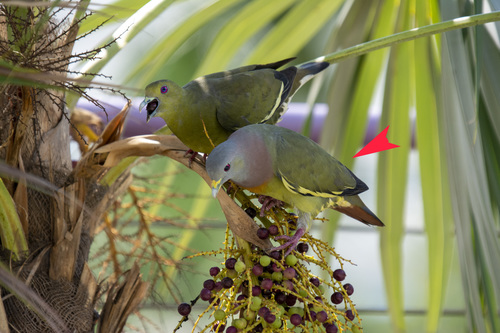 Pink-necked Green-Pigeon
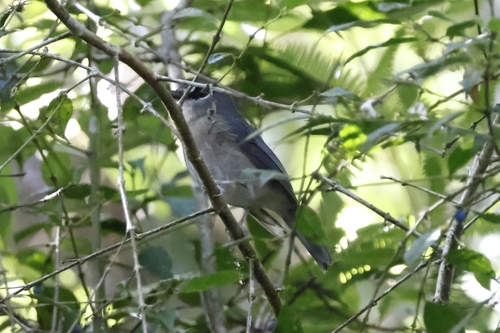 Mindanao Jungle Flycatcher
In breve
Il segno distintivo più affidabile per separare il Pink-necked Green-Pigeon dal Mindanao Jungle Flycatcher è la struttura e il colore complessivi: il piccione è un uccello robusto, di taglia media, con piumaggio verde e un becco spesso e, nei maschi, un collo rosa sorprendente, mentre il flycatcher è molto più piccolo, snello e grigio-marrone con un ventre chiaro, occhiali bianchi e un becco fine e ricurvo. In volo, il piccione mostra una barra gialla attraverso l'ala (dai terziali con bordo giallo), che non è mai presente nel flycatcher. I piccioni giovani possono mancare del collo rosa del maschio ma rimangono più robusti e verdi rispetto al flycatcher. Le due specie differiscono drammaticamente in jizz, habitat e voce, con il piccione spesso in aree aperte di pianura e il flycatcher limitato alle foreste montane di Mindanao.
Consigli di identificazione
- Dimensioni e forma: Il Pink-necked Green-Pigeon è molto più grande e robusto del Mindanao Jungle Flycatcher. Anche una femmina o un piccione giovane è visibilmente più robusto del flycatcher, che è snello e eretto.
- Forma del becco: Il piccione ha un becco spesso e chiaro (bianco, blu-verde o grigio), mentre il flycatcher ha un piccolo becco nero con una punta ricurva. Il colore e la forma del becco sono visibili da vicino.
- Colore delle zampe: Entrambe le specie possono mostrare zampe rossastre, ma questo non è un separatore forte. Concentrati su altri segni.
- Maschio Pink-necked Green-Pigeon: Solo il maschio piccione ha un collo rosa e un petto superiore con un petto inferiore arancione—mai visto nel flycatcher. Se vedi rosa o arancione sul collo/petto, è il piccione.
- Femmina/piccolo piccione vs flycatcher: Le femmine e i piccioni giovani mancano del rosa/arancione, ma sono ancora verdastri sopra e giallastri sotto, con una barra gialla attraverso l'ala in volo. Il flycatcher è sempre grigio-marrone sopra e chiaro sotto, con nessun verde o giallo.
- Schema dell'ala in volo: Il piccione mostra una barra gialla attraverso l'ala (dai terziali con bordo giallo) e primarie nere—questo è visibile in tutte le età e sessi. Il flycatcher ha ali marroni semplici senza barre o pannelli.
- Schema facciale: Il flycatcher ha occhiali bianchi e fronte, anello oculare scuro e lore, e un aspetto generalmente 'mascherato'. Il piccione non ha bianco sul viso; i maschi hanno una testa grigia e un collo rosa, le femmine sono verdastre/giallastre.
- Schema della coda: Il piccione ha una coda grigia con una banda terminale nera e copritrici superiori castanee, visibili quando è posato o in volo. Il flycatcher ha una coda semplice senza un forte schema.
- Toni del piumaggio: Il piccione è sempre verdastro (anche nei giovani), con giallo e talvolta rosa/arancione. Il flycatcher è sempre di tonalità terrose (grigio-marrone, chiaro sotto), senza verde/giallo/rosa.
- Habitat: Il piccione si trova in habitat di pianura, aperti o di margine, spesso vicino agli esseri umani. Il flycatcher è limitato alla foresta montana di Mindanao—mai in giardini o piantagioni di pianura.
- Comportamento: Il piccione si posiziona eretto su rami esposti, a volte in gruppi, nutrendosi di frutta. Il flycatcher è solitario, cerca cibo in basso in foreste dense, e compie brevi voli per catturare insetti.
- Voce: Il piccione emette richiami profondi, fischianti o raschianti, raramente vocali tranne che nei dormitori o quando si nutre. Il flycatcher emette note acute, rapide, che accelerano e decelerano.
- Distribuzione: Se non sei a Mindanao in foresta montana, quasi certamente non stai vedendo Mindanao Jungle Flycatcher. Il piccione è diffuso in tutta l'Asia sudorientale e nelle Filippine.
- Dimorfismo sessuale: Solo il piccione è sessualmente dimorfico (maschio con rosa/arancione, femmina più verde/gialla). Il flycatcher mostra poche o nessuna differenza sessuale nel piumaggio.
- Trappole: Le femmine e i piccioni giovani possono essere scambiati per altri piccioni verdi, ma non per il flycatcher se controlli le dimensioni, la barra dell'ala e il colore complessivo.
Taglia
Il Pink-necked Green-Pigeon è significativamente più grande, con una lunghezza di 25–30 cm e un peso di 105–160 g [wikipedia], rispetto al Mindanao Jungle Flycatcher, che è lungo 17–18 cm e molto più leggero [wikipedia]. Il piccione è tozzo e robusto, con un collo spesso e ali larghe, mentre il flycatcher è snello, con una postura tipica di Muscicapidae, con becco fine e eretto. Anche una femmina o un piccione giovane sovrasta il flycatcher in bulk e lunghezza.
Piumaggio
- Confronto giovanile/immaturo: I giovani Pink-necked Green-Pigeons assomigliano alle femmine, essendo verdastri sopra e giallastri sotto, ma sono generalmente più grigi nelle parti superiori. Mostrano ancora le ali verdi con primarie nere e una barra gialla attraverso l'ala in volo (dai bordi terziali gialli). I giovani del Mindanao Jungle Flycatcher non sono descritti in dettaglio, ma tutte le età sono grigio-marroni sopra, chiari sotto, e mancano di toni verdi o gialli.
- Maschio adulto Pink-necked Green-Pigeon: Collo rosa sorprendente e petto superiore, petto inferiore arancione, dorso verde oliva, ali verdi con primarie nere e bordi terziali gialli (creando una barra gialla in volo), ventre giallastro, coda grigia con banda terminale nera e copritrici superiori castanee. La femmina è simile ma manca del rosa e dell'arancione, essendo più uniformemente verdastra con un ventre e un viso giallastri.
- Mindanao Jungle Flycatcher (tutte le età/sessi): Grigio-marrone chiaro sopra, ventre e gola più chiari, occhiali bianchi e fronte, anello oculare scuro e lore, zampe rosa e un becco nero con una punta ricurva. Nessun tono verde, giallo o rosa ovunque. L'effetto complessivo è attenuato e di tonalità terrosa, con un distintivo schema facciale.
- In volo: Solo il piccione mostra una barra gialla attraverso l'ala; il flycatcher ha ali marroni semplici senza pannelli o barre contrastanti.
Comportamento
Il Pink-necked Green-Pigeon è spesso visto posato eretto su rami esposti, a volte in piccoli gruppi, nutrendosi di frutta, o volando con forti battiti d'ala diretti. Può essere trovato in giardini, piantagioni o ai margini delle foreste, ed è spesso evidente a causa delle sue dimensioni e del suo colore. Il Mindanao Jungle Flycatcher è un uccello solitario, silenzioso e discreto, tipicamente in cerca di cibo in basso in foreste montane dense, lanciandosi per catturare insetti e poi tornando a un posatoio. I suoi movimenti sono più delicati e simili a quelli del flycatcher, con un volo meno evidente e più tempo trascorso posato in copertura.
Habitat
Il Pink-necked Green-Pigeon è diffuso e comune nelle pianure del sud-est asiatico, trovato in una vasta gamma di habitat aperti e di margine, tra cui giardini, piantagioni, foreste secondarie e mangrovie, così come ai margini delle foreste fino a elevazioni moderate (fino a 1200 m in Sulawesi, ma per lo più più basse altrove) [wikipedia]. Il Mindanao Jungle Flycatcher è strettamente endemico delle foreste montane di Mindanao, Filippine, e non si trova in habitat di pianura o aperti. Pertanto, il contesto è un forte indizio: un piccione verde in un parco cittadino o in un'area costiera è quasi certamente non un flycatcher di giungla.
Voce
Il Pink-necked Green-Pigeon è generalmente silenzioso, ma i maschi possono emettere un richiamo fischiante tri-sillabico che termina in un coo, o un raschiante 'krrak krrak...' nei dormitori comuni o quando si nutrono [wikipedia]. Il Mindanao Jungle Flycatcher emette una serie di note rapide, acute e ripetute che accelerano e decelerano, una tipica canzone del flycatcher. I richiami del piccione sono più profondi e più simili a quelli del piccione, mentre quelli del flycatcher sono più acuti e simili a quelli degli insetti.
Pink-necked Green-Pigeon · Mindanao Jungle Flycatcher · I miei uccelli difficili