

tartaranhão-pálido vs pied harrier
Circus macrourus versus Circus melanoleucos
Jogue um quiz com tartaranhão-pálido e pied harrier
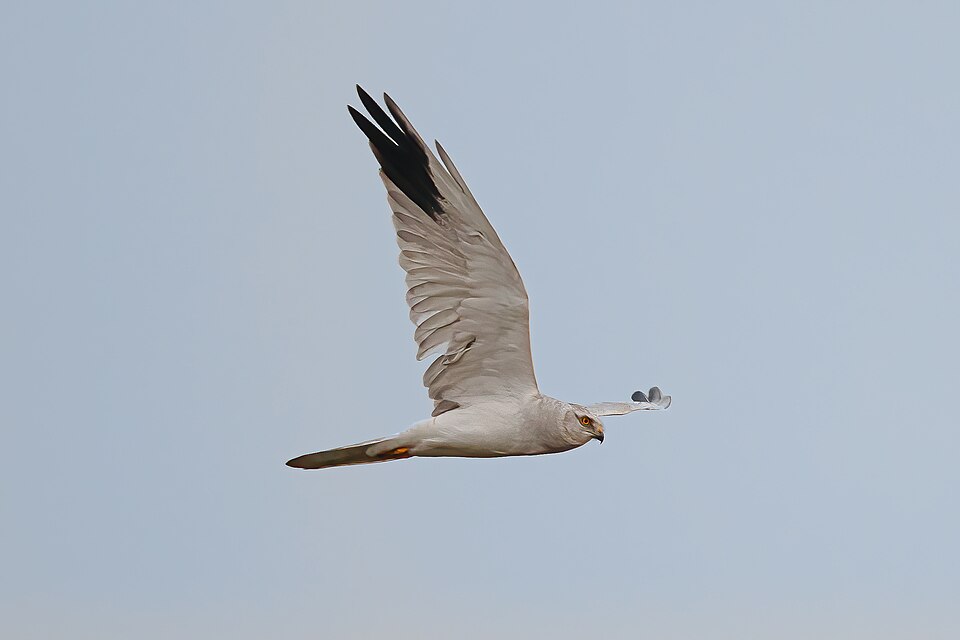 tartaranhão-pálido
 pied harrier
Em resumo
A marca de campo mais confiável entre o tartaranhão-pálido e o pied harrier é a plumagem do macho adulto: os machos do tartaranhão-pálido são cinza claro por cima e brancos por baixo, com apenas pontas de asas pretas estreitas, enquanto os machos do pied harrier são impressionantemente pretos e brancos, com cabeça, costas e peito pretos contrastando fortemente com as partes inferiores brancas e a asa anterior. Para fêmeas e juvenis, a separação é muito mais complicada, pois ambos são marrons por cima e claros por baixo, com listras, mas o tartaranhão-pálido tende a ter uma barriga mais clara e um padrão facial mais definido. Em voo, ambas as espécies mostram asas longas e estreitas mantidas em um V raso, mas as asas do pied harrier são ligeiramente mais arredondadas nas pontas e a cauda é mais arredondada. O juvenil do pied harrier é mais escuro por cima e mais rico em canela por baixo do que o tartaranhão-pálido, que é mais claro. Use uma combinação de cor das partes inferiores, padrão facial e forma das asas/cauda para ter a melhor chance de uma identificação positiva.
Dicas de identificação
- A plumagem do macho adulto é a melhor marca de campo: Os machos do tartaranhão-pálido são cinza claro por cima e brancos por baixo, com apenas pontas de asas pretas estreitas; os machos do pied harrier são pretos e brancos, com cabeça, pescoço, costas e peito pretos, e asa anterior, rabo e partes inferiores brancas. Se você ver um harrier preto e branco, é o pied; se for cinza claro e branco, é o tartaranhão-pálido.
- Fêmeas e juvenis são muito mais complicados: Ambos são marrons por cima e claros por baixo, com listras. O tartaranhão-pálido tende a ter uma barriga mais clara e mais clara e um padrão facial mais definido (colar pálido e disco facial), enquanto o pied é mais escuro por cima e por baixo, com partes inferiores em canela mais ricas nos juvenis.
- Padrão facial: Procure um disco facial pálido bem definido e um colar nas fêmeas/juvenis do tartaranhão-pálido; o padrão facial do pied é menos distinto.
- Cor das partes inferiores: As fêmeas/juvenis do tartaranhão-pálido são mais claras e pálidas por baixo; as fêmeas/juvenis do pied são geralmente mais escuras, com mais contraste e tons de canela mais ricos nos juvenis.
- Mancha do rabo: Ambos mostram um rabo branco, mas o do pied é menor e mais bem definido; o do tartaranhão-pálido pode parecer maior e menos bem delimitado.
- Forma da asa em voo: As asas do pied harrier são ligeiramente mais arredondadas nas pontas e a cauda mais arredondada; as asas do tartaranhão-pálido são mais estreitas e a cauda mais quadrada. Isso é sutil e melhor visto em comparação direta.
- Estilo de voo: Ambas as espécies voam com asas longas e estreitas mantidas em um V raso, planando e pairando com batidas de asas leves e lentas. Não há diferença forte, mas o pied pode parecer ligeiramente mais 'arredondado' em contorno.
- Cor dos olhos: O macho adulto do pied tem olhos amarelos, a fêmea tem olhos marrons; não é confiável à distância.
- Comportamento de empoleiramento: Ambos empoleiram-se no chão ou em postes/juncos, raramente em árvores. Não é diagnóstico.
- Contexto geográfico: Se estiver na Europa Ocidental, o tartaranhão-pálido é muito mais provável; no sudeste asiático, ambos são possíveis no inverno.
- Tamanho: Ambos são muito semelhantes em tamanho e estrutura; não é uma marca de campo confiável.
- Confusão juvenil: Ambos os juvenis se assemelham ao juvenil da águia-caçadeira, mas o pied é mais escuro por cima e mais rico em canela por baixo, enquanto o tartaranhão-pálido é mais claro e mais pálido.
- Dimorfismo sexual: Apenas os machos adultos são verdadeiramente distintos; fêmeas e juvenis são muito semelhantes entre as duas espécies e à águia-caçadeira. Use uma combinação de marcas.
- Quando em dúvida: Foque na cor das partes inferiores (mais clara no tartaranhão-pálido, mais rica/escura no pied), padrão facial (mais nítido no tartaranhão-pálido) e contraste geral (maior no pied).
Tamanho
Ambas as espécies são muito semelhantes em tamanho, com o tartaranhão-pálido pesando em média um pouco mais (383,5g vs 355,0g [wikidata]). Ambas medem cerca de 40–49 cm de comprimento, com envergaduras na faixa de 95–120 cm. As fêmeas são maiores que os machos em ambas as espécies, mas a diferença é sutil e não confiável em campo. As proporções estruturais também são semelhantes, embora as asas do pied harrier sejam descritas como ligeiramente mais arredondadas nas pontas e a cauda como mais arredondada, enquanto as asas do tartaranhão-pálido são mais estreitas no geral.
Plumagem
-
Juvenis e Fêmeas: As fêmeas e juvenis de ambas as espécies são marrons por cima e claras por baixo, com listras, mas as fêmeas/juvenis do tartaranhão-pálido têm uma barriga mais clara e mais pálida e um padrão facial mais bem definido (especialmente o colar pálido e o disco facial), enquanto as fêmeas/juvenis do pied harrier são geralmente mais escuras por cima, com mais contraste e um pequeno rabo branco. O juvenil do pied harrier é mais escuro por cima do que a fêmea adulta, com partes inferiores ricas em canela, enquanto o juvenil do tartaranhão-pálido é mais claro por baixo. Ambos podem mostrar um padrão de 'cauda anelada' (coberturas de cauda superiores brancas), mas o contraste facial é mais forte no tartaranhão-pálido.
-
Machos Adultos: Os machos do tartaranhão-pálido são cinza claro por cima, brancos por baixo, com apenas pontas de asas pretas estreitas. Os machos do pied harrier são dramaticamente pied: cabeça, pescoço, costas e peito pretos, com asa anterior, rabo e partes inferiores brancas. O contraste preto e branco do pied é único e diagnóstico.
-
Asas e Cauda: Em voo, ambos mostram asas longas e estreitas mantidas em um V raso. As asas do pied harrier são ligeiramente mais arredondadas nas pontas e a cauda é mais arredondada, enquanto as asas do tartaranhão-pálido são mais estreitas e a cauda é mais quadrada. Ambos têm um rabo branco, mas a extensão e o contraste são maiores no pied.
-
Olhos: O macho adulto do pied tem olhos amarelos impressionantes; a fêmea tem olhos marrons. A cor dos olhos não é uma marca de campo forte à distância.
Comportamento
Ambas as espécies caçam baixo sobre o solo aberto com voo leve e planador intercalado com batidas de asas lentas. Ambos empoleiram-se no chão ou em postes/juncos, raramente em árvores. O pied harrier é descrito como principalmente solitário, mas pode formar grupos soltos, semelhante ao tartaranhão-pálido. Não há separação comportamental forte disponível nas fontes.
Habitat
Ambas as espécies ocorrem em campos abertos, pântanos e campos. O tartaranhão-pálido se reproduz do leste da Europa até a Ásia Central e inverna na Índia e no sudeste asiático, enquanto o pied harrier é endêmico da Ásia, do sul da Sibéria às Filipinas. Suas áreas de invernada se sobrepõem na Índia e no sudeste asiático. Ambos são raros vagantes fora de sua área principal, mas o tartaranhão-pálido é um raro vagante na Europa Ocidental, enquanto o pied não é.