

Motmot

ウスハイイロチュウヒ 対 マダラチュウヒ

Circus macrourus 対 Circus melanoleucos

ウスハイイロチュウヒとマダラチュウヒのクイズ
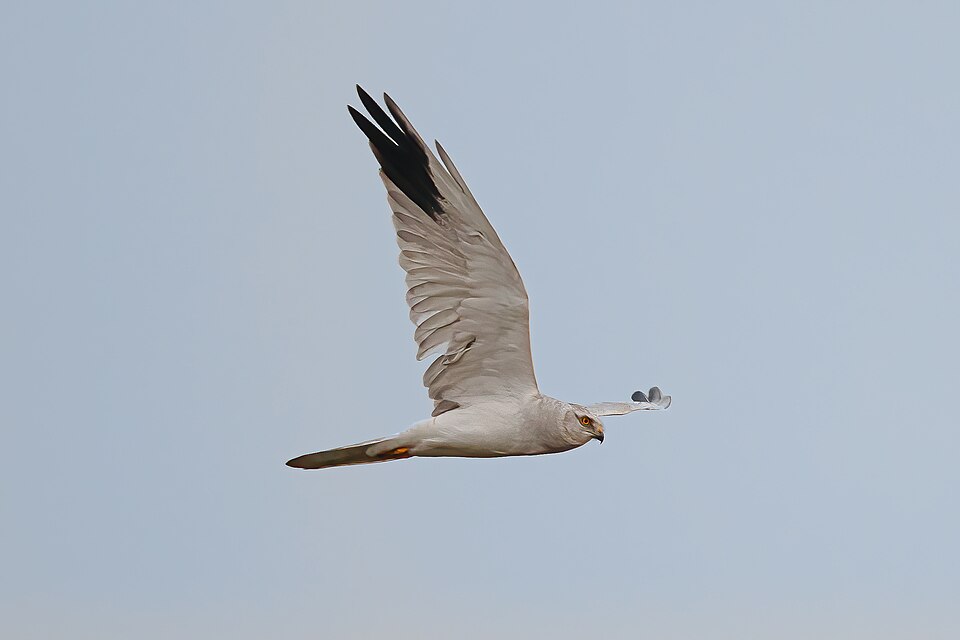
ウスハイイロチュウヒ (Circus macrourus) ウスハイイロチュウヒ
マダラチュウヒ (Circus melanoleucos) マダラチュウヒ

メディア

読み込み中…

要点

ウスハイイロチュウヒとマダラチュウヒの最も信頼できるフィールドマークは、成鳥オスの羽毛です:ウスハイイロチュウヒのオスは上面が淡い灰色で、下面が白く、狭い黒い翼先端のみを持っています。一方、マダラチュウヒのオスは、黒い頭、背中、胸が白い下面と前翼と鮮やかに対比される、目を引く黒と白の羽毛を持っています。雌と幼鳥の場合、分離ははるかに難しく、両者とも上面が茶色で下面が淡い色合いで縞模様がありますが、ウスハイイロチュウヒは腹部がより淡い傾向があり、顔の模様がより明確です。飛行中、両種は浅いV字型で長く狭い翼を持っていますが、マダラチュウヒの翼は先端がわずかに丸みを帯びており、尾もより丸みを帯びています。幼鳥のマダラチュウヒは、ウスハイイロチュウヒよりも上面が暗く、下面がよりリッチなシナモン色です。肯定的な同定のためには、下面の色、顔の模様、翼/尾の形状の組み合わせを使用してください。

識別のコツ

  1. 成鳥オスの羽毛が最良のフィールドマークです: ウスハイイロチュウヒのオスは上面が淡い灰色で、下面が白く、狭い黒い翼先端のみを持っています;マダラチュウヒのオスは黒と白で、黒い頭、首、背中、胸、白い前翼、尾、下面を持っています。黒と白のチュウヒを見たら、それはマダラチュウヒです;淡い灰色と白なら、それはウスハイイロチュウヒです。
  2. 雌と幼鳥ははるかに難しいです: 両者とも上面が茶色で、下面が淡い色合いで縞模様があります。ウスハイイロチュウヒは腹部がより淡い、バフ色の傾向があり、顔の模様がより明確(淡い襟と顔の円盤)ですが、マダラチュウヒは上面と下面がより暗く、幼鳥の下面はよりリッチなシナモン色です。
  3. 顔の模様: ウスハイイロチュウヒの雌/幼鳥には、明確な淡い顔の円盤と襟を探してください;マダラチュウヒの顔の模様はあまり明確ではありません。
  4. 下面の色: ウスハイイロチュウヒの雌/幼鳥はバフ色で淡いです;マダラチュウヒの雌/幼鳥は一般的に暗く、コントラストが強く、幼鳥にはよりリッチなシナモン色があります。
  5. 尾の斑点: 両者とも白い尾を持っていますが、マダラチュウヒの尾は小さく、より明確に定義されています;ウスハイイロチュウヒの尾は大きく見えることがありますが、境界があまり明確ではありません。
  6. 飛行中の翼の形: マダラチュウヒの翼は先端がわずかに丸みを帯びており、尾もより丸みを帯びています;ウスハイイロチュウヒの翼は全体的に狭く、尾はより四角いです。これは微妙で、直接比較で最もよく見られます。
  7. 飛行スタイル: 両種は浅いV字型で長く狭い翼を持って飛び、浮遊しながらゆったりとした翼の動きで滑空します。大きな違いはありませんが、マダラチュウヒはわずかに「丸みを帯びた」外観に見えるかもしれません。
  8. 目の色: 成鳥オスのマダラチュウヒは黄色い目を持ち、雌は茶色です;遠くからは信頼できません。
  9. 止まり方: 両者とも地面や柱/葦の上に止まりますが、木にはめったに止まりません。診断的ではありません。
  10. 地理的文脈: 西ヨーロッパにいる場合、ウスハイイロチュウヒの方がはるかに可能性が高いです;東南アジアでは、冬に両者が可能です。
  11. サイズ: 両者はサイズと構造が非常に似ています;信頼できるフィールドマークではありません。
  12. 幼鳥の混乱: 両幼鳥は幼鳥のヒメハイイロチュウヒに似ていますが、マダラチュウヒは上面が暗く、下面がよりリッチなシナモン色で、ウスハイイロチュウヒはより淡く、バフ色です。
  13. 性差: 成鳥オスだけが本当に独特です;雌と幼鳥は両種間で非常に似ており、ヒメハイイロチュウヒにも似ています。マークの組み合わせを使用してください。
  14. 疑わしい場合: 下面の色(ウスハイイロチュウヒはより淡く、マダラチュウヒはよりリッチ/暗い)、顔の模様(ウスハイイロチュウヒはよりシャープ)、全体のコントラスト(マダラチュウヒはより高い)に焦点を当ててください。

大きさ

両種はサイズが非常に似ており、ウスハイイロチュウヒはわずかに重い(383.5g対355.0g [wikidata])です。両者は約40–49 cmの長さで、翼幅は95–120 cmの範囲です。雌は両種ともオスより大きいですが、その違いは微妙で、フィールドでは信頼できません。構造的な比率も似ていますが、マダラチュウヒの翼は先端がわずかに丸みを帯びており、尾もより丸みを帯びていると説明されていますが、ウスハイイロチュウヒの翼は全体的に狭いです。

羽色

行動

両種は開けた地面の上を低く飛び、浮遊しながらゆったりとした翼の動きで滑空します。両者とも地面や柱/葦の上に止まりますが、木にはめったに止まりません。マダラチュウヒは主に孤独であると説明されていますが、ウスハイイロチュウヒと同様に緩い群れを形成することがあります。情報源からは強い行動的な分離は得られません。

生息環境

両種は開けた国、湿地、野原に生息しています。ウスハイイロチュウヒは東ヨーロッパから中央アジアで繁殖し、インドと東南アジアで冬を越します。一方、マダラチュウヒはアジアに特有で、南シベリアからフィリピンまで分布しています。彼らの冬の生息範囲はインドと東南アジアで重なります。両者はコア範囲外では珍しい迷鳥ですが、ウスハイイロチュウヒは西ヨーロッパに珍しい迷鳥であり、マダラチュウヒはそうではありません。

より良い説明を送る

比較と同じ項目を使ってください。文章はすぐに公開されます。

The most reliable field mark between Pallid Harrier and Pied Harrier is the adult male's plumage: Pallid males are pale grey above and white below with only narrow black wingtips, while Pied males are strikingly black and white with a black head, back, and breast contrasting sharply with white underparts and forewing. For females and juveniles, separation is much trickier, as both are brown above and pale below with streaking, but Pallid tends to have a paler belly and a more defined facial pattern. In flight, both species show long, narrow wings held in a shallow V, but Pied Harrier's wings are slightly more rounded at the tips and the tail is more rounded. Juvenile Pied Harrier is darker above and richer cinnamon below than Pallid, which is buffier. Use a combination of underpart color, facial pattern, and wing/tail shape for the best chance at a positive ID.

  1. Adult male plumage is the best field mark: Pallid Harrier males are pale grey above and white below with only narrow black wingtips; Pied Harrier males are black and white, with a black head, neck, back, and breast, and white forewing, rump, and underparts. If you see a black-and-white harrier, it's Pied; if it's pale grey and white, it's Pallid.
  2. Females and juveniles are much trickier: Both are brown above and pale below with streaking. Pallid tends to have a paler, buffier belly and a more sharply defined facial pattern (pale collar and facial disk), while Pied is darker above and below, with richer cinnamon underparts in juveniles.
  3. Facial pattern: Look for a well-defined pale facial disk and collar in Pallid Harrier females/juvs; Pied's facial pattern is less distinct.
  4. Underpart color: Pallid females/juvs are buffier and paler below; Pied females/juvs are generally darker, with more contrast and richer cinnamon tones in juveniles.
  5. Rump patch: Both show a white rump, but Pied's is smaller and more sharply defined; Pallid's can appear larger and less sharply bordered.
  6. Wing shape in flight: Pied Harrier's wings are slightly more rounded at the tips and the tail more rounded; Pallid's wings are narrower and the tail more square. This is subtle and best seen in direct comparison.
  7. Flight style: Both species fly with long, narrow wings held in a shallow V, gliding and soaring with buoyant, leisurely wingbeats. No strong difference, but Pied may appear slightly more 'rounded' in outline.
  8. Eye color: Adult male Pied has yellow eyes, female has brown; not reliable at distance.
  9. Perching behavior: Both perch on the ground or on posts/reeds, rarely in trees. Not diagnostic.
  10. Geographic context: If in western Europe, Pallid is much more likely; in southeast Asia, both are possible in winter.
  11. Size: Both are very similar in size and structure; not a reliable field mark.
  12. Juvenile confusion: Both juveniles resemble juvenile Montagu's Harrier, but Pied is darker above and richer cinnamon below, while Pallid is paler and buffier.
  13. Sexual dimorphism: Only adult males are truly distinctive; females and juveniles are very similar between the two species and to Montagu's Harrier. Use a combination of marks.
  14. When in doubt: Focus on underpart color (paler in Pallid, richer/darker in Pied), facial pattern (sharper in Pallid), and overall contrast (higher in Pied).

Both species are very similar in size, with Pallid Harrier averaging slightly heavier (383.5g vs 355.0g [wikidata]). Both measure about 40–49 cm in length with wingspans in the 95–120 cm range. Females are larger than males in both species, but the difference is subtle and not reliable in the field. Structural proportions are also similar, though Pied Harrier's wings are described as slightly more rounded at the tips and the tail as more rounded, while Pallid Harrier's wings are narrower overall.

  • Juveniles and Females: Both species' females and juveniles are brown above and pale below with streaking, but Pallid Harrier females/juvs have a paler, buffier belly and a more sharply defined facial pattern (especially the pale collar and facial disk), while Pied Harrier females/juvs are generally darker above, with more contrast and a small white rump. Juvenile Pied Harrier is darker above than adult female, with rich cinnamon underparts, while Pallid juvenile is paler buff below. Both can show a 'ringtail' pattern (white upper tail coverts), but the facial contrast is stronger in Pallid.

  • Adult Males: Pallid Harrier males are pale grey above, white below, with only narrow black wingtips. Pied Harrier males are dramatically pied: black head, neck, back, and breast, with white forewing, rump, and underparts. The black-and-white contrast of Pied is unique and diagnostic.

  • Wing and Tail: In flight, both show long, narrow wings held in a shallow V. Pied Harrier's wings are slightly more rounded at the tips and the tail is more rounded, while Pallid's wings are narrower and the tail is more square. Both have a white rump, but the extent and contrast is greater in Pied.

  • Eyes: Adult male Pied has striking yellow eyes; female has brown eyes. Eye color is not a strong field mark at distance.

Both species hunt low over open ground with buoyant, gliding flight interspersed with leisurely wingbeats. Both perch on the ground or on posts/reeds, rarely in trees. Pied Harrier is described as primarily solitary but may form loose groups, similar to Pallid. No strong behavioral separation is available from the sources.

Both species occur in open country, marshes, and fields. Pallid Harrier breeds from eastern Europe to central Asia and winters in India and southeast Asia, while Pied Harrier is endemic to Asia, from southern Siberia to the Philippines. Their wintering ranges overlap in India and southeast Asia. Both are rare vagrants outside their core range, but Pallid is a rare vagrant to western Europe, while Pied is not.

変更を破棄しますか?

保存していない編集があります。今離れると失われます。

ウスハイイロチュウヒ · マダラチュウヒ · 苦手な鳥