

ganga-das-estepes vs ganga-castanha
Syrrhaptes paradoxus versus Pterocles exustus
Jogue um quiz com ganga-das-estepes e ganga-castanha
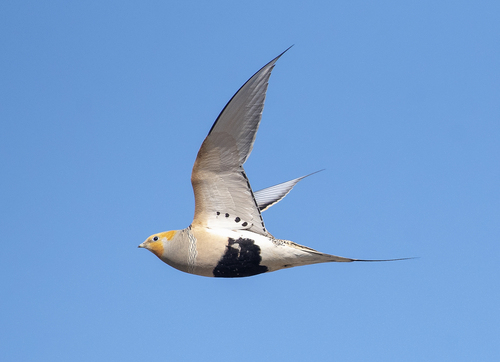 ganga-das-estepes
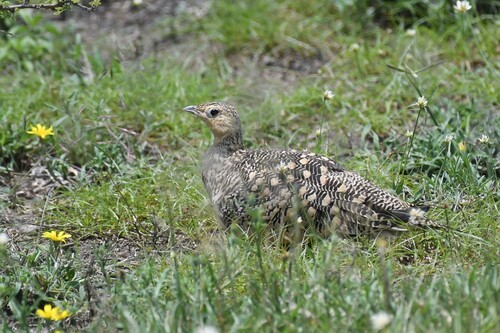 ganga-castanha
Em resumo
A separação mais confiável entre a ganga-das-estepes e a ganga-castanha é a combinação do padrão de asa inferior e barriga em voo: a ganga-das-estepes apresenta uma asa inferior strikingly pálida e uma mancha preta sólida na barriga, enquanto a ganga-castanha tem uma barriga mais escura, chocolate ou castanha, mas com asas inferiores menos contrastantes. No chão, a ganga-das-estepes é mais robusta, com uma construção compacta, semelhante a uma pomba, e pernas e dedos emplumados, enquanto a ganga-castanha parece mais esbelta, com um pescoço e cauda mais longos. As diferenças de sexo e idade são sutis, mas podem ajudar: o macho da ganga-das-estepes tem uma cabeça cinza e um rosto laranja, enquanto o macho da ganga-castanha apresenta um rosto amarelo-ocre e uma faixa preta estreita no peito. As fêmeas de ambas são mais apagadas e mais barradas, mas a fêmea da ganga-das-estepes não possui a faixa no peito. Ambas as espécies podem ser vistas em grandes bandos, mas seus habitats e áreas preferidos raramente se sobrepõem.
Dicas de identificação
- Em voo, procure pela asa inferior: A ganga-das-estepes sempre mostra uma asa inferior pálida e uma mancha preta sólida na barriga, independentemente da idade ou sexo. A ganga-castanha não possui esse contraste e tem uma asa inferior mais escura e menos definida.
- Cor da barriga em voo: A ganga-das-estepes tem uma mancha preta na barriga; a ganga-castanha mostra uma barriga chocolate ou castanha, com os machos tendo um centro preto no abdômen, mas não uma mancha limpa.
- Forma geral: A ganga-das-estepes é mais robusta e compacta, com uma cabeça e pescoço semelhantes a uma pomba, e um corpo robusto. A ganga-castanha é mais esbelta, com um pescoço e cauda mais longos, e parece mais ereta quando alerta.
- Pernas e pés: A ganga-das-estepes tem pernas e dedos emplumados, dando uma aparência semelhante a uma pata; as pernas da ganga-castanha são curtas e menos emplumadas, não formando uma estrutura semelhante a uma pata.
- Cauda: Ambas têm caudas pontudas, mas a cauda da ganga-castanha é mais alongada e acentua sua aparência esbelta, especialmente em voo.
- Cabeça e peito do macho: O macho da ganga-das-estepes tem uma cabeça e peito cinzas com um rosto laranja e uma faixa cinza no peito. O macho da ganga-castanha tem um rosto e garganta amarelo-ocre, um peito vináceo-claro, e uma faixa preta estreita no peito com bordas brancas.
- Plumagem feminina: A fêmea da ganga-das-estepes é mais apagada, não possui a faixa no peito, e é mais barrada na parte superior. A fêmea da ganga-castanha é clara e estriada/barrada, especialmente nas partes inferiores e na parte de trás do pescoço, com um peito vináceo e manchas pretas.
- Postura no chão: A ganga-das-estepes parece compacta e semelhante a uma pomba, muitas vezes com uma postura encurvada. A ganga-castanha parece mais ereta, com um pescoço esticado quando está alerta.
- Comportamento em bandos: Ambas as espécies podem formar grandes bandos, mas a ganga-das-estepes é especialmente conhecida por enormes grupos que voam rapidamente cobrindo longas distâncias até a água.
- Contexto de habitat: Se vista na estepe euroasiática ou durante uma irrupção na Europa, a ganga-das-estepes é mais provável. Em zonas áridas africanas ou indianas, a ganga-castanha é a padrão.
- Variação de subespécies (ganga-castanha): Algumas subespécies são mais cinzentas ou mais pálidas, mas nenhuma apresenta a asa inferior pálida e a mancha preta na barriga da ganga-das-estepes.
- Faixa no peito (sexagem): Apenas o macho da ganga-das-estepes tem uma faixa cinza no peito; o macho da ganga-castanha tem uma faixa preta estreita no peito com bordas brancas, e as fêmeas de ambas não possuem uma faixa clara no peito.
- Cor do rosto: Rosto laranja no macho da ganga-das-estepes vs rosto amarelo-ocre no macho da ganga-castanha.
- Barrado nas partes superiores: A fêmea da ganga-das-estepes é mais barrada na parte superior; as fêmeas da ganga-castanha têm costas e pescoços estriados ou barrados, mas o padrão é menos ousado do que o da ganga-das-estepes.
- Quando em dúvida, confie nas vistas de voo: O padrão da asa inferior e da barriga são as marcas mais consistentes e confiáveis para todas as idades e sexos.
Tamanho
A comparação direta de tamanho é limitada pelos dados disponíveis, mas a ganga-das-estepes é geralmente a espécie maior e mais robusta, com um comprimento corporal de 30–41 cm e uma construção notavelmente robusta e compacta. A ganga-castanha é menor e mais leve (massa adulta ~210 g [wikidata]), com uma aparência mais alongada e esbelta, especialmente notável na cauda e pescoço mais longos. No campo, a ganga-das-estepes muitas vezes parece mais robusta e semelhante a uma pomba, enquanto a ganga-castanha é mais elegante e mais ereta quando alerta.
Plumagem
- Em voo (todas as idades): A ganga-das-estepes mostra uma asa inferior pálida e uma mancha preta ousada na barriga, que é a única marca diagnóstica mais importante. A ganga-castanha tem uma barriga chocolate ou castanha (com um centro preto nos machos), mas a asa inferior é menos contrastante e não possui a aparência limpa e pálida da ganga-das-estepes.
- Machos adultos: A ganga-das-estepes tem uma cabeça e peito cinzas, rosto laranja, e uma faixa cinza no peito. Os machos da ganga-castanha têm um rosto e garganta amarelo-ocre, peito vináceo-claro, e uma faixa preta estreita no peito com bordas brancas; seu peito inferior se transforma em chocolate, com um centro preto no abdômen.
- Fêmeas adultas: A fêmea da ganga-das-estepes é mais apagada no geral, não possui a faixa no peito, e é mais barrada na parte superior. As fêmeas da ganga-castanha são claras e estriadas ou barradas, especialmente nas partes inferiores e na parte de trás do pescoço; seu peito é vináceo com manchas pretas, e a barriga é clara, com barras escuras.
- Pés e pernas: A ganga-das-estepes tem pernas e dedos emplumados (dando uma aparência semelhante a uma pata), enquanto as pernas da ganga-castanha são curtas e menos emplumadas.
- Cauda: Ambas têm caudas pontudas, mas a cauda da ganga-castanha é mais alongada e acentua sua aparência esbelta.
Comportamento
Ambas as espécies se reúnem em grandes bandos e voam para a água ao amanhecer e ao anoitecer, mas a ganga-das-estepes é especialmente conhecida por enormes bandos que voam rapidamente cobrindo longas distâncias (até 121 km por dia) [wikipedia]. Os machos da ganga-das-estepes molham suas penas do peito para carregar água para os filhotes, um comportamento não especificamente notado para a ganga-castanha. No chão, a ganga-das-estepes parece mais compacta e semelhante a uma pomba, enquanto a ganga-castanha muitas vezes estica seu pescoço e parece mais ereta e esbelta. Ambas podem ser cautelosas, mas a ganga-castanha é descrita como esticando seu pescoço quando alerta.
Habitat
A ganga-das-estepes se reproduz nas secas estepes da Ásia Central e é uma migrante parcial, às vezes irrumpindo longe para o oeste na Europa. A ganga-castanha é mais ampla, variando do Norte e Centro da África até o oeste e sul da Ásia, e geralmente é sedentária ou nômade. Seus habitats podem se sobrepor em zonas áridas, mas a ganga-das-estepes prefere a estepe aberta e sem árvores, enquanto a ganga-castanha é mais frequentemente encontrada em semi-desertos, arbustos e planícies arenosas.