

Sirratte vs Chestnut-bellied Sandgrouse
Syrrhaptes paradoxus contro Pterocles exustus
Fai un quiz con Sirratte e Chestnut-bellied Sandgrouse
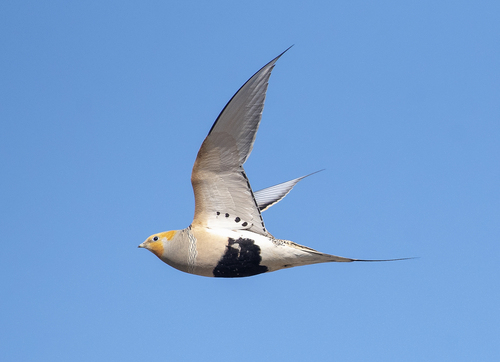 Sirratte
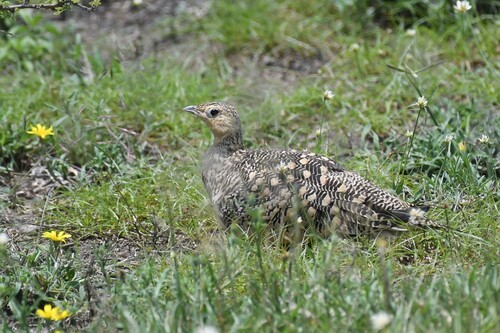 Chestnut-bellied Sandgrouse
In breve
La separazione più affidabile tra Sirratte e Chestnut-bellied Sandgrouse è la combinazione del modello di sottoala e pancia in volo: Sirratte mostra una sottoala sorprendentemente chiara e una macchia nera solida sulla pancia, mentre Chestnut-bellied ha una pancia più scura, cioccolato o castagna, ma meno contrastata nelle sottoali. A terra, Sirratte è più robusta con una struttura compatta, simile a quella di un piccione, e gambe e dita piumate, mentre Chestnut-bellied appare più snella, con un collo e una coda più lunghi. Le differenze di sesso e età sono sottili ma possono aiutare: il maschio di Sirratte ha una testa grigia e un volto arancione, mentre il maschio di Chestnut-bellied mostra un volto giallo-ocra e una stretta banda nera sul petto. Le femmine di entrambe sono più opache e più barrate, ma la femmina di Sirratte manca completamente della banda sul petto. Entrambe le specie possono essere viste in grandi stormi, ma i loro habitat preferiti e il loro areale raramente si sovrappongono.
Consigli di identificazione
- In volo, cerca la sottoala: La Sirratte mostra sempre una sottoala chiara e una macchia nera solida sulla pancia, indipendentemente dall'età o dal sesso. Chestnut-bellied manca di questo contrasto e ha una sottoala più scura e meno definita.
- Colore della pancia in volo: La Sirratte ha una macchia nera sulla pancia; Chestnut-bellied mostra una pancia cioccolato o castagna, con i maschi che hanno un centro nero nell'addome ma non una macchia pulita.
- Forma generale: La Sirratte è più robusta e compatta, con una testa e un collo simili a quelli di un piccione, e un corpo robusto. Chestnut-bellied è più snella, con un collo e una coda più lunghi, e appare più eretta quando è allerta.
- Gambe e piedi: La Sirratte ha gambe e dita piumate, dando un aspetto simile a una zampa; le gambe di Chestnut-bellied sono corte e meno piumate, non formando una struttura simile a una zampa.
- Coda: Entrambe hanno code appuntite, ma quella di Chestnut-bellied è più allungata e accentua il suo aspetto snello, specialmente in volo.
- Testa e petto del maschio: Il maschio di Sirratte ha una testa e un petto grigi con un volto arancione e una banda grigia sul petto. Il maschio di Chestnut-bellied ha un volto e una gola giallo-ocra, un petto vinaceo-buffo e una stretta banda nera sul petto bordata di bianco.
- Piumaggio femminile: La femmina di Sirratte è più opaca, manca della banda sul petto ed è più pesantemente barrata sopra. La femmina di Chestnut-bellied è buffa e striata/barrata, specialmente sulle parti inferiori e sulla parte posteriore del collo, con un petto vinaceo e macchie nere.
- Aspetto a terra: La Sirratte appare compatta e simile a un piccione, spesso con una postura curvata. Chestnut-bellied appare più eretta, con un collo allungato quando è in allerta.
- Comportamento in stormo: Entrambe le specie possono formare grandi stormi, ma la Sirratte è particolarmente nota per enormi, gruppi volanti veloci che coprono lunghe distanze verso l'acqua.
- Contesto dell'habitat: Se vista nella steppa eurasiatica o durante un'irruzione in Europa, è più probabile che sia la Sirratte. Nelle zone aride africane o indiane, Chestnut-bellied è la norma.
- Variazione delle sottospecie (Chestnut-bellied): Alcune sottospecie sono più grigie o più chiare, ma nessuna mostra la sottoala chiara e la macchia nera sulla pancia della Sirratte.
- Banda sul petto (sessaggio): Solo il maschio di Sirratte ha una banda grigia sul petto; il maschio di Chestnut-bellied ha una stretta banda nera sul petto bordata di bianco, e le femmine di entrambe mancano di una chiara banda sul petto.
- Colore del volto: Volto arancione nel maschio di Sirratte contro volto giallo-ocra nel maschio di Chestnut-bellied.
- Barratura delle parti superiori: La femmina di Sirratte è più barrata sopra; le femmine di Chestnut-bellied hanno schiene e colli striati o barrati, ma il modello è meno audace rispetto a quello di Sirratte.
- Quando hai dubbi, fai affidamento sulle viste in volo: Il modello della sottoala e della pancia sono i segni più consistenti e affidabili per tutte le età e i sessi.
Taglia
Il confronto diretto delle dimensioni è limitato dai dati disponibili, ma la Sirratte è generalmente la specie più grande e robusta, con una lunghezza del corpo di 30–41 cm e una struttura compatta e robusta. Chestnut-bellied Sandgrouse è più piccola e leggera (massa adulta ~210 g [wikidata]), con un aspetto più allungato e snello, particolarmente evidente nella coda e nel collo più lunghi. Sul campo, la Sirratte appare spesso più tozza e simile a un piccione, mentre Chestnut-bellied è più snella e più eretta quando è allerta.
Piumaggio
- In volo (tutte le età): La Sirratte mostra una sottoala chiara e una macchia nera audace sulla pancia, che è il segno diagnostico più importante. Chestnut-bellied Sandgrouse ha una pancia cioccolato o castagna (con un centro nero nei maschi), ma la sottoala è meno contrastante e manca dell'aspetto chiaro e pallido della Sirratte.
- Maschi adulti: La Sirratte ha una testa e un petto grigi, un volto arancione e una banda grigia sul petto. I maschi di Chestnut-bellied hanno un volto e una gola giallo-ocra, un petto vinaceo-buffo e una stretta banda nera sul petto bordata di bianco; il loro petto inferiore sfuma in cioccolato, con un centro nero nell'addome.
- Femmine adulte: La femmina di Sirratte è più opaca nel complesso, manca della banda sul petto ed è più pesantemente barrata sopra. Le femmine di Chestnut-bellied sono buffe e striate o barrate, specialmente sulle parti inferiori e sulla parte posteriore del collo; il loro petto è vinaceo con macchie nere, e la pancia è di un buffo chiaro, strettamente barrata di marrone scuro.
- Piedi e gambe: La Sirratte ha gambe e dita piumate (dando un aspetto simile a una zampa), mentre le gambe di Chestnut-bellied sono corte e meno piumate.
- Coda: Entrambe hanno code appuntite, ma quella di Chestnut-bellied è più allungata e accentua il suo aspetto snello.
Comportamento
Entrambe le specie si radunano in grandi stormi e volano verso l'acqua all'alba e al tramonto, ma la Sirratte è particolarmente nota per enormi stormi volanti veloci che coprono lunghe distanze (fino a 121 km al giorno) [wikipedia]. I maschi di Sirratte inzuppano le piume del petto per trasportare acqua per i pulcini, un comportamento non specificamente notato per Chestnut-bellied. A terra, la Sirratte appare più compatta e simile a un piccione, mentre Chestnut-bellied spesso allunga il collo e appare più eretta e snella. Entrambe possono essere diffidenti, ma Chestnut-bellied è descritta come allungando il collo quando è allerta.
Habitat
La Sirratte nidifica nelle secche steppe dell'Asia centrale ed è un migratore parziale, a volte irrompendo lontano a ovest in Europa. Chestnut-bellied Sandgrouse è più diffusa, che va dal Nord e Centro Africa all'Asia occidentale e meridionale, ed è generalmente sedentaria o nomade. I loro habitat possono sovrapporsi in zone aride, ma la Sirratte preferisce steppe aperte e senza alberi, mentre Chestnut-bellied si trova più spesso in semi-deserto, cespugli e pianure sabbiose.
Sirratte · Chestnut-bellied Sandgrouse · I miei uccelli difficili