

Motmot

サケイ 対 チャバラサケイ

Syrrhaptes paradoxus 対 Pterocles exustus

サケイとチャバラサケイのクイズ
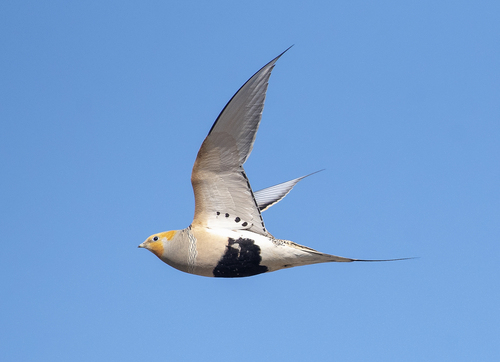
サケイ (Syrrhaptes paradoxus) サケイ
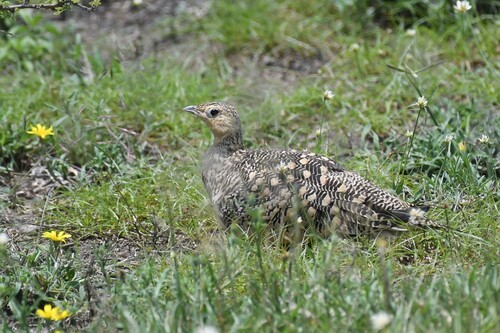
チャバラサケイ (Pterocles exustus) チャバラサケイ

メディア

読み込み中…

要点

パラスサケイとチャバラサケイの最も信頼できる区別は、飛行中の翼の下と腹部の模様の組み合わせです:パラスサケイは非常に淡い翼の下と黒い腹部の斑点を示し、チャバラサケイはより暗いチョコレート色または栗色の腹部を持ちますが、翼の下はコントラストが少ないです。地上では、パラスサケイはより大きく、コンパクトで鳩のような体型と羽毛のある脚と足を持ち、チャバラサケイはより細身で、首と尾が長く見えます。性別と年齢の違いは微妙ですが、役立つことがあります:オスのパラスサケイは灰色の頭とオレンジ色の顔を持ち、オスのチャバラサケイは黄色の顔と狭い黒い胸の帯を示します。両方の雌はより鈍い色合いで、より多くの斑点がありますが、パラスサケイの雌は胸の帯が完全に欠けています。両種は大きな群れで見ることができますが、好む生息地と範囲はめったに重なりません。

識別のコツ

  1. In flight, look for the underwing: パラスサケイは常に淡い翼の下と黒い腹部の斑点を示し、年齢や性別に関係なく、チャバラサケイはこのコントラストが欠けており、より暗く、はっきりしない翼の下を持っています。
  2. Belly color in flight: パラスサケイは黒い腹部の斑点を持ち、チャバラサケイはチョコレート色または栗色の腹部を示し、オスは腹部の中心が黒いですが、クリーンな斑点はありません。
  3. Overall shape: パラスサケイはより大きく、コンパクトで、鳩のような頭と首、頑丈な体を持っています。チャバラサケイはより細身で、首と尾が長く、警戒しているときはより直立して見えます。
  4. Legs and feet: パラスサケイは羽毛のある脚と足を持ち、足のような外観を与えますが、チャバラサケイの脚は短く、羽毛が少なく、足のような構造を形成しません。
  5. Tail: 両方とも尖った尾を持っていますが、チャバラサケイの尾はより長く、その細身の外観を強調します。
  6. Male head and breast: オスのパラスサケイは灰色の頭と胸、オレンジ色の顔、灰色の胸の帯を持っています。オスのチャバラサケイは黄色の顔と喉、ワイン色の上胸、狭い黒い胸の帯を持ち、白で縁取られています。
  7. Female plumage: 雌のパラスサケイは鈍く、胸の帯がなく、より多くの斑点があります。雌のチャバラサケイは淡い色で、特に腹部と首の後ろに斑点があり、胸はワイン色で黒い斑点があります。
  8. Ground jizz: パラスサケイはコンパクトで鳩のように見え、しばしば背中を丸めた姿勢をとります。チャバラサケイはより直立して見え、警戒しているときは首を伸ばします。
  9. Flock behavior: 両種は大きな群れを形成することがありますが、パラスサケイは特に水を求めて長距離を飛ぶ巨大で速い群れで知られています。
  10. Habitat context: ユーラシアの草原やヨーロッパでの出現時に見られた場合、パラスサケイの可能性が高いです。アフリカやインドの乾燥地帯では、チャバラサケイがデフォルトです。
  11. Subspecies variation (Chestnut-bellied): 一部の亜種はより灰色または淡いですが、いずれもパラスサケイの淡い翼の下と黒い腹部の斑点を示しません。
  12. Breast band (sexing): オスのパラスサケイだけが灰色の胸の帯を持ち、オスのチャバラサケイは狭い黒い胸の帯を持ち、両方の雌は明確な胸の帯がありません。
  13. Face color: オスのパラスサケイのオレンジ色の顔とオスのチャバラサケイの黄色の顔。
  14. Upperpart barring: 雌のパラスサケイは上部がより多くの斑点があります。チャバラサケイの雌は背中と首に斑点やストライプがありますが、パターンはパラスサケイよりも大胆ではありません。
  15. When in doubt, rely on flight views: 翼の下と腹部の模様は、すべての年齢と性別に対して最も一貫性があり、信頼できる特徴です。

大きさ

直接的なサイズ比較は利用可能なデータによって制限されていますが、パラスサケイは一般的により大きく、頑丈な種で、体長は30〜41 cmで、特に頑丈でコンパクトな体型を持っています。チャバラサケイはより小さく、軽量(成鳥の質量約210 g [wikidata])で、特に尾と首が長く、より細身の外観が目立ちます。フィールドでは、パラスサケイはしばしばより大きく、鳩のように見え、チャバラサケイはよりスリムで、警戒しているときはより直立して見えます。

羽色

行動

両種は大きな群れを形成し、夜明けと夕暮れに水を求めて飛びますが、パラスサケイは特に長距離をカバーする巨大で速い群れで知られています(1日に最大121 km)[wikipedia]。パラスサケイのオスは胸の羽毛を濡らして雛のために水を運ぶ行動をとりますが、これは特にチャバラサケイには見られません。地上では、パラスサケイはよりコンパクトで鳩のように見え、チャバラサケイはしばしば首を伸ばし、より直立して細身に見えます。両方とも警戒心がありますが、チャバラサケイは警戒しているときに首を伸ばすと説明されています。

生息環境

パラスサケイは中央アジアの乾燥した草原で繁殖し、部分的な移動性を持ち、時にはヨーロッパの西部にまで出現します。チャバラサケイはより広範囲に分布し、北アフリカと中央アフリカから西アジアと南アジアにかけて生息し、一般的には定住または遊牧的です。彼らの生息地は乾燥地帯で重なることがありますが、パラスサケイは開けた無木の草原を好み、チャバラサケイはより頻繁に半砂漠、低木、砂地の平原に見られます。

より良い説明を送る

比較と同じ項目を使ってください。文章はすぐに公開されます。

The most reliable separation between Pallas's Sandgrouse and Chestnut-bellied Sandgrouse is the combination of underwing and belly pattern in flight: Pallas's shows a strikingly pale underwing and a solid black belly patch, while Chestnut-bellied has a darker, chocolate or chestnut belly but less contrasty underwings. On the ground, Pallas's is bulkier with a compact, pigeon-like build and feathered legs and toes, whereas Chestnut-bellied appears more slender, with a longer neck and tail. Sex and age differences are subtle but can help: male Pallas's has a grey head and orange face, while male Chestnut-bellied shows a yellow-ochre face and a narrow black breast band. Females of both are duller and more barred, but Pallas's female lacks the breast band entirely. Both species can be seen in large flocks, but their preferred habitats and range rarely overlap.

  1. In flight, look for the underwing: Pallas's Sandgrouse always shows a pale underwing and a solid black belly patch, regardless of age or sex. Chestnut-bellied lacks this contrast and has a darker, less sharply defined underwing.
  2. Belly color in flight: Pallas's has a black belly patch; Chestnut-bellied shows a chocolate or chestnut belly, with males having a black center to the abdomen but not a clean patch.
  3. Overall shape: Pallas's is bulkier and more compact, with a pigeon-like head and neck, and a sturdy body. Chestnut-bellied is more slender, with a longer neck and tail, and appears more upright when alert.
  4. Legs and feet: Pallas's has feathered legs and toes, giving a paw-like appearance; Chestnut-bellied's legs are short and less feathered, not forming a paw-like structure.
  5. Tail: Both have pointed tails, but Chestnut-bellied's is more elongated and accentuates its slender look, especially in flight.
  6. Male head and breast: Male Pallas's has a grey head and breast with an orange face and a grey breast band. Male Chestnut-bellied has a yellow-ochre face and throat, a vinous-buff upper breast, and a narrow black breast band bordered with white.
  7. Female plumage: Female Pallas's is duller, lacks the breast band, and is more heavily barred above. Female Chestnut-bellied is buffy and streaked/barred, especially on the underparts and back of the neck, with a vinous breast and black spots.
  8. Ground jizz: Pallas's looks compact and pigeon-like, often with a hunched posture. Chestnut-bellied appears more upright, with a stretched neck when wary.
  9. Flock behavior: Both species may form large flocks, but Pallas's is especially known for huge, fast-flying groups covering long distances to water.
  10. Habitat context: If seen in Eurasian steppe or during an irruption in Europe, Pallas's is more likely. In African or Indian arid zones, Chestnut-bellied is the default.
  11. Subspecies variation (Chestnut-bellied): Some subspecies are greyer or paler, but none show the pale underwing and black belly patch of Pallas's.
  12. Breast band (sexing): Only male Pallas's has a grey breast band; male Chestnut-bellied has a narrow black breast band bordered with white, and females of both lack a clear breast band.
  13. Face color: Orange face in male Pallas's vs yellow-ochre face in male Chestnut-bellied.
  14. Upperpart barring: Female Pallas's is more barred above; Chestnut-bellied females have streaked or barred backs and necks, but pattern is less bold than Pallas's.
  15. When in doubt, rely on flight views: The underwing and belly pattern are the most consistent and reliable marks for all ages and sexes.

Direct size comparison is limited by available data, but Pallas's Sandgrouse is generally the larger and more robust species, with a body length of 30–41 cm and a notably sturdy, compact build. Chestnut-bellied Sandgrouse is smaller and lighter (adult mass ~210 g [wikidata]), with a more elongated and slender appearance, especially noticeable in the longer tail and neck. In the field, Pallas's often looks chunkier and more pigeon-like, while Chestnut-bellied is sleeker and more upright when alert.

  • In flight (all ages): Pallas's Sandgrouse shows a pale underwing and a bold black belly patch, which is the single most diagnostic mark. Chestnut-bellied Sandgrouse has a chocolate or chestnut belly (with a black center in males), but the underwing is less contrasting and lacks the clean pale look of Pallas's.
  • Adult males: Pallas's has a grey head and breast, orange face, and a grey breast band. Chestnut-bellied males have a yellow-ochre face and throat, vinous-buff upper breast, and a narrow black breast band bordered with white; their lower breast grades into chocolate, with a black center to the abdomen.
  • Adult females: Pallas's female is duller overall, lacks the breast band, and is more heavily barred above. Chestnut-bellied females are buffy and streaked or barred, especially on the underparts and back of the neck; their breast is vinous with black spots, and the belly is pale ochre-buff, closely barred dark brown.
  • Feet and legs: Pallas's has feathered legs and toes (giving a paw-like look), while Chestnut-bellied's legs are short and less feathered.
  • Tail: Both have pointed tails, but Chestnut-bellied's is more elongated and accentuates its slender look.

Both species gather in large flocks and fly to water at dawn and dusk, but Pallas's Sandgrouse is especially known for massive, fast-flying flocks covering long distances (up to 121 km per day) [wikipedia]. Males of Pallas's soak their breast feathers to carry water for chicks, a behavior not specifically noted for Chestnut-bellied. On the ground, Pallas's appears more compact and pigeon-like, while Chestnut-bellied often stretches its neck and looks more upright and slender. Both can be wary, but Chestnut-bellied is described as stretching its neck when alert.

Pallas's Sandgrouse breeds across the dry steppes of central Asia and is partial migrant, sometimes irrupting far west into Europe. Chestnut-bellied Sandgrouse is more widespread, ranging from North and Central Africa to western and southern Asia, and is generally sedentary or nomadic. Their habitats may overlap in arid zones, but Pallas's prefers open, treeless steppe, while Chestnut-bellied is more often found in semi-desert, scrub, and sandy plains.

変更を破棄しますか?

保存していない編集があります。今離れると失われます。

サケイ · チャバラサケイ · 苦手な鳥