

painted bunting vs saí-azul
Passerina ciris versus Dacnis cayana
Jogue um quiz com painted bunting e saí-azul
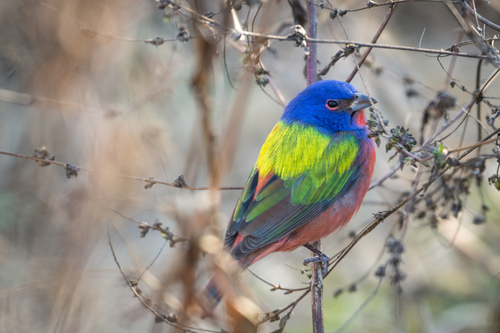 painted bunting
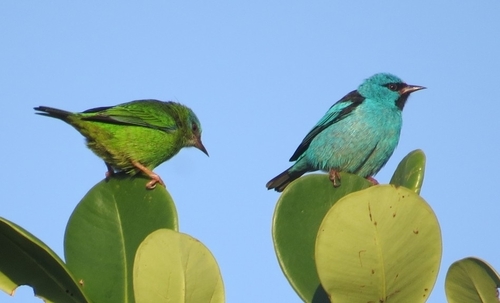 saí-azul
Em resumo
A marca de campo mais confiável entre painted bunting e saí-azul é a plumagem do macho: machos de painted bunting exibem uma mistura vívida de azul, verde e vermelho, enquanto machos de saí-azul são turquesa a azul com uma máscara e costas pretas. Fêmeas e imaturos de ambas as espécies são esverdeados, mas fêmeas de painted bunting são um verde mais brilhante e verdadeiro, enquanto fêmeas de saí-azul são verdes com uma cabeça azulada e garganta acinzentada. A forma do bico também ajuda: painted bunting tem um bico mais grosso e cônico, enquanto saí-azul tem um bico mais fino e pontudo. O tamanho é semelhante, mas painted bunting é ligeiramente maior e mais robusto. Em voo ou empoleirado, procure o verde geral mais brilhante de painted bunting em fêmeas e juvenis, e as asas pretas com bordas azuis de saí-azul em machos.
Dicas de identificação
- Plumagem do Macho Adulto: Machos de painted bunting são inconfundíveis com uma cabeça azul, costas verdes e partes inferiores/roupa vermelhas. Machos de saí-azul são azuis/turquesa com uma máscara e costas pretas—nunca vermelhos ou verdes.
- Plumagem de Fêmeas e Juvenis: Fêmeas e imaturos de painted bunting são um verde verdadeiro e brilhante no geral, sem azul ou cinza na cabeça ou garganta. Fêmeas de saí-azul são verdes, mas têm uma cabeça azulada e garganta cinza—procure por esse contraste sutil.
- Padrão de Asa em Machos: Machos de saí-azul têm asas pretas com amplas bordas azuis, visíveis em voo ou em repouso. As asas de painted bunting são simples e combinam com a cor do corpo, nunca mostrando esse contraste.
- Forma do Bico: Painted bunting tem um bico grosso e cônico, típico dos cardinalídeos. Saí-azul tem um bico mais fino e pontudo, mais adequado para colher insetos e néctar.
- Tamanho e Estrutura: Painted bunting é ligeiramente maior e mais robusto, com um corpo mais arredondado e pescoço mais grosso. Saí-azul é mais esbelto e delicado, com um bico mais fino e aparência mais ágil.
- Padrão da Cabeça: Machos de saí-azul têm uma máscara preta desde as lore até atrás do olho, contrastando com a cabeça azul. Machos de painted bunting têm uma cabeça azul sólida sem máscara.
- Cor das Costas: Machos de painted bunting têm costas verdes; machos de saí-azul têm costas pretas. Isso é visível mesmo quando empoleirados.
- Partes Inferiores: Machos de painted bunting têm partes inferiores vermelhas; machos de saí-azul têm partes inferiores turquesa com um centro de garganta preta.
- Padrão da Cauda: Saí-azul tem uma cauda preta com finas bordas azuis nas penas externas; a cauda de painted bunting não tem um padrão distinto.
- Cabeça e Garganta de Fêmeas: Fêmeas de saí-azul mostram um tom azul na cabeça e uma garganta cinza, enquanto fêmeas de painted bunting são verdes por inteiro.
- Comportamento: Painted bunting é mais provável de ser visto escondido em folhagens densas ou arbustos baixos; saí-azul é mais ativo, forrageando na copa externa.
- Habitat e Distribuição: Painted bunting é esperado na América do Norte, especialmente no sudeste; saí-azul é uma espécie tropical e seria extremamente rara ao norte da América Central.
- Voz: Saí-azul emite chamadas finas, agudas e fracas e uma canção ofegante. A canção de painted bunting é mais rica e musical.
- Estação e Idade: No final do verão e outono, juvenis e fêmeas de painted bunting são verdes; fêmeas e imaturos de saí-azul são verdes com cabeça e garganta azuladas/cinzas. Sempre verifique a cor sutil da cabeça/garganta.
- Armadilhas: Imaturos de painted bunting só podem ser separados de fêmeas por inspeção cuidadosa, mas ambos são um verde mais brilhante do que qualquer saí-azul. Fêmeas de saí-azul nunca mostram o verde puro e brilhante de painted bunting.
Tamanho
Painted bunting é ligeiramente maior, medindo 12–14 cm de comprimento e pesando 13–19 g. Saí-azul é um pouco menor, com 11–12 cm e 10–15,5 g. Ambos são pequenos pássaros canoros, mas painted bunting é mais robusto e tem uma construção mais robusta, enquanto saí-azul é mais esbelto e delicado. A diferença é sutil no campo, mas painted bunting pode parecer mais robusto, especialmente quando empoleirado.
Plumagem
- Juvenil e Fêmea de Painted Bunting: Ambos os sexos no primeiro ano, assim como fêmeas adultas, são um verde verdadeiro e brilhante acima e amarelo-esverdeado abaixo. Esse verde é incomumente vívido para um pássaro canoro da América do Norte e não possui os tons azuis ou cinzas vistos em saí-azul. Juvenis trocam de penas duas vezes em seu primeiro outono, mas ambas as trocas resultam em uma plumagem semelhante à da fêmea adulta—verde brilhante no geral.
- Juvenil e Fêmea de Saí-Azul: Fêmeas adultas são verdes acima com partes inferiores verde-claras, mas sua cabeça é tingida de azul e a garganta é cinza, não verde. Juvenis não são descritos em detalhes, mas provavelmente se assemelham a fêmeas adultas. O verde é mais opaco e menos puro do que o de painted bunting, e a cabeça azulada e a garganta cinza são fundamentais.
- Macho Adulto de Painted Bunting: Marcadamente multicolorido—cabeça azul escura, costas verdes, partes inferiores e roupa vermelhas. Sem máscara azul ou costas pretas. Nenhum outro pássaro da América do Norte combina essa combinação.
- Macho Adulto de Saí-Azul: Turquesa a azul no geral, com uma máscara preta (lore até atrás do olho) e costas pretas. As asas e a cauda são pretas com bordas azuis. As partes inferiores são turquesa, exceto por um centro de garganta preta. Sem vermelho ou verde no corpo. Subespécies variam em tonalidade de azul, mas sempre têm uma máscara e costas pretas.
- Asas em Voo: Painted bunting (todas as idades) mostra asas simples que combinam com a cor do corpo, sem forte contraste. Machos de saí-azul têm asas pretas com amplas bordas azuis, criando uma aparência contrastante em voo ou quando empoleirados com as asas fechadas.
Comportamento
Painted bunting é frequentemente secreto, escondendo-se em folhagens densas mesmo quando canta, e pode ser difícil de avistar apesar de suas cores brilhantes. Saí-azul é mais ativo e pode ser visto forrageando nas partes externas das árvores, às vezes em pares ou pequenos grupos. Painted bunting tende a se empoleirar mais baixo em arbustos ou árvores baixas, enquanto saí-azul é mais propenso a ser visto mais alto, movendo-se rapidamente pela copa.
Habitat
Painted bunting é nativo da América do Norte, reproduzindo-se em áreas arbustivas, bordas de florestas e árvores baixas, frequentemente no sudeste dos Estados Unidos. Saí-azul é encontrado na América Central e do Sul (excluindo Chile e Uruguai), habitando uma ampla gama de habitats florestais e semi-abertos, incluindo as partes externas das árvores e bordas de florestas. Se visto na América do Norte, saí-azul seria extremamente raro e fora de seu alcance, enquanto painted bunting é esperado em sua área de reprodução.
Voz
A canção de painted bunting não é descrita aqui, mas geralmente é um trinado doce e musical. Saí-azul tem uma canção fraca e ofegante de notas finas e altas (por exemplo, "wee-tee tsee-tew"), e suas chamadas são notas altas e finas "tsit" ou "chit-it". Se você ouvir uma canção fina, fraca e aguda, é mais provável que seja saí-azul; a canção de painted bunting é mais rica e complexa.