

Painted Bunting vs Blue Dacnis
Passerina ciris contro Dacnis cayana
Fai un quiz con Painted Bunting e Blue Dacnis
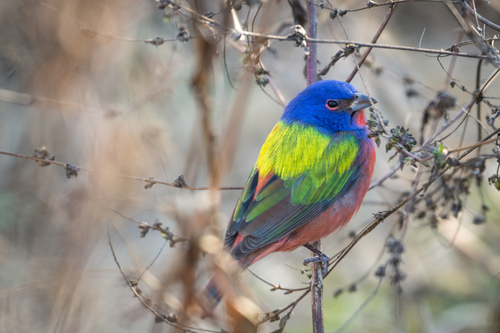 Painted Bunting
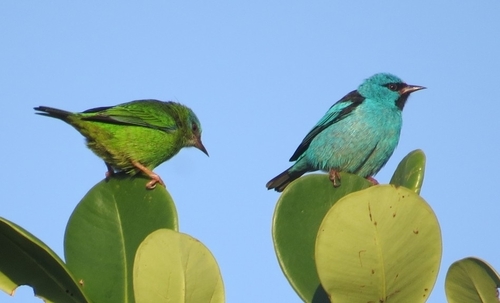 Blue Dacnis
In breve
Il segno di campo più affidabile tra il Painted Bunting e il Blue Dacnis è il piumaggio del maschio: i maschi di Painted Bunting mostrano un vivace mix di blu, verde e rosso, mentre i maschi di Blue Dacnis sono turchesi o blu con una maschera nera e il dorso nero. Le femmine e gli immaturi di entrambe le specie sono verdastri, ma le femmine di Painted Bunting sono di un verde più brillante e puro, mentre le femmine di Blue Dacnis sono verdi con una testa bluastro e una gola grigia. Anche la forma del becco aiuta: il Painted Bunting ha un becco più spesso e conico, mentre il Blue Dacnis ha un becco più sottile e appuntito. Le dimensioni sono simili, ma il Painted Bunting è leggermente più grande e robusto. In volo o posato, cerca il verde complessivo più brillante del Painted Bunting nelle femmine e nei giovani, e le ali nere bordate di blu del Blue Dacnis nei maschi.
Consigli di identificazione
- Adult Male Plumage: I maschi di Painted Bunting sono inconfondibili con una testa blu, un dorso verde e parti inferiori/rump rosse. I maschi di Blue Dacnis sono blu/turchesi con una maschera nera e un dorso nero—mai rossi o verdi.
- Female and Juvenile Plumage: Le femmine e gli immaturi di Painted Bunting sono di un verde brillante e puro, privi di blu o grigio sulla testa o sulla gola. Le femmine di Blue Dacnis sono verdi ma hanno una testa bluastra e una gola grigia—cerca questo sottile contrasto.
- Wing Pattern in Males: I maschi di Blue Dacnis hanno ali nere con ampi bordi blu, visibili in volo o a riposo. Le ali del Painted Bunting sono semplici e corrispondono al colore del corpo, non mostrando mai questo contrasto.
- Bill Shape: Il Painted Bunting ha un becco spesso e conico, tipico dei cardinalidi. Il Blue Dacnis ha un becco più sottile e appuntito, più adatto a raccogliere insetti e nettare.
- Size and Structure: Il Painted Bunting è leggermente più grande e robusto, con un corpo più rotondo e un collo più spesso. Il Blue Dacnis è più snello e delicato, con un becco più fine e un aspetto più agile.
- Head Pattern: I maschi di Blue Dacnis hanno una maschera nera che va dalle lore oltre l'occhio, in contrasto con la testa blu. I maschi di Painted Bunting hanno una testa blu solida senza maschera.
- Back Color: I maschi di Painted Bunting hanno un dorso verde; i maschi di Blue Dacnis hanno un dorso nero. Questo è visibile anche quando sono posati.
- Underparts: I maschi di Painted Bunting hanno parti inferiori rosse; i maschi di Blue Dacnis hanno parti inferiori turchesi con un centro della gola nera.
- Tail Pattern: Il Blue Dacnis ha una coda nera con sottili bordi blu sulle piume esterne; la coda del Painted Bunting non ha un motivo distintivo.
- Female Head and Throat: Le femmine di Blue Dacnis mostrano una sfumatura bluastro sulla testa e una gola grigia, mentre le femmine di Painted Bunting sono verdi in tutto.
- Behavior: Il Painted Bunting è più probabile che venga visto nascondersi in folti cespugli o bassa vegetazione; il Blue Dacnis è più attivo, foraggiando nella parte esterna della chioma.
- Habitat and Range: Il Painted Bunting è atteso in Nord America, specialmente nel sud-est; il Blue Dacnis è una specie tropicale e sarebbe estremamente raro a nord dell'America Centrale.
- Voice: Il Blue Dacnis emette richiami sottili, acuti e deboli e una canzone affannosa. La canzone del Painted Bunting è più ricca e musicale.
- Season and Age: Alla fine dell'estate e in autunno, i giovani e le femmine di Painted Bunting sono verdi; le femmine e gli immaturi di Blue Dacnis sono verdi con testa e gola bluastre/grigie. Controlla sempre il sottile colore della testa/gola.
- Pitfalls: Gli immaturi di Painted Bunting possono essere separati dalle femmine solo con un attento esame, ma entrambi sono di un verde più brillante rispetto a qualsiasi Blue Dacnis. Le femmine di Blue Dacnis non mostrano mai il verde puro e brillante del Painted Bunting.
Taglia
Il Painted Bunting è leggermente più grande, misurando 12–14 cm di lunghezza e pesando 13–19 g. Il Blue Dacnis è un po' più piccolo a 11–12 cm e 10–15.5 g. Entrambi sono piccoli uccelli canori, ma il Painted Bunting è più robusto e ha una costruzione più robusta, mentre il Blue Dacnis è più snello e delicato. La differenza è sottile sul campo, ma il Painted Bunting può apparire più robusto, specialmente quando è posato.
Piumaggio
- Juvenile and Female Painted Bunting: Entrambi i sessi nel loro primo anno, così come le femmine adulte, sono di un verde brillante e puro sopra e giallo-verde sotto. Questo verde è insolitamente vivido per un uccello canoro nordamericano e manca delle tonalità blu o grigie viste nel Blue Dacnis. I giovani mutano due volte nel loro primo autunno, ma entrambe le mute producono un piumaggio simile a quello della femmina adulta—brillante verde in generale.
- Juvenile and Female Blue Dacnis: Le femmine adulte sono verdi sopra con parti inferiori verde chiaro, ma la loro testa è tinta di bluastro e la gola è grigia, non verde. I giovani non sono descritti in dettaglio, ma probabilmente assomigliano alle femmine adulte. Il verde è più opaco e meno puro rispetto al Painted Bunting, e la testa bluastra e la gola grigia sono chiave.
- Adult Male Painted Bunting: Strabiliante multicolore—testa blu scuro, dorso verde, parti inferiori e rump rossi. Nessuna maschera blu o dorso nero. Nessun altro uccello nordamericano corrisponde a questa combinazione.
- Adult Male Blue Dacnis: Turchese o blu in generale, con una maschera nera (dalle lore fino dietro l'occhio) e dorso nero. Le ali e la coda sono nere con bordi blu. Le parti inferiori sono turchesi tranne per un centro della gola nera. Nessun rosso o verde sul corpo. Le sottospecie variano nel tono di blu, ma hanno sempre una maschera nera e un dorso nero.
- Wings in Flight: Il Painted Bunting (tutte le età) mostra ali semplici che corrispondono al colore del corpo, prive di forte contrasto. I maschi di Blue Dacnis hanno ali nere con ampi bordi blu, creando un aspetto contrastante in volo o quando sono posati con le ali chiuse.
Comportamento
Il Painted Bunting è spesso segreto, nascondendosi in folti cespugli anche quando canta, e può essere difficile da individuare nonostante i suoi colori brillanti. Il Blue Dacnis è più attivo e può essere visto foraggiando nelle parti esterne degli alberi, a volte in coppie o piccoli gruppi. Il Painted Bunting tende a posarsi più in basso in cespugli o alberi bassi, mentre il Blue Dacnis è più probabile che venga visto più in alto, muovendosi rapidamente attraverso la chioma.
Habitat
Il Painted Bunting è nativo del Nord America, nidificando in aree cespugliose, bordi di boschi e alberi bassi, spesso nel sud-est degli Stati Uniti. Il Blue Dacnis si trova in America Centrale e Meridionale (escludendo Cile e Uruguay), abitante di una vasta gamma di habitat forestali e semi-aperti, comprese le parti esterne degli alberi e i bordi delle foreste. Se visto in Nord America, il Blue Dacnis sarebbe estremamente raro e fuori dal suo areale, mentre il Painted Bunting è atteso nel suo areale di nidificazione.
Voce
La canzone del Painted Bunting non è descritta qui, ma è generalmente un dolce, musicale warble. Il Blue Dacnis ha una canzone debole e affannosa di note sottili e acute (ad es., "wee-tee tsee-tew"), e i suoi richiami sono note alte e sottili "tsit" o "chit-it". Se senti una canzone sottile, debole e acuta, è più probabile che sia un Blue Dacnis; la canzone del Painted Bunting è più ricca e complessa.