

Azulillo Sietecolores vs Dacnis Azul
Passerina ciris frente a Dacnis cayana
Juega un quiz con Azulillo Sietecolores y Dacnis Azul
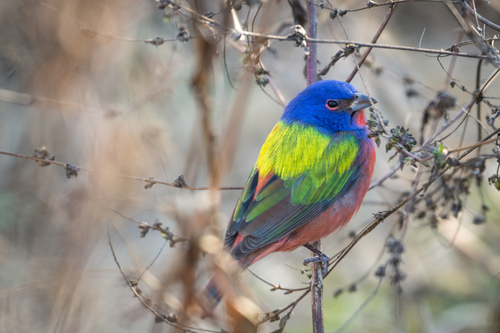 Azulillo Sietecolores
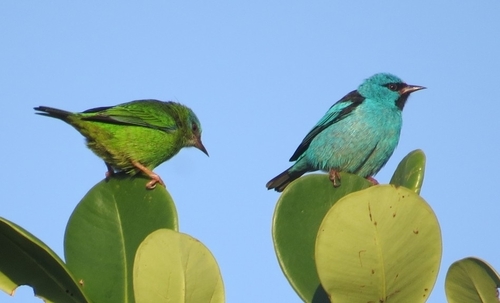 Dacnis Azul
En breve
La marca de campo más confiable entre el Azulillo Sietecolores y el Dacnis Azul es el plumaje del macho: los machos de Azulillo Sietecolores muestran una mezcla vívida de azul, verde y rojo, mientras que los machos de Dacnis Azul son turquesa a azul con una máscara negra y espalda. Las hembras y los inmaduros de ambas especies son verdosos, pero las hembras de Azulillo Sietecolores son de un verde más brillante y verdadero, mientras que las hembras de Dacnis Azul son verdes con una cabeza azulada y garganta grisácea. La forma del pico también ayuda: el Azulillo Sietecolores tiene un pico más grueso y cónico, mientras que el Dacnis Azul tiene un pico más delgado y puntiagudo. El tamaño es similar, pero el Azulillo Sietecolores es ligeramente más grande y robusto. En vuelo o posado, busca el verde más brillante del Azulillo Sietecolores en hembras y juveniles, y las alas negras con bordes azules del Dacnis Azul en machos.
Consejos de identificación
- Plumaje del Macho Adulto: Los machos de Azulillo Sietecolores son inconfundibles con una cabeza azul, espalda verde y partes inferiores/rabadilla rojas. Los machos de Dacnis Azul son azules/turquesas con una máscara negra y espalda—nunca rojos o verdes.
- Plumaje de Hembras y Juveniles: Las hembras y los inmaduros de Azulillo Sietecolores son de un verde brillante y verdadero en general, sin azul o gris en la cabeza o garganta. Las hembras de Dacnis Azul son verdes pero tienen una cabeza azulada y garganta gris—busca este sutil contraste.
- Patrón de Alas en Machos: Los machos de Dacnis Azul tienen alas negras con amplios bordes azules, visibles en vuelo o en reposo. Las alas del Azulillo Sietecolores son lisas y coinciden con el color del cuerpo, nunca mostrando este contraste.
- Forma del Pico: El Azulillo Sietecolores tiene un pico grueso y cónico, típico de los cardenalidos. El Dacnis Azul tiene un pico más delgado y puntiagudo, más adecuado para recoger insectos y néctar.
- Tamaño y Estructura: El Azulillo Sietecolores es ligeramente más grande y robusto, con un cuerpo más redondeado y un cuello más grueso. El Dacnis Azul es más esbelto y delicado, con un pico más fino y una apariencia más ágil.
- Patrón de Cabeza: Los machos de Dacnis Azul tienen una máscara negra desde los lóbulos hasta detrás del ojo, contrastando con la cabeza azul. Los machos de Azulillo Sietecolores tienen una cabeza azul sólida sin máscara.
- Color de Espalda: Los machos de Azulillo Sietecolores tienen una espalda verde; los machos de Dacnis Azul tienen una espalda negra. Esto es visible incluso cuando están posados.
- Partes Inferiores: Los machos de Azulillo Sietecolores tienen partes inferiores rojas; los machos de Dacnis Azul tienen partes inferiores turquesas con un centro de garganta negra.
- Patrón de Cola: El Dacnis Azul tiene una cola negra con bordes azules delgados en las plumas externas; la cola del Azulillo Sietecolores no tiene un patrón distintivo.
- Cabeza y Garganta de Hembras: Las hembras de Dacnis Azul muestran un tinte azul en la cabeza y una garganta gris, mientras que las hembras de Azulillo Sietecolores son verdes en su totalidad.
- Comportamiento: El Azulillo Sietecolores es más probable que se vea escondiéndose en la densa vegetación o arbustos bajos; el Dacnis Azul es más activo, forrajeando en el dosel exterior.
- Hábitat y Distribución: Se espera que el Azulillo Sietecolores esté en América del Norte, especialmente en el sureste; el Dacnis Azul es una especie tropical y sería extremadamente raro al norte de América Central.
- Voz: El Dacnis Azul emite llamadas delgadas, agudas y débiles y una canción sibilante. La canción del Azulillo Sietecolores es más rica y musical.
- Temporada y Edad: A finales del verano y en otoño, los juveniles y hembras de Azulillo Sietecolores son verdes; las hembras e inmaduros de Dacnis Azul son verdes con cabeza y garganta azuladas/grises. Siempre verifica el color sutil de la cabeza/garganta.
- Trampas: Los inmaduros de Azulillo Sietecolores solo pueden separarse de las hembras con una inspección cercana, pero ambos son de un verde más brillante que cualquier Dacnis Azul. Las hembras de Dacnis Azul nunca muestran el verde puro y brillante del Azulillo Sietecolores.
Tamaño
El Azulillo Sietecolores es ligeramente más grande, midiendo 12–14 cm de longitud y pesando 13–19 g. El Dacnis Azul es un poco más pequeño, con 11–12 cm y 10–15.5 g. Ambos son pequeños pájaros cantores, pero el Azulillo Sietecolores es más robusto y tiene una construcción más robusta, mientras que el Dacnis Azul es más delgado y delicado. La diferencia es sutil en el campo, pero el Azulillo Sietecolores puede parecer más robusto, especialmente cuando está posado.
Plumaje
- Juvenil y Hembra de Azulillo Sietecolores: Ambos sexos en su primer año, así como las hembras adultas, son de un verde brillante y verdadero arriba y amarillo-verde abajo. Este verde es inusualmente vívido para un pájaro cantor de América del Norte y carece de los tonos azules o grises que se ven en el Dacnis Azul. Los juveniles mudan dos veces en su primer otoño, pero ambas mudas producen un plumaje similar al de la hembra adulta—verde brillante en general.
- Juvenil y Hembra de Dacnis Azul: Las hembras adultas son verdes arriba con partes inferiores verdosas más pálidas, pero su cabeza tiene un tinte azul y la garganta es gris, no verde. Los juveniles no se describen en detalle, pero probablemente se asemejan a las hembras adultas. El verde es más apagado y menos puro que el del Azulillo Sietecolores, y la cabeza azulada y la garganta gris son clave.
- Macho Adulto de Azulillo Sietecolores: Llamativamente multicolor—cabeza azul oscura, espalda verde, partes inferiores y rabadilla rojas. Sin máscara azul ni espalda negra. Ningún otro pájaro de América del Norte coincide con esta combinación.
- Macho Adulto de Dacnis Azul: Turquesa a azul en general, con una máscara negra (lóbulos hasta detrás del ojo) y espalda negra. Las alas y la cola son negras con bordes azules. Las partes inferiores son turquesas excepto por un centro de garganta negra. Sin rojo o verde en el cuerpo. Las subespecies varían en el tono de azul, pero siempre tienen una máscara y espalda negras.
- Alas en Vuelo: El Azulillo Sietecolores (todas las edades) muestra alas lisas que coinciden con el color del cuerpo, careciendo de un fuerte contraste. Los machos de Dacnis Azul tienen alas negras con amplios bordes azules, creando un aspecto contrastante en vuelo o cuando están posados con las alas cerradas.
Comportamiento
El Azulillo Sietecolores es a menudo secreto, escondiéndose en la densa vegetación incluso cuando canta, y puede ser difícil de ver a pesar de sus colores brillantes. El Dacnis Azul es más activo y se puede ver forrajeando en las partes exteriores de los árboles, a veces en parejas o pequeños grupos. El Azulillo Sietecolores tiende a posarse más bajo en arbustos o árboles bajos, mientras que el Dacnis Azul es más propenso a ser visto más alto, moviéndose rápidamente a través del dosel.
Hábitat
El Azulillo Sietecolores es nativo de América del Norte, criando en áreas arbustivas, bordes de bosques y árboles bajos, a menudo en el sureste de los Estados Unidos. El Dacnis Azul se encuentra en América Central y del Sur (excluyendo Chile y Uruguay), habitando una amplia gama de hábitats forestales y semi-abiertos, incluyendo las partes exteriores de los árboles y bordes de bosques. Si se ve en América del Norte, el Dacnis Azul sería extremadamente raro y fuera de su rango, mientras que se espera que el Azulillo Sietecolores esté en su rango de cría.
Voz
La canción del Azulillo Sietecolores no se describe aquí, pero generalmente es un trino dulce y musical. El Dacnis Azul tiene una canción débil y sibilante de notas delgadas y agudas (por ejemplo, "wee-tee tsee-tew"), y sus llamadas son notas altas y delgadas "tsit" o "chit-it". Si escuchas una canción delgada, débil y aguda, es más probable que sea un Dacnis Azul; la canción del Azulillo Sietecolores es más rica y compleja.