

rouxinol-grande-oriental vs sakhalin grasshopper warbler
Acrocephalus orientalis versus Helopsaltes amnicola
Jogue um quiz com rouxinol-grande-oriental e sakhalin grasshopper warbler
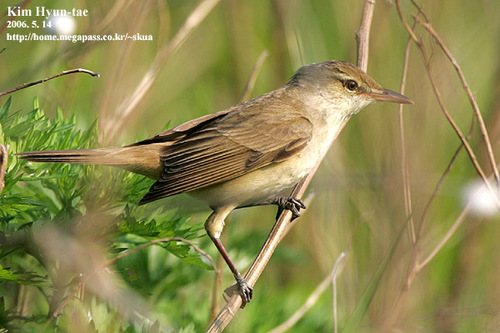 rouxinol-grande-oriental
 sakhalin grasshopper warbler
Em resumo
A marca de campo mais confiável para separar o rouxinol-grande-oriental da cigarrinha-de-pallas é a cauda com ponta clara do Oriental, que é visível tanto empoleirada quanto em voo e está ausente no Sakhalin. O rouxinol-grande-oriental também apresenta uma distinta faixa ocular escura com um supercílios claro, enquanto a cigarrinha-de-pallas tem um rosto mais simples e plumagem mais uniforme. Estruturalmente, o rouxinol-grande-oriental é maior, com um bico mais pesado e longo e cauda mais quadrada, enquanto o Sakhalin parece mais compacto e tem um bico mais curto e fino. A coloração das partes inferiores e da cauda também difere: o Oriental é esbranquiçado embaixo com flancos marrons, enquanto o Sakhalin é amarelado com coberturas de cauda de laranja opaco. As vocalizações são muito diferentes se ouvidas.
Dicas de identificação
- Ponta da cauda clara (todas as idades): O rouxinol-grande-oriental mostra uma ponta clara na cauda, visível tanto empoleirada quanto em voo. A cigarrinha-de-pallas não possui essa característica; sua cauda é de cor uniforme.
- Padrão do rosto: O rouxinol-grande-oriental tem uma forte faixa ocular escura e um supercílios claro distinto (sobrancelha), proporcionando um contraste facial marcante. A cigarrinha-de-pallas tem um rosto simples, sem faixa ocular forte ou supercílios.
- Estrutura do bico: O rouxinol-grande-oriental tem um bico longo e pesado (marron em cima, rosa embaixo, abertura laranja), enquanto o bico do Sakhalin é mais curto e fino. Isso é melhor avaliado quando ambas as espécies são vistas lado a lado.
- Forma da cauda: A cauda do Oriental é mais curta e com extremidade mais quadrada; a forma da cauda do Sakhalin não é especificamente descrita, mas a falta de uma ponta clara é fundamental.
- Partes superiores: O Oriental é marrom em cima com um rabo mais claro; o Sakhalin é de um marrom-oliva sem listras em cima, parecendo mais uniforme e menos contrastante.
- Partes inferiores: O Oriental é esbranquiçado embaixo, com flancos marrons e coberturas de cauda. O Sakhalin é amarelado embaixo, com um peito cinza uniforme e coberturas de cauda de laranja opaco.
- Coberturas de cauda: As coberturas de cauda de laranja opaco do Sakhalin são distintas e contrastam com a cauda mais marrom do Oriental.
- Tamanho e estrutura: O Oriental é visivelmente maior e mais robusto, com um corpo e bico mais longos, enquanto o Sakhalin é menor e mais compacto. Isso é mais útil com experiência ou comparação direta.
- Postura empoleirada: O Oriental frequentemente se empoleira de forma ereta e proeminente; o Sakhalin tende a ser mais furtivo, embora isso nem sempre seja confiável.
- Canto: O canto do Oriental é uma mistura de notas trêmulas e ásperas; o do Sakhalin é uma frase musical curta e alta. Se ouvido, isso é diagnóstico.
- Chamado: O Oriental emite um 'chack' alto e áspero; o chamado do Sakhalin não é descrito, então isso pode ajudar se o chamado for ouvido.
- Habitat: O Oriental prefere canaviais e bordas de áreas úmidas; o Sakhalin pode estar em gramados densos ou arbustos, mas a sobreposição de habitat é possível.
- Sem listras embaixo: Ambas as espécies não apresentam listras fortes nas partes inferiores, então isso não é um separador.
- Sem padrão de asa juvenil distinto: Nenhuma das espécies apresenta um padrão único de asa superior juvenil, então concentre-se na cauda e no rosto para aves imaturas.
- Estação e sexo: Nenhuma diferença de plumagem sazonal ou baseada em sexo é descrita para qualquer uma das espécies; todas as marcas acima se aplicam durante todo o ano e a ambos os sexos.
Tamanho
O rouxinol-grande-oriental é um Acrocephalus grande, medindo 18–20 cm de comprimento com uma envergadura de 23–26 cm [wikipedia]. A cigarrinha-de-pallas é menor e mais compacta, embora medidas exatas não sejam fornecidas nas notas. No campo, o Oriental geralmente parecerá ter um corpo mais longo e um bico mais pesado, enquanto o Sakhalin é mais curto e mais delicado no geral.
Plumagem
- Aves juvenis e não reprodutoras: O rouxinol-grande-oriental de todas as idades mostra uma ponta clara na cauda, que é um separador chave da cigarrinha-de-pallas, que não possui essa característica. O Oriental também tem partes superiores marrons com um rabo mais claro e uma faixa ocular escura contrastante com um supercílios claro; as partes inferiores são esbranquiçadas com flancos marrons e coberturas de cauda. A cigarrinha-de-pallas tem um dorso marrom-oliva sem listras, um peito cinza uniforme, partes inferiores amareladas e coberturas de cauda de laranja opaco sem manchas. Seu rosto é simples, sem a forte faixa ocular e supercílios do Oriental. Nenhum padrão de asa juvenil distinto ou marcas de voo são descritos para qualquer uma das espécies, então a ponta da cauda e o padrão do rosto são as pistas de plumagem mais confiáveis.
Comportamento
O rouxinol-grande-oriental frequentemente canta de um poleiro proeminente, como o topo de um canavial ou arbusto, e pode parecer mais ereto e conspícuo. O comportamento da cigarrinha-de-pallas é menos descrito, mas como um Locustellid, pode ser mais furtivo e menos propenso a se empoleirar de forma proeminente em aberto, embora isso não seja diagnóstico a partir das notas fornecidas.
Habitat
Ambas as espécies estão associadas a vegetação densa, mas o rouxinol-grande-oriental é tipicamente encontrado em canaviais e habitats úmidos semelhantes. O habitat da cigarrinha-de-pallas não é detalhado nas notas, mas como uma cigarrinha, pode preferir áreas densas, gramadas ou arbustivas, às vezes longe da água. Em áreas sobrepostas, o habitat sozinho não é um separador confiável.
Voz
O rouxinol-grande-oriental emite um canto de frases trêmulas misturadas com notas guturais e ásperas, e um chamado alto e áspero 'chack'. A cigarrinha-de-pallas tem um canto curto, alto e musical, descrito como mais musical do que a cigarrinha-de-pallas e nada parecido com o trinado semelhante a insetos da Locustella europeia. Se o canto for ouvido, a diferença é óbvia: o Oriental é áspero e variado, o Sakhalin é curto e musical.
rouxinol-grande-oriental · sakhalin grasshopper warbler · Minhas aves difíceis