

Motmot

オオヨシキリ 対 エゾセンニュウ

Acrocephalus orientalis 対 Helopsaltes amnicola

オオヨシキリとエゾセンニュウのクイズ
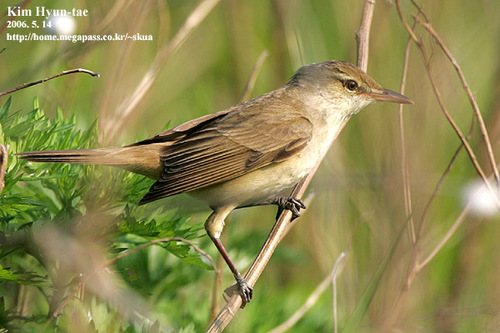
オオヨシキリ (Acrocephalus orientalis) オオヨシキリ
エゾセンニュウ (Helopsaltes amnicola) エゾセンニュウ

メディア

読み込み中…

要点

オオヨシキリとエゾセンニュウを区別する最も信頼できるフィールドマークは、オオヨシキリの淡い尾先であり、これは止まっているときも飛んでいるときも見え、エゾにはありません。オオヨシキリは明確な暗いアイストライプと淡いスーパシリウムを示しますが、エゾセンニュウはより地味な顔と均一な羽毛を持っています。構造的には、オオヨシキリは大きく、重くて長いくちばしと四角い尾を持ち、エゾはよりコンパクトに見え、短くて細いくちばしを持っています。腹部と尾の色合いも異なります:オオヨシキリは下が白っぽく、茶色の側面を持ち、エゾは淡いオレンジ色の尾羽覆いを持つバフ色です。声の発音は、聞こえた場合には非常に異なります。

識別のコツ

  1. Pale tail tip (all ages): オオヨシキリは尾の淡い先端を示し、止まっているときも飛んでいるときも見えます。エゾセンニュウはこの特徴がなく、尾は均一な色です。
  2. Face pattern: オオヨシキリは強い暗いアイストライプと明確な淡いスーパシリウム(眉毛)を持ち、顔のコントラストが際立っています。エゾセンニュウは強いアイストライプやスーパシリウムがない地味な顔を持っています。
  3. Bill structure: オオヨシキリは長くて重いくちばし(上が茶色、下がピンク、オレンジの口裂け)を持ち、エゾのくちばしは短くて細いです。これは両種がよく並んで見られたときに最も判断しやすいです。
  4. Tail shape: オオヨシキリの尾は短くて四角い端を持ち、エゾの尾の形は特に記述されていませんが、淡い先端がないことが重要です。
  5. Upperparts: オオヨシキリは上が茶色で、より淡い尾羽を持ち、エゾはストライプのないオリーブブラウンで、より均一でコントラストが少ないように見えます。
  6. Underparts: オオヨシキリは下が白っぽく、茶色がかった側面と尾羽覆いを持っています。エゾは下がバフ色で、均一な灰色の胸と鈍いオレンジ色の尾羽覆いを持っています。
  7. Undertail coverts: エゾの鈍いオレンジ色の尾羽覆いは特徴的で、オオヨシキリの茶色がかった尾羽と対照的です。
  8. Size and structure: オオヨシキリは明らかに大きくて頑丈で、体とくちばしが長いのに対し、エゾは小さくてコンパクトです。これは経験や直接比較が最も役立ちます。
  9. Perched posture: オオヨシキリはしばしば直立して目立つように止まり、エゾはより隠れる傾向がありますが、これは常に信頼できるわけではありません。
  10. Song: オオヨシキリの歌は、さえずりと粗い、鳴き声の音を混ぜたもので、エゾの歌は短くて大きな音楽的なフレーズです。聞こえた場合、これは診断的です。
  11. Call: オオヨシキリは大きくて粗い「チャック」と鳴き、エゾの鳴き声は記述されていないため、鳴き声が聞こえた場合には役立つかもしれません。
  12. Habitat: オオヨシキリはヨシ原や湿地の縁を好み、エゾは密な草や低木にいるかもしれませんが、生息地の重複は可能です。
  13. No streaking below: 両種は腹部に強いストライプがないため、これは区別にはなりません。
  14. No distinctive juvenile wing pattern: 両種とも独自の幼鳥の上翼パターンを示さないため、未熟な鳥の尾と顔に焦点を当ててください。
  15. Season and sex: 両種に強い季節的または性別に基づく羽毛の違いは記述されていないため、上記のすべてのマークは年間を通じて両性に適用されます。

大きさ

オオヨシキリは大きなAcrocephalusで、全長18〜20 cm、翼開長23〜26 cmです [wikipedia]。エゾセンニュウは小さくてコンパクトですが、正確な測定値はメモに記載されていません。フィールドでは、オオヨシキリは通常、体が長く、くちばしが重いように見え、エゾは全体的に短くて繊細に見えます。

羽色

行動

オオヨシキリはしばしば目立つ止まり木から歌い、ヨシや低木の上部などでより直立して目立つように見えることがあります。エゾセンニュウの行動はあまり記述されていませんが、Locustellidとして、より隠れる傾向があり、開けた場所で目立って止まることは少ないかもしれませんが、これは提供されたメモからは診断的ではありません。

生息環境

両種は密な植生に関連していますが、オオヨシキリは通常、ヨシ原や同様の湿地生息地に見られます。エゾセンニュウの生息地はメモに詳細が記載されていませんが、草食性のセンニュウとして、密な草地や低木のある地域を好むかもしれません。水から離れていることもあります。重複する地域では、生息地だけでは信頼できる区別にはなりません。

声

オオヨシキリは、さえずりのフレーズと喉の奥から出る粗い音を混ぜた歌を歌い、大きくて粗い「チャック」と鳴きます。エゾセンニュウは短くて大きな音楽的な歌を持ち、シベリアセンニュウよりも音楽的で、ヨーロッパのLocustellaの昆虫のような鳴き声とはまったく異なります。歌が聞こえた場合、違いは明らかです:オオヨシキリは粗くて多様で、エゾは短くて音楽的です。

より良い説明を送る

比較と同じ項目を使ってください。文章はすぐに公開されます。

The most reliable field mark to separate Oriental Reed Warbler from Sakhalin Grasshopper Warbler is the Oriental's pale-tipped tail, which is visible both perched and in flight and is absent in Sakhalin. Oriental Reed Warbler also shows a distinct dark eyestripe with a pale supercilium, while Sakhalin Grasshopper Warbler has a plainer face and more uniform plumage. Structurally, Oriental Reed Warbler is larger, with a heavier, longer bill and squarer tail, whereas Sakhalin appears more compact and has a shorter, finer bill. Underparts and undertail coloration also differ: Oriental is whitish below with brown flanks, while Sakhalin is buffy with dull orange undertail coverts. Vocalizations are very different if heard.

  1. Pale tail tip (all ages): Oriental Reed Warbler shows a pale tip to the tail, visible both perched and in flight. Sakhalin Grasshopper Warbler lacks this feature; its tail is uniformly colored.
  2. Face pattern: Oriental Reed Warbler has a strong dark eyestripe and a distinct pale supercilium (eyebrow), giving a striking facial contrast. Sakhalin Grasshopper Warbler has a plain face with no strong eyestripe or supercilium.
  3. Bill structure: Oriental Reed Warbler has a long, heavy bill (brown above, pink below, orange gape), while Sakhalin's bill is shorter and finer. This is best judged when both species are seen well side by side.
  4. Tail shape: Oriental's tail is shorter and more square-ended; Sakhalin's tail shape is not specifically described, but the lack of a pale tip is key.
  5. Upperparts: Oriental is brown above with a paler rump; Sakhalin is unstreaked olive-brown above, appearing more uniform and less contrasting.
  6. Underparts: Oriental is whitish below, with brownish flanks and undertail coverts. Sakhalin is buff below, with a uniformly grey breast and dull orange undertail coverts.
  7. Undertail coverts: The dull orange undertail coverts of Sakhalin are distinctive and contrast with the browner undertail of Oriental.
  8. Size and structure: Oriental is noticeably larger and more robust, with a longer body and bill, while Sakhalin is smaller and more compact. This is most useful with experience or direct comparison.
  9. Perched posture: Oriental often perches upright and prominently; Sakhalin is likely to be more skulking, though this is not always reliable.
  10. Song: Oriental's song is a mix of warbling and harsh, croaking notes; Sakhalin's is a short, loud, musical phrase. If heard, this is diagnostic.
  11. Call: Oriental gives a loud, harsh 'chack'; Sakhalin's call is not described, so this may help if the call is heard.
  12. Habitat: Oriental prefers reedbeds and wetland edges; Sakhalin may be in dense grass or shrubs, but habitat overlap is possible.
  13. No streaking below: Both species lack strong streaking on the underparts, so this is not a separator.
  14. No distinctive juvenile wing pattern: Neither species shows a unique juvenile upperwing pattern, so focus on tail and face for immature birds.
  15. Season and sex: No strong seasonal or sex-based plumage differences are described for either species; all marks above apply year-round and to both sexes.

Oriental Reed Warbler is a large Acrocephalus, measuring 18–20 cm in length with a wingspan of 23–26 cm [wikipedia]. Sakhalin Grasshopper Warbler is smaller and more compact, though exact measurements are not provided in the notes. In the field, Oriental will usually appear longer-bodied and heavier-billed, while Sakhalin is shorter and more delicate overall.

  • Juvenile and non-breeding birds: The Oriental Reed Warbler of all ages shows a pale tip to the tail, which is a key separator from Sakhalin Grasshopper Warbler, which lacks this feature. Oriental also has brown upperparts with a paler rump and a contrasting dark eyestripe with a pale supercilium; underparts are whitish with brownish flanks and undertail coverts. Sakhalin Grasshopper Warbler has an unstreaked olive-brown back, a uniformly grey breast, buff underparts, and unmottled dull orange undertail coverts. Its face is plain, lacking the strong eyestripe and supercilium of Oriental. No distinctive juvenile wing or flight marks are described for either species, so the tail tip and face pattern are the most reliable plumage clues.

Oriental Reed Warbler often sings from a prominent perch, such as the top of a reed or bush, and may appear more upright and conspicuous. Sakhalin Grasshopper Warbler's behavior is less described, but as a Locustellid, it may be more skulking and less likely to perch prominently in the open, though this is not diagnostic from the notes provided.

Both species are associated with dense vegetation, but Oriental Reed Warbler is typically found in reedbeds and similar wetland habitats. Sakhalin Grasshopper Warbler's habitat is not detailed in the notes, but as a grasshopper warbler, it may prefer dense, grassy or shrubby areas, sometimes away from water. In overlapping areas, habitat alone is not a reliable separator.

Oriental Reed Warbler gives a song of warbling phrases mixed with guttural, croaking notes, and a loud, harsh 'chack' call. Sakhalin Grasshopper Warbler has a short, loud, musical song, described as more musical than Pallas's Grasshopper Warbler and not at all like the insect-like reeling of European Locustella. If the song is heard, the difference is obvious: Oriental is harsh and varied, Sakhalin is short and musical.

変更を破棄しますか?

保存していない編集があります。今離れると失われます。

オオヨシキリ · エゾセンニュウ · 苦手な鳥