

Oriental Reed Warbler vs Sakhalin Grasshopper Warbler
Acrocephalus orientalis contro Helopsaltes amnicola
Fai un quiz con Oriental Reed Warbler e Sakhalin Grasshopper Warbler
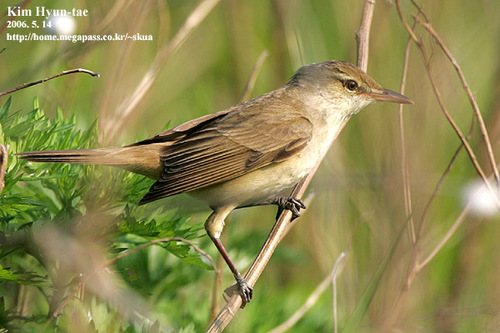 Oriental Reed Warbler
 Sakhalin Grasshopper Warbler
In breve
Il segno di campo più affidabile per separare l'Oriental Reed Warbler dal Sakhalin Grasshopper Warbler è la coda a punta chiara dell'Oriental, visibile sia in posizione perpendicolare che in volo e assente nel Sakhalin. L'Oriental Reed Warbler mostra anche una distintiva striscia oculare scura con un supercilium chiaro, mentre il Sakhalin Grasshopper Warbler ha un volto più semplice e un piumaggio più uniforme. Strutturalmente, l'Oriental Reed Warbler è più grande, con un becco più pesante e lungo e una coda più quadrata, mentre il Sakhalin appare più compatto e ha un becco più corto e fine. Anche la colorazione delle parti inferiori e della coda differisce: l'Oriental è biancastro sotto con fianchi marroni, mentre il Sakhalin è color crema con copritrici della coda di un arancione opaco. Le vocalizzazioni sono molto diverse se ascoltate.
Consigli di identificazione
- Punta della coda chiara (tutte le età): L'Oriental Reed Warbler mostra una punta chiara alla coda, visibile sia in posizione perpendicolare che in volo. Il Sakhalin Grasshopper Warbler manca di questa caratteristica; la sua coda è di colore uniforme.
- Schema del volto: L'Oriental Reed Warbler ha una forte striscia oculare scura e un distintivo supercilium chiaro (sopracciglio), che conferisce un forte contrasto facciale. Il Sakhalin Grasshopper Warbler ha un volto semplice senza una forte striscia oculare o supercilium.
- Struttura del becco: L'Oriental Reed Warbler ha un becco lungo e pesante (marrone sopra, rosa sotto, apertura arancione), mentre il becco del Sakhalin è più corto e fine. Questo è meglio giudicato quando entrambe le specie sono viste bene affiancate.
- Forma della coda: La coda dell'Oriental è più corta e più quadrata; la forma della coda del Sakhalin non è specificamente descritta, ma la mancanza di una punta chiara è fondamentale.
- Parte superiore: L'Oriental è marrone sopra con un dorso più chiaro; il Sakhalin è di un marrone oliva non striato sopra, apparendo più uniforme e meno contrastante.
- Parte inferiore: L'Oriental è biancastro sotto, con fianchi marroni e copritrici della coda. Il Sakhalin è color crema sotto, con un petto uniformemente grigio e copritrici della coda di un arancione opaco.
- Copritrici della coda: Le copritrici della coda di un arancione opaco del Sakhalin sono distintive e contrastano con la coda più marrone dell'Oriental.
- Dimensioni e struttura: L'Oriental è notevolmente più grande e più robusto, con un corpo e un becco più lunghi, mentre il Sakhalin è più piccolo e compatto. Questo è più utile con l'esperienza o il confronto diretto.
- Postura in perching: L'Oriental spesso si posiziona in modo eretto e prominente; il Sakhalin tende a essere più schivo, anche se questo non è sempre affidabile.
- Canto: Il canto dell'Oriental è un mix di note gorgheggianti e dure, croccanti; il canto del Sakhalin è una frase musicale breve e forte. Se ascoltato, questo è diagnostico.
- Richiamo: L'Oriental emette un forte e duro 'chack'; il richiamo del Sakhalin non è descritto, quindi questo potrebbe aiutare se il richiamo viene ascoltato.
- Habitat: L'Oriental preferisce le zone umide e i margini delle paludi; il Sakhalin può trovarsi in erba densa o cespugli, ma è possibile una sovrapposizione degli habitat.
- Nessuna striatura sotto: Entrambe le specie mancano di forti striature sulle parti inferiori, quindi questo non è un separatore.
- Nessun schema distintivo delle ali juvenile: Nessuna delle due specie mostra un unico schema delle ali superiori juvenile, quindi concentrati sulla coda e sul volto per gli uccelli immaturi.
- Stagione e sesso: Non sono descritte forti differenze di piumaggio stagionali o basate sul sesso per nessuna delle due specie; tutti i segni sopra si applicano tutto l'anno e a entrambi i sessi.
Taglia
L'Oriental Reed Warbler è un grande Acrocephalus, che misura 18–20 cm di lunghezza con un'apertura alare di 23–26 cm [wikipedia]. Il Sakhalin Grasshopper Warbler è più piccolo e più compatto, anche se le misure esatte non sono fornite nelle note. Sul campo, l'Oriental apparirà di solito con un corpo più lungo e un becco più pesante, mentre il Sakhalin è più corto e più delicato nel complesso.
Piumaggio
- Uccelli juvenile e non in riproduzione: L'Oriental Reed Warbler di tutte le età mostra una punta chiara alla coda, che è un separatore chiave dal Sakhalin Grasshopper Warbler, che manca di questa caratteristica. L'Oriental ha anche parti superiori marroni con un dorso più chiaro e una striscia oculare scura contrastante con un supercilium chiaro; le parti inferiori sono biancastre con fianchi marroni e copritrici della coda. Il Sakhalin Grasshopper Warbler ha un dorso marrone oliva non striato, un petto uniformemente grigio, parti inferiori color crema e copritrici della coda di un arancione opaco non maculato. Il suo volto è semplice, privo della forte striscia oculare e del supercilium dell'Oriental. Non sono descritti segni distintivi delle ali juvenile o di volo per nessuna delle due specie, quindi la punta della coda e il pattern del volto sono gli indizi di piumaggio più affidabili.
Comportamento
L'Oriental Reed Warbler spesso canta da un posatoio prominente, come la cima di una canna o un cespuglio, e può apparire più eretto e appariscente. Il comportamento del Sakhalin Grasshopper Warbler è meno descritto, ma come Locustellid, potrebbe essere più schivo e meno propenso a posarsi in modo prominente in aperto, anche se questo non è diagnostico dalle note fornite.
Habitat
Entrambe le specie sono associate a vegetazione densa, ma l'Oriental Reed Warbler si trova tipicamente in zone umide e habitat simili. L'habitat del Sakhalin Grasshopper Warbler non è dettagliato nelle note, ma come un grasshopper warbler, potrebbe preferire aree dense, erbose o cespugliose, a volte lontano dall'acqua. Nelle aree sovrapposte, l'habitat da solo non è un separatore affidabile.
Voce
L'Oriental Reed Warbler emette un canto di frasi gorgheggianti mescolate a note gutturali e croccanti, e un forte e duro richiamo 'chack'. Il Sakhalin Grasshopper Warbler ha un canto musicale breve e forte, descritto come più musicale rispetto al Pallas's Grasshopper Warbler e per nulla simile al gorgheggio simile a un insetto del Locustella europeo. Se il canto viene ascoltato, la differenza è ovvia: l'Oriental è duro e vario, il Sakhalin è breve e musicale.
Oriental Reed Warbler · Sakhalin Grasshopper Warbler · I miei uccelli difficili