

piuí-boreal vs northern tropical pewee
Contopus cooperi versus Contopus bogotensis
Jogue um quiz com piuí-boreal e northern tropical pewee
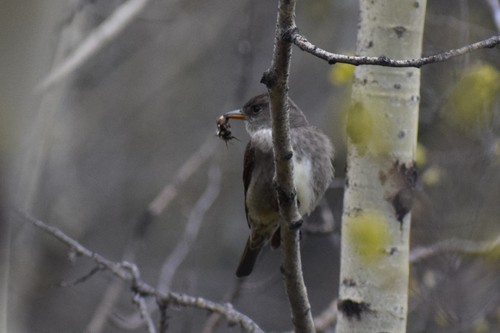 piuí-boreal
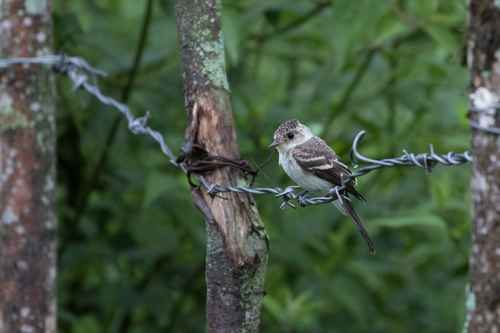 northern tropical pewee
Em resumo
A marca de campo mais confiável para separar o piuí-boreal do northern tropical pewee é o ousado 'colete' escuro de cinza escuro nas laterais do peito, que emoldura nitidamente uma garganta e barriga centrais brancas no piuí-boreal de todas as idades. O northern tropical pewee não possui esse colete e, em vez disso, apresenta um peito cinza pálido ou esbranquiçado mais uniforme, com apenas um leve tom cinza, no máximo. Os juvenis de northern tropical pewee têm coberturas de asas distintivas com bordas canela ou cor de buff, que o piuí-boreal nunca apresenta. O piuí-boreal também é muito maior e mais robusto, com um bico e asas visivelmente mais longos. Ambas as espécies pousam eretas em galhos expostos, mas o piuí-boreal normalmente escolhe os topos das árvores altas, enquanto o northern tropical pewee permanece mais baixo e frequentemente agita a cauda após pousar.
Dicas de identificação
- Procure pelo 'colete' escuro no peito: O piuí-boreal sempre apresenta um ousado colete cinza escuro nas laterais do peito, que emoldura nitidamente uma garganta e barriga centrais brancas. O northern tropical pewee nunca apresenta esse padrão; seu peito é pálido e uniforme, com apenas um leve tom cinza, no máximo. Esta é a única marca diagnóstica em todas as idades e estações.
- Verifique as barras de asas e as bordas das coberturas em juvenis: O juvenil de northern tropical pewee tem bordas largas de cor buff ou canela nas coberturas das asas e partes superiores mais marrons, com um queixo marrom. Os juvenis de piuí-boreal não apresentam esses tons quentes e mostram uma parte superior mais uniforme de cinza-oliva e partes inferiores brancas, com o colete já presente.
- Avalie o tamanho e a estrutura geral: O piuí-boreal é muito maior e mais robusto que o northern tropical pewee, com um bico e asas mais longos. Se o pássaro parecer robusto, com asas longas e robustas, especialmente em comparação com outros Contopus, é provável que seja um piuí-boreal. O northern tropical pewee é visivelmente menor e mais leve.
- Forma e tamanho do bico: O piuí-boreal tem um bico relativamente longo e grosso para um Contopus. O bico do northern tropical pewee é mais curto e mais fino, com uma mandíbula inferior amarelada ou alaranjada (adultos) ou laranja escuro (juvenis).
- Comportamento de empoleiramento: O piuí-boreal quase sempre escolhe o poleiro mais alto e exposto disponível (topo de árvores mortas ou tocos) e se senta muito ereto. O northern tropical pewee pousa mais baixo, frequentemente em níveis intermediários ou na borda da floresta, e agita sua cauda após pousar — um comportamento não observado no piuí-boreal.
- Cabeça e crista: Ambas as espécies podem apresentar uma leve crista, mas a do piuí-boreal pode parecer mais pronunciada quando levantada. A coroa do northern tropical pewee é de um cinza escuro, quase preto, com uma leve crista, mas isso não é tão distintivo quanto a marca do colete.
- Padrão das asas em adultos: O northern tropical pewee apresenta duas finas barras de asas (branco acinzentado a cinza amarronzado) e um tufo de penas brancas escondido em cada lado da região do rabo (geralmente oculto). O piuí-boreal não possui barras de asas fortes e não tem um tufo de rabo branco.
- Marcas faciais: O northern tropical pewee tem um fino anel ocular branco e lores brancos a cinza claro, dando um rosto ligeiramente mais marcado do que o piuí-boreal, que tem um rosto mais simples.
- Cor das partes inferiores: O piuí-boreal tem uma garganta e barriga brancas, nitidamente destacadas pelo colete escuro. As partes inferiores do northern tropical pewee são brancas a brancas amareladas, com um subcauda marrom claro e sem contraste acentuado.
- Contexto do habitat: O piuí-boreal prefere bordas de florestas abertas, coníferas ou boreais, frequentemente perto da água e em elevações, e é visto nos poleiros mais altos. O northern tropical pewee é encontrado em bordas de florestas ou níveis intermediários em florestas do México ao norte da América do Sul, não estando tão intimamente ligado à água ou a altas elevações.
- Estilo de voo: O piuí-boreal parece maior e mais poderoso em voo, com asas mais longas e um estilo de ataque mais direto. O northern tropical pewee é mais leve e mais flutuante.
- Sexos: Ambas as espécies são sexualmente monomórficas; o sexo não é uma marca de campo útil.
- Variação sazonal: Os tons de oliva do piuí-boreal são mais aparentes em plumagem fresca e boa luz, mas o colete está sempre presente. A plumagem do northern tropical pewee é mais consistente durante todo o ano, com os juvenis mostrando as diferenças mais distintivas (barras de asas cor de buff, queixo marrom).
- Vocalizações: Não coberto nas notas disponíveis; não confie na voz para separação neste contexto.
- Armadilhas: Cuidado com a iluminação e o desgaste das penas, que podem obscurecer os tons de oliva ou tornar o colete menos óbvio no piuí-boreal, mas o padrão geral permanece. As barras de asas cor de buff e o queixo marrom do juvenil northern tropical pewee são únicos entre esses dois.
Tamanho
O piuí-boreal é substancialmente maior e mais pesado que o northern tropical pewee. O piuí-boreal é descrito como pequeno a médio, mas pesa quase o dobro do peso dos menores Contopus pewees, incluindo o northern tropical pewee. O northern tropical pewee mede cerca de 12–14 cm de comprimento e pesa 8–14 g, enquanto o piuí-boreal é distintamente mais robusto e com asas mais longas. Essa diferença de tamanho é frequentemente óbvia em comparação direta ou com experiência, mas pode ser enganosa se vista sozinha ou à distância.
Plumagem
- Pássaros juvenis/imaturos: O juvenil northern tropical pewee apresenta bordas óbvias de cor buff a canela nas coberturas das asas e partes superiores mais marrons, com um queixo marrom. Os juvenis de piuí-boreal não apresentam esses tons quentes ou bordas largas de coberturas; sua plumagem é mais uniformemente cinza-oliva acima e branca abaixo, com o colete escuro característico já presente.
- Adultos: O piuí-boreal de todas as idades tem um ousado 'colete' cinza escuro nas laterais do peito, contrastando nitidamente com uma garganta e barriga brancas. As costas são de cinza-oliva a marrons, às vezes com um tom esverdeado em plumagem fresca. Os adultos de northern tropical pewee têm costas de cinza-oliva esfumaçado, um fino anel ocular branco e lores brancos a cinza claro, mas as partes inferiores são muito mais pálidas e uniformes, com apenas um leve tom cinza na parte superior do peito e sem efeito de colete. Ambos têm leves cristas, mas a do piuí-boreal pode parecer mais pronunciada quando levantada. O northern tropical pewee apresenta duas finas barras de asas (branco acinzentado a cinza amarronzado) e um tufo de penas brancas escondido na região do rabo, enquanto o piuí-boreal não possui barras de asas fortes e não apresenta um tufo de rabo branco.
Comportamento
Ambas as espécies são clássicos pega-varetas, mas o piuí-boreal é mais propenso a pousar no topo de árvores altas e mortas ou tocos, frequentemente em habitats abertos ou de borda, e se senta muito ereto. O northern tropical pewee também pousa ereto, mas normalmente escolhe poleiros mais baixos, em níveis intermediários ou na borda, e é conhecido por agitar sua cauda ao retornar a um poleiro. O piuí-boreal é descrito como um voador ágil, mas seus ataques são frequentemente mais longos e diretos. O northern tropical pewee geralmente retorna ao mesmo poleiro após um ataque e raramente se junta a bandos de espécies mistas.
Habitat
O piuí-boreal se reproduz em habitats abertos ou de borda de florestas boreais e coníferas, frequentemente perto da água e em elevações mais altas, e está fortemente associado a árvores ou tocos altos e expostos. Em contraste, o northern tropical pewee é encontrado do sudeste do México ao norte da América do Sul, tipicamente em bordas de florestas ou níveis intermediários dentro das florestas, e não está tão intimamente ligado à água ou a altas elevações. O piuí-boreal pode ser visto em cidades ou fazendas durante a migração, mas sempre busca poleiros abertos. O northern tropical pewee é mais restrito a habitats florestais ou de borda e não busca os poleiros mais altos.
piuí-boreal · northern tropical pewee · Minhas aves difíceis