

Motmot

ナキヒタキモドキ 対 Northern Tropical Pewee

Contopus cooperi 対 Contopus bogotensis

ナキヒタキモドキとNorthern Tropical Peweeのクイズ
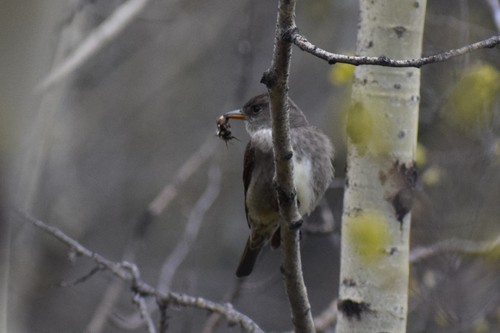
ナキヒタキモドキ (Contopus cooperi) ナキヒタキモドキ
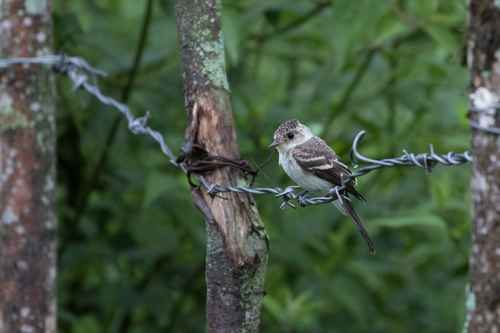
Northern Tropical Pewee (Contopus bogotensis) Northern Tropical Pewee

メディア

読み込み中…

要点

ナキヒタキモドキとNorthern Tropical Peweeを区別するための最も信頼できるフィールドマークは、ナキヒタキモドキの胸の側面にある濃い灰色の大胆な「ベスト」で、すべての年齢のナキヒタキモドキの白い中央の喉と腹を鮮やかにフレームしています。Northern Tropical Peweeはこのベストを欠いており、代わりにより均一な淡い灰色または白っぽい胸を示し、せいぜいかすかな灰色の色合いしかありません。幼鳥のNorthern Tropical Peweeは、ナキヒタキモドキが決して示さない特徴的なバフィーまたはシナモンエッジの翼覆いを持っています。ナキヒタキモドキはまた、はるかに大きく、体重も重く、明らかに長いくちばしと翼を持っています。両種は露出した枝に直立して止まりますが、ナキヒタキモドキは通常、高い枯れ木の頂上を選び、Northern Tropical Peweeは低い位置に留まり、着地後によく尾を震わせます。

識別のコツ

  1. Look for the dark 'vest' on the breast: ナキヒタキモドキは常に胸の側面に大胆な薄暗い灰色のベストを示し、白い中央の喉と腹を鮮やかにフレームします。Northern Tropical Peweeはこのパターンを示さず、その胸は淡く均一で、せいぜいかすかな灰色の色合いしかありません。これはすべての年齢と季節における最も診断的なマークです。
  2. Check for wingbars and covert edges in juveniles: 幼鳥のNorthern Tropical Peweeは、翼覆いに広いバフィーまたはシナモンバフィーのエッジと、より茶色い上面を持ち、茶色のあごを持っています。ナキヒタキモドキの幼鳥はこれらの暖かい色調を欠き、より均一なオリーブ灰色の上面と、すでに存在するベストを持つ白い下面を示します。
  3. Assess overall size and structure: ナキヒタキモドキはNorthern Tropical Peweeよりもはるかに大きく、体重も重いです。もしその鳥がずんぐりしていて、長い翼を持ち、頑丈に見えるなら、特に他のContopusと比較して、ナキヒタキモドキである可能性が高いです。Northern Tropical Peweeは明らかに小さく、軽いです。
  4. Bill shape and size: ナキヒタキモドキはContopusにしては比較的長く、太いくちばしを持っています。Northern Tropical Peweeのくちばしは短く、細く、黄色がかったまたはオレンジ色の下あご(成鳥)または薄暗いオレンジ色(幼鳥)です。
  5. Perching behavior: ナキヒタキモドキはほぼ常に利用可能な最も高く、最も露出した止まり木(枯れ木や枯れ木の頂上)を選び、非常に直立して座ります。Northern Tropical Peweeは低い位置に止まり、しばしば中間の高さや森林の端で止まり、着地後に尾を震わせるという行動を示します—これはナキヒタキモドキでは見られません。
  6. Head and crest: 両種はわずかな冠を示すことがありますが、ナキヒタキモドキの冠は上げるとより目立つことがあります。Northern Tropical Peweeの冠は暗い黒灰色でわずかな冠がありますが、これはベストマークほど際立っていません。
  7. Wing pattern in adults: Northern Tropical Peweeは2本の細い翼帯(灰白色から茶灰色)と、尾の両側に隠れた白い羽毛の房(通常は隠れている)を示します。ナキヒタキモドキは強い翼帯を欠き、白い尾の房を持っていません。
  8. Facial markings: Northern Tropical Peweeは薄い白い目のリングと白から灰白色のロアを持ち、ナキヒタキモドキよりもわずかに目立つ顔を持っていますが、ナキヒタキモドキはより地味な顔をしています。
  9. Underpart color: ナキヒタキモドキは白い喉と腹を持ち、暗いベストによって鮮やかに際立っています。Northern Tropical Peweeの下面は白から黄色がかった白で、淡い茶色の尾羽があり、鮮やかなコントラストはありません。
  10. Habitat context: ナキヒタキモドキは開けた針葉樹または北方林の端を好み、しばしば水の近くや高い標高で見られ、最も高い止まり木に見られます。Northern Tropical Peweeはメキシコから南アメリカ北部の森林の端や中間の高さで見られ、水や高い標高にそれほど密接に結びついていません。
  11. Flight jizz: ナキヒタキモドキは飛行中に大きく、より力強く見え、翼が長く、より直接的なサリーのスタイルを持っています。Northern Tropical Peweeは軽く、よりひらひらします。
  12. Sexes: 両種は性別が同じであり、性別は有用なフィールドマークではありません。
  13. Seasonal variation: ナキヒタキモドキのオリーブ色のトーンは新鮮な羽毛と良い光の中で最も明らかですが、ベストは常に存在します。Northern Tropical Peweeの羽毛は年間を通じてより一貫しており、幼鳥は最も特徴的な違い(バフィーの翼帯、茶色のあご)を示します。
  14. Vocalizations: 利用可能なメモにはカバーされていません。この文脈での区別のために声に頼らないでください。
  15. Pitfalls: 照明や羽毛の摩耗に注意してください。これにより、ナキヒタキモドキのオリーブ色のトーンが隠れたり、ベストが目立たなくなることがありますが、全体のパターンは残ります。幼鳥のNorthern Tropical Peweeのバフィーの翼帯と茶色のあごは、これらの2種の中でユニークです。

大きさ

ナキヒタキモドキはNorthern Tropical Peweeよりもはるかに大きく、体重も重いです。ナキヒタキモドキは小型から中型と説明されていますが、Northern Tropical Peweeを含む小型のContopus peweesのほぼ2倍の体重です。Northern Tropical Peweeは約12〜14 cmの長さで、8〜14 gの重さがありますが、ナキヒタキモドキは明らかにより大きく、長い翼を持っています。このサイズの違いは、直接比較や経験によってしばしば明らかですが、単独または遠くから見ると誤解を招くことがあります。

羽色

行動

両種は典型的なサリーのフライキャッチャーですが、ナキヒタキモドキは高い枯れ木や枯れ木の頂上に止まる可能性が高く、しばしば開けた場所やエッジの生息地で非常に直立して座ります。Northern Tropical Peweeも直立して止まりますが、通常は低い、中間の高さ、またはエッジの止まり木を選び、止まり木に戻るときに尾を震わせることが知られています。ナキヒタキモドキは敏捷な飛行者として説明されていますが、そのサリーはしばしばより長く、より直接的です。Northern Tropical Peweeは通常、サリーの後に同じ止まり木に戻り、混成種の群れに加わることはほとんどありません。

生息環境

ナキヒタキモドキは開けたまたはエッジの生息地の北方および針葉樹林で繁殖し、しばしば水の近くや高い標高で見られ、高い露出した木や枯れ木に強く関連しています。それに対して、Northern Tropical Peweeはメキシコ南東部から南アメリカ北部にかけて見られ、通常は森林の端や中間の高さにあり、水や高い標高にそれほど密接に結びついていません。ナキヒタキモドキは移動中に都市や農場で見られることがありますが、常に開けた止まり木を探します。Northern Tropical Peweeは森林やエッジの生息地により制限されており、最も高い止まり木を探すことはありません。

より良い説明を送る

比較と同じ項目を使ってください。文章はすぐに公開されます。

The most reliable field mark for separating Olive-sided Flycatcher from Northern Tropical Pewee is the bold, dark 'vest' of dusky gray on the sides of the breast, sharply framing a white central throat and belly in Olive-sided Flycatcher of all ages. Northern Tropical Pewee lacks this vest and instead shows a more uniform pale grayish or whitish breast, with only a faint gray tinge at most. Juvenile Northern Tropical Pewees have distinctive buffy or cinnamon-edged wing coverts, which Olive-sided Flycatcher never shows. Olive-sided Flycatcher is also much larger and heavier-bodied, with a noticeably longer bill and wings. Both species perch upright on exposed branches, but Olive-sided Flycatcher typically chooses the very tops of tall snags, while Northern Tropical Pewee stays lower and often shivers its tail after landing.

  1. Look for the dark 'vest' on the breast: Olive-sided Flycatcher always shows a bold, dusky gray vest on the sides of the breast, sharply framing a white central throat and belly. Northern Tropical Pewee never shows this pattern; its breast is pale and uniform with only a faint gray tinge at most. This is the single most diagnostic mark in all ages and seasons.
  2. Check for wingbars and covert edges in juveniles: Juvenile Northern Tropical Pewee has broad buff or cinnamon-buff edges to the wing coverts and browner upperparts, with a brown chin. Olive-sided Flycatcher juveniles lack these warm tones and show a more uniform olive-gray upperpart and white underparts with the vest already present.
  3. Assess overall size and structure: Olive-sided Flycatcher is much larger and heavier-bodied than Northern Tropical Pewee, with a longer bill and wings. If the bird appears chunky, long-winged, and robust, especially compared to other Contopus, it is likely Olive-sided Flycatcher. Northern Tropical Pewee is noticeably smaller and lighter.
  4. Bill shape and size: Olive-sided Flycatcher has a relatively long, thick bill for a Contopus. Northern Tropical Pewee's bill is shorter and thinner, with a yellowish or orangey lower mandible (adults) or dusky orange (juveniles).
  5. Perching behavior: Olive-sided Flycatcher almost always chooses the highest, most exposed perch available (top of dead trees or snags) and sits very upright. Northern Tropical Pewee perches lower, often at mid-levels or forest edge, and shivers its tail after landing—a behavior not seen in Olive-sided Flycatcher.
  6. Head and crest: Both species can show a slight crest, but Olive-sided Flycatcher's can appear more pronounced when raised. Northern Tropical Pewee's crown is dark blackish gray with a slight crest, but this is not as distinctive as the vest mark.
  7. Wing pattern in adults: Northern Tropical Pewee shows two thin wingbars (grayish white to brownish gray) and a hidden white feather tuft on each side of the rump (usually concealed). Olive-sided Flycatcher lacks strong wingbars and does not have a white rump tuft.
  8. Facial markings: Northern Tropical Pewee has a thin white eye-ring and white to grayish white lores, giving a slightly more marked face than Olive-sided Flycatcher, which is more plain-faced.
  9. Underpart color: Olive-sided Flycatcher has a white throat and belly, sharply set off by the dark vest. Northern Tropical Pewee's underparts are white to yellowish white, with a pale brown undertail and no sharp contrast.
  10. Habitat context: Olive-sided Flycatcher prefers open, coniferous or boreal forest edges, often near water and at elevation, and is seen on the tallest perches. Northern Tropical Pewee is found at forest edges or mid-levels in forests from Mexico to northern South America, not as closely tied to water or high elevation.
  11. Flight jizz: Olive-sided Flycatcher appears larger and more powerful in flight, with longer wings and a more direct sallying style. Northern Tropical Pewee is lighter and more fluttery.
  12. Sexes: Both species are sexually monomorphic; sex is not a useful field mark.
  13. Seasonal variation: Olive-sided Flycatcher's olive tones are most apparent in fresh plumage and good light, but the vest is always present. Northern Tropical Pewee's plumage is more consistent year-round, with juveniles showing the most distinctive differences (buffy wingbars, brown chin).
  14. Vocalizations: Not covered in the available notes; do not rely on voice for separation in this context.
  15. Pitfalls: Beware of lighting and feather wear, which can obscure the olive tones or make the vest less obvious in Olive-sided Flycatcher, but the overall pattern remains. Juvenile Northern Tropical Pewee's buffy wingbars and brown chin are unique among these two.

Olive-sided Flycatcher is substantially larger and heavier than Northern Tropical Pewee. Olive-sided Flycatcher is described as small to medium-sized, but is almost twice the weight of the smaller Contopus pewees, including Northern Tropical Pewee. Northern Tropical Pewee measures about 12–14 cm in length and weighs 8–14 g, while Olive-sided Flycatcher is distinctly bulkier and longer-winged. This size difference is often obvious in direct comparison or with experience, but can be misleading if seen alone or at a distance.

  • Juvenile/immature birds: Juvenile Northern Tropical Pewee shows obvious buff to cinnamon-buff edges on the wing coverts and browner upperparts, with a brown chin. Olive-sided Flycatcher juveniles do not show these warm buffy tones or broad covert edges; their plumage is more uniformly olive-gray above and white below, with the signature dark vest already present.
  • Adults: Olive-sided Flycatcher of all ages has a bold, dark gray 'vest' on the sides of the breast, sharply contrasting with a white throat and belly. The back is olive-gray to brownish, sometimes with a greenish cast in fresh plumage. Northern Tropical Pewee adults have a sooty olive-gray back, a thin white eye-ring, and a white to grayish white lores, but the underparts are much paler and more uniform, with only a faint gray tinge to the upper breast and no vest effect. Both have slight crests, but Olive-sided Flycatcher's can appear more pronounced when raised. Northern Tropical Pewee shows two thin wingbars (grayish white to brownish gray) and a hidden white feather tuft on the rump, while Olive-sided Flycatcher lacks strong wingbars and does not show a white rump tuft.

Both species are classic sallying flycatchers, but Olive-sided Flycatcher is more likely to perch at the very top of tall, dead trees or snags, often in open or edge habitats, and sits very upright. Northern Tropical Pewee also perches upright, but typically chooses lower, mid-level, or edge perches and is noted for shivering its tail upon returning to a perch. Olive-sided Flycatcher is described as an agile flyer, but its sallies are often longer and more direct. Northern Tropical Pewee usually returns to the same perch after a sally and rarely joins mixed-species flocks.

Olive-sided Flycatcher breeds in open or edge habitats of boreal and coniferous forests, often near water and at higher elevations, and is strongly associated with tall, exposed trees or snags. In contrast, Northern Tropical Pewee is found from southeastern Mexico to northern South America, typically at forest edges or mid-levels within forests, and is not as closely tied to water or high elevation. Olive-sided Flycatcher may be seen in cities or farms during migration, but always seeks out open perches. Northern Tropical Pewee is more restricted to forested or edge habitats and does not seek the highest perches.

変更を破棄しますか?

保存していない編集があります。今離れると失われます。

ナキヒタキモドキ · Northern Tropical Pewee · 苦手な鳥