

Olive-sided Flycatcher vs Northern Tropical Pewee
Contopus cooperi contro Contopus bogotensis
Fai un quiz con Olive-sided Flycatcher e Northern Tropical Pewee
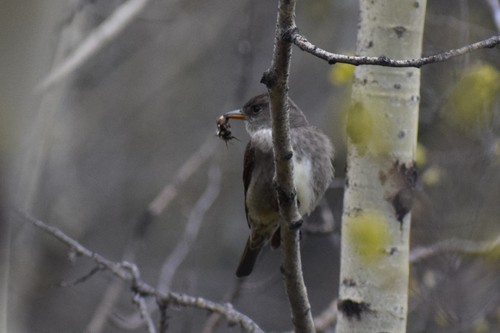 Olive-sided Flycatcher
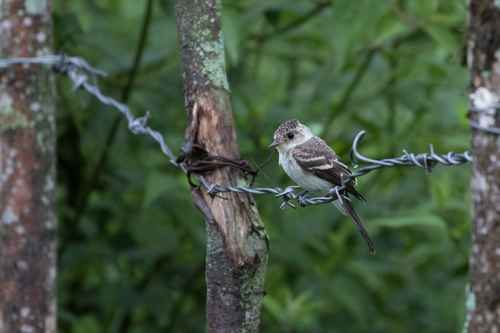 Northern Tropical Pewee
In breve
Il segno di campo più affidabile per separare l'Olive-sided Flycatcher dal Northern Tropical Pewee è il 'gilet' scuro e audace di grigio scuro sui lati del petto, che incornicia nettamente una gola e un ventre bianchi nell'Olive-sided Flycatcher di tutte le età. Il Northern Tropical Pewee manca di questo gilet e mostra invece un petto grigio chiaro o bianco più uniforme, con solo una leggera sfumatura grigia al massimo. I Northern Tropical Pewee juvenili hanno copritrici delle ali distintive di colore buffo o con bordi cannella, che l'Olive-sided Flycatcher non mostra mai. L'Olive-sided Flycatcher è anche molto più grande e pesante, con un becco e ali visibilmente più lunghi. Entrambe le specie si posano erette su rami esposti, ma l'Olive-sided Flycatcher sceglie tipicamente le cime più alte dei tronchi morti, mentre il Northern Tropical Pewee rimane più in basso e spesso scuote la coda dopo l'atterraggio.
Consigli di identificazione
- Cerca il 'gilet' scuro sul petto: L'Olive-sided Flycatcher mostra sempre un gilet audace e grigio scuro sui lati del petto, incorniciando nettamente una gola e un ventre bianchi. Il Northern Tropical Pewee non mostra mai questo schema; il suo petto è chiaro e uniforme con solo una leggera sfumatura grigia al massimo. Questo è il segno diagnostico più importante in tutte le età e stagioni.
- Controlla le barre alari e i bordi delle copritrici nei juvenili: Il Northern Tropical Pewee juvenili ha bordi buffi o cannella larghi sulle copritrici delle ali e parti superiori più marroni, con un mento marrone. I juvenili dell'Olive-sided Flycatcher mancano di queste tonalità calde e mostrano una parte superiore più uniforme di grigio oliva e parti inferiori bianche con il gilet già presente.
- Valuta la dimensione e la struttura complessiva: L'Olive-sided Flycatcher è molto più grande e pesante del Northern Tropical Pewee, con un becco e ali più lunghi. Se l'uccello appare robusto, con ali lunghe e robuste, specialmente rispetto ad altri Contopus, è probabile che sia un Olive-sided Flycatcher. Il Northern Tropical Pewee è visibilmente più piccolo e leggero.
- Forma e dimensione del becco: L'Olive-sided Flycatcher ha un becco relativamente lungo e spesso per un Contopus. Il becco del Northern Tropical Pewee è più corto e più sottile, con una mandibola inferiore giallastra o arancione (adulti) o arancione scuro (juvenili).
- Comportamento di poso: L'Olive-sided Flycatcher sceglie quasi sempre il posatoio più alto e più esposto disponibile (cima di alberi morti o tronchi) e si siede molto eretto. Il Northern Tropical Pewee si posa più in basso, spesso a livelli medi o al margine della foresta, e scuote la coda dopo l'atterraggio—un comportamento non osservato nell'Olive-sided Flycatcher.
- Testa e cresta: Entrambe le specie possono mostrare una leggera cresta, ma quella dell'Olive-sided Flycatcher può apparire più pronunciata quando sollevata. La corona del Northern Tropical Pewee è di un grigio scuro, quasi nero, con una leggera cresta, ma questo non è così distintivo come il segno del gilet.
- Schema alare negli adulti: Il Northern Tropical Pewee mostra due sottili barre alari (bianco grigiastro a grigio bruno) e un ciuffo di piume bianche nascosto su ciascun lato del groppone (di solito nascosto). L'Olive-sided Flycatcher manca di barre alari forti e non ha un ciuffo di groppone bianco.
- Segni facciali: Il Northern Tropical Pewee ha un sottile anello oculare bianco e lore bianchi a grigio chiaro, dando un volto leggermente più marcato rispetto all'Olive-sided Flycatcher, che ha un volto più semplice.
- Colore delle parti inferiori: L'Olive-sided Flycatcher ha una gola e un ventre bianchi, nettamente contrapposti dal gilet scuro. Le parti inferiori del Northern Tropical Pewee sono bianche a bianche giallastre, con un sottocoda marrone chiaro e senza un forte contrasto.
- Contesto dell'habitat: L'Olive-sided Flycatcher preferisce margini di foreste aperte, conifere o boreali, spesso vicino all'acqua e ad alta quota, ed è visto sui posatoi più alti. Il Northern Tropical Pewee si trova ai margini delle foreste o a livelli medi nelle foreste dal Messico al nord della Sud America, non così strettamente legato all'acqua o all'alta quota.
- Stile di volo: L'Olive-sided Flycatcher appare più grande e potente in volo, con ali più lunghe e uno stile di attacco più diretto. Il Northern Tropical Pewee è più leggero e più svolazzante.
- Sessi: Entrambe le specie sono sessualmente monomorfiche; il sesso non è un segno utile per il campo.
- Variazione stagionale: Le tonalità oliva dell'Olive-sided Flycatcher sono più evidenti nel piumaggio fresco e in buona luce, ma il gilet è sempre presente. Il piumaggio del Northern Tropical Pewee è più consistente durante tutto l'anno, con i juvenili che mostrano le differenze più distintive (barre alari buffe, mento marrone).
- Vocalizzazioni: Non trattato nelle note disponibili; non fare affidamento sulla voce per la separazione in questo contesto.
- Trappole: Fai attenzione all'illuminazione e all'usura delle piume, che possono offuscare le tonalità olive o rendere il gilet meno evidente nell'Olive-sided Flycatcher, ma il modello complessivo rimane. Le barre alari buffe e il mento marrone del Northern Tropical Pewee juvenili sono unici tra questi due.
Taglia
L'Olive-sided Flycatcher è sostanzialmente più grande e pesante del Northern Tropical Pewee. L'Olive-sided Flycatcher è descritto come di dimensioni piccole a medie, ma è quasi il doppio del peso dei più piccoli Contopus pewees, incluso il Northern Tropical Pewee. Il Northern Tropical Pewee misura circa 12–14 cm di lunghezza e pesa 8–14 g, mentre l'Olive-sided Flycatcher è decisamente più robusto e con ali più lunghe. Questa differenza di dimensioni è spesso ovvia in un confronto diretto o con esperienza, ma può essere fuorviante se vista da sola o da lontano.
Piumaggio
- Uccelli juvenili/immaturi: Il Northern Tropical Pewee juvenili mostra bordi evidenti di colore buffo a cannella sulle copritrici delle ali e parti superiori più marroni, con un mento marrone. I juvenili dell'Olive-sided Flycatcher non mostrano queste tonalità calde o bordi larghi delle copritrici; il loro piumaggio è più uniformemente grigio oliva sopra e bianco sotto, con il gilet scuro caratteristico già presente.
- Adulti: L'Olive-sided Flycatcher di tutte le età ha un 'gilet' audace e grigio scuro sui lati del petto, in netto contrasto con una gola e un ventre bianchi. La schiena è di un grigio oliva a bruno, a volte con una sfumatura verdognola nel piumaggio fresco. Gli adulti del Northern Tropical Pewee hanno una schiena grigio oliva fuligginosa, un sottile anello oculare bianco e lore bianchi a grigio chiaro, ma le parti inferiori sono molto più chiare e uniformi, con solo una leggera sfumatura grigia sul petto superiore e senza effetto gilet. Entrambi hanno leggere creste, ma quella dell'Olive-sided Flycatcher può apparire più pronunciata quando sollevata. Il Northern Tropical Pewee mostra due sottili barre alari (bianco grigiastro a grigio bruno) e un ciuffo di piume bianche nascosto sul groppone, mentre l'Olive-sided Flycatcher manca di barre alari forti e non mostra un ciuffo di groppone bianco.
Comportamento
Entrambe le specie sono classici catturatori volanti, ma l'Olive-sided Flycatcher è più propenso a posarsi in cima ad alberi morti o tronchi alti, spesso in habitat aperti o di margine, e si siede molto eretto. Anche il Northern Tropical Pewee si posa eretto, ma sceglie tipicamente posatoi più bassi, a livelli medi o ai margini e viene notato per scuotere la coda al ritorno su un posatoio. L'Olive-sided Flycatcher è descritto come un volatore agile, ma i suoi attacchi sono spesso più lunghi e diretti. Il Northern Tropical Pewee di solito ritorna allo stesso posatoio dopo un attacco e raramente si unisce a stormi di specie miste.
Habitat
L'Olive-sided Flycatcher nidifica in habitat aperti o di margine di foreste boreali e conifere, spesso vicino all'acqua e a quote più elevate, ed è fortemente associato ad alberi o tronchi alti ed esposti. Al contrario, il Northern Tropical Pewee si trova dal sud-est del Messico al nord della Sud America, tipicamente ai margini delle foreste o a livelli medi all'interno delle foreste, e non è così strettamente legato all'acqua o all'alta quota. L'Olive-sided Flycatcher può essere visto in città o fattorie durante la migrazione, ma cerca sempre posatoi aperti. Il Northern Tropical Pewee è più ristretto a habitat forestali o di margine e non cerca i posatoi più alti.
Olive-sided Flycatcher · Northern Tropical Pewee · I miei uccelli difficili