

pato-colhereiro vs capuchinho-tricolor
Spatula clypeata versus Lonchura malacca
Jogue um quiz com pato-colhereiro e capuchinho-tricolor
 pato-colhereiro
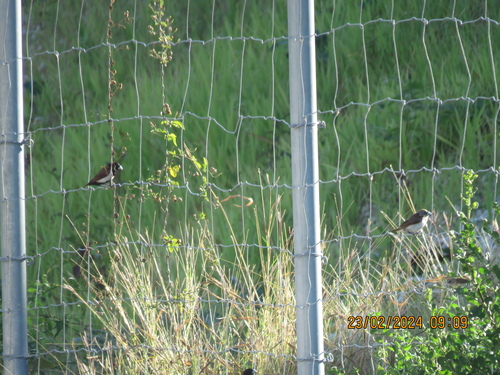 capuchinho-tricolor
Em resumo
A maneira mais confiável de separar o pato-colhereiro do capuchinho-tricolor é pela sua estrutura dramaticamente diferente: o pato-colhereiro é um pato grande e de corpo largo com um enorme bico espatulato, enquanto o capuchinho é um pequeno e compacto tentilhão com um bico curto e cônico. Em voo ou empoleirado, nenhuma idade do capuchinho mostra a asa anterior azul pálido do pato-colhereiro ou seu bico maciço. Os capuchinhos juvenis não apresentam o padrão afiado preto e castanho do adulto, mas mesmo assim, seu tamanho e forma do bico são completamente diferentes de qualquer pato-colhereiro. Se você não tiver certeza, concentre-se primeiro na forma do bico e no tamanho geral, depois verifique a asa anterior azul única do pato-colhereiro ou a plumagem adulta tricolor nítida do capuchinho.
Dicas de identificação
- Forma do Bico: O pato-colhereiro tem um enorme bico plano e espatulato, único entre os patos e nunca igualado pelo bico curto e cônico do capuchinho-tricolor. Isso é visível em todas as idades e em todas as plumagens.
- Tamanho: Os patos-colhereiros são patos de tamanho completo (44–52 cm), muito maiores que o pequeno capuchinho (11,5 cm). Mesmo à distância, o volume do pato-colhereiro é óbvio.
- Padrão da Asa em Voo: Todas as idades e sexos do pato-colhereiro mostram uma asa anterior azul pálido em voo, contornada por branco e verde. Os capuchinhos têm penas de voo marrons escuras sem azul ou verde, e coberturas de asa inferiores brancas a creme.
- Plumagem Juvenil/Imatura: Os capuchinhos juvenis são marrons quentes por cima e amarelos por baixo, sem a cabeça preta e as costas castanhas do adulto, mas ainda assim não mostram azul na asa e têm um bico de tentilhão. Os patos-colhereiros juvenis são marrons manchados com uma asa anterior cinza e um grande bico espatulato.
- Plumagem do Macho Adulto: O macho reprodutor do pato-colhereiro tem uma cabeça verde escura, peito branco, flancos castanhos e bico preto. O capuchinho adulto é nitidamente tricolor: cabeça e peito pretos, barriga/flancos brancos, costas castanhas.
- Plumagem Feminina/Eclipse: As fêmeas e os machos em eclipse do pato-colhereiro são marrons manchados, mas sempre mostram a asa anterior azul e o grande bico. As fêmeas do capuchinho se parecem com os machos adultos, mas com franjas mais claras nas coberturas da cauda; o bico permanece pequeno e cônico.
- Cor das Pernas: Os patos-colhereiros têm pernas laranja-avermelhadas brilhantes; os capuchinhos têm pernas e pés cinzas.
- Comportamento Alimentar: Os patos-colhereiros mergulham e filtram alimentos na água, balançando seus bicos de lado a lado. Os capuchinhos se alimentam de sementes, frequentemente empoleirados em gramíneas ou juncos, nunca mergulhando.
- Habitat: Os patos-colhereiros são encontrados em águas abertas ou pântanos; os capuchinhos estão em áreas gramadas ou com juncos perto da água, mas nunca nadam.
- Estilo de Voo: Os patos-colhereiros têm um voo de pato direto e constante; os capuchinhos têm um voo rápido e saltitante típico de pequenos tentilhões.
- Tamanho do Grupo: Ambos podem estar em bandos, mas os bandos de pato-colhereiro estão na água, enquanto os bandos de capuchinho estão na vegetação.
- Contexto: Se visto nadando ou mergulhando, é um pato-colhereiro. Se visto agarrado a caules de grama ou se alimentando de sementes, é um capuchinho.
- Cor do Bico: O bico do pato-colhereiro é escuro (macho) ou cinza com bordas laranja (fêmea); o bico do capuchinho é cinza azulado pálido.
- Cor do Rabo: Os capuchinhos têm um rabo e coberturas da cauda de cor marrom-avermelhada; os patos-colhereiros não têm.
- Identidade Confusa: Mesmo em plumagem de eclipse ou juvenil, o tamanho, bico e asa anterior azul do pato-colhereiro nunca são igualados pelo capuchinho. Os capuchinhos juvenis podem ser confundidos com outros capuchinhos, mas não com patos-colhereiros.
Tamanho
O pato-colhereiro é vastamente maior, medindo 44–52 cm de comprimento e pesando 500–800 g, em comparação com o pequeno comprimento de 11,5 cm e a massa de 12,6 g do capuchinho-tricolor. O pato-colhereiro é um pato de tamanho completo, frequentemente visto com outras aves aquáticas, enquanto o capuchinho é um pequeno tentilhão do tamanho de um pardal. Essa diferença de tamanho é óbvia em qualquer visão direta e é especialmente aparente em voo ou quando empoleirado perto de outras aves para escala.
Plumagem
-
Juvenis/Imaturos: Os capuchinhos-tricolores juvenis são marrons quentes por cima e amarelos por baixo, sem a cabeça preta e as costas castanhas do adulto, mas ainda assim não mostram azul ou verde na asa e nunca têm um bico espatulato. Os patos-colhereiros juvenis (especialmente fêmeas e machos em eclipse) são marrons manchados, com uma asa anterior cinza e um grande bico amplo com tons laranja nas bordas. Em voo, mesmo os patos-colhereiros em eclipse ou fêmeas mostram uma asa anterior azul pálido, uma característica ausente em todos os capuchinhos.
-
Reprodução Adulto: Os machos adultos do pato-colhereiro têm uma cabeça verde escura iridescente, peito branco, flancos castanhos e uma mancha de asa anterior azul pálido contornada por branco e verde em voo. As fêmeas são marrons manchadas, mas ainda mostram a asa anterior azul e o enorme bico. Os capuchinhos-tricolores adultos são nitidamente marcados: pretos da cabeça ao peito, barriga e flancos brancos, e partes superiores castanhas quentes, com penas de voo marrons escuras e um rabo marrom-avermelhado. O bico é cinza azulado pálido e cônico.
-
Eclipse/Não Reprodutivo: Os machos do pato-colhereiro em eclipse se assemelham às fêmeas, mas sempre retêm a asa anterior azul. Os capuchinhos não têm plumagem de eclipse; os adultos mantêm seu padrão tricolor durante todo o ano.
Comportamento
Os patos-colhereiros são patos mergulhadores, frequentemente vistos nadando em águas abertas, balançando seus grandes bicos de lado a lado para filtrar alimentos da superfície da água. Eles são menos gregários do que alguns patos, mas ainda formam pequenos bandos. Os capuchinhos-tricolores são tentilhões que se alimentam de sementes, tipicamente vistos em bandos empoleirados em gramíneas ou juncos, ou se alimentando de sementes. Os capuchinhos não nadam ou mergulham e são raramente vistos em águas abertas. Seu voo é rápido e saltitante, típico de pequenos tentilhões, enquanto os patos-colhereiros têm um voo de pato direto e constante.
Habitat
Os patos-colhereiros são encontrados em pântanos, lagos e áreas úmidas rasas, especialmente aqueles com fundos lamacentos ricos em invertebrados. Eles são amplamente distribuídos pelo Hemisfério Norte durante a migração e o inverno. Os capuchinhos-tricolores habitam áreas quentes e gramadas perto da água, como leitos de juncos, campos de arroz e bordas de pântano, mas não utilizam água aberta como os patos. Na área introduzida, os capuchinhos são frequentemente vistos em áreas agrícolas e áreas úmidas gramadas, mas sempre como aves terrestres, não aves aquáticas.
pato-colhereiro · capuchinho-tricolor · Minhas aves difíceis