

northern red-fronted tinkerbird vs southern yellow white-eye
Pogoniulus uropygialis versus Zosterops anderssoni
Jogue um quiz com northern red-fronted tinkerbird e southern yellow white-eye
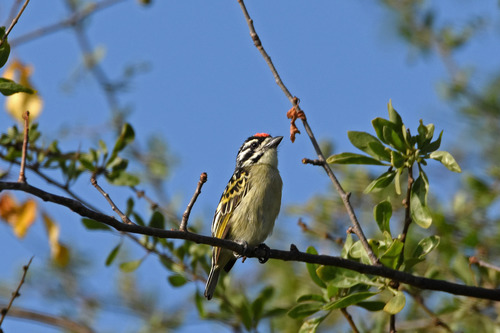 northern red-fronted tinkerbird
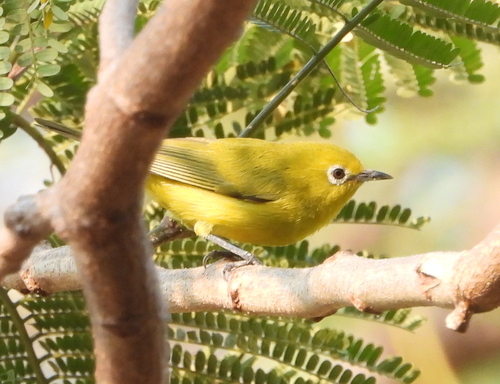 southern yellow white-eye
Em resumo
A marca de campo mais confiável que separa esses dois é a mancha frontal vermelha acima do bico no macho adulto do northern red-fronted tinkerbird, que nunca está presente no southern yellow white-eye. Tinkerbirds imaturos podem ser complicados, mas são ligeiramente menores e têm um dorso mais escuro do que o barbadinho-de-fronte-amarela (não comparado diretamente aqui), enquanto os white-eyes não têm vermelho no rosto e mostram em vez disso um proeminente anel ocular branco. Estruturalmente, os tinkerbirds são pequenos, com bicos grossos, enquanto os white-eyes são mais esguios, com bicos mais finos e um comportamento mais ativo e ágil. As vocalizações também são distintas: os tinkerbirds emitem um chamado repetitivo 'took', enquanto os white-eyes têm chamados diferentes, menos monótonos. O habitat e a distribuição não se sobrepõem muito, com os tinkerbirds na África Oriental e os white-eyes na África do Sul.
Dicas de identificação
- Mancha frontal vermelha: Apenas o macho adulto do northern red-fronted tinkerbird apresenta uma mancha vermelha brilhante acima do bico. Se você vê isso, é diagnóstico.
- Anel ocular branco: O southern yellow white-eye sempre tem um anel ocular branco ousado, que nunca está presente em tinkerbirds de qualquer idade ou sexo.
- Formato do bico: O tinkerbird tem um bico robusto e pesado, semelhante ao de um barbete; o white-eye tem um bico fino e pontudo. Isso é visível mesmo à distância com binóculos.
- Proporções da cabeça e do corpo: O tinkerbird parece ter uma cabeça grande e compacta; o white-eye é esguio e com cabeça pequena.
- Cor da plumagem: O tinkerbird é mais padronizado, com um rosto contrastante (especialmente nos machos), enquanto o white-eye é principalmente amarelo-esverdeado, sem padrão facial, exceto pelo anel ocular.
- Confusão juvenil: Tinkerbirds imaturos não têm a mancha vermelha e podem parecer mais simples, mas ainda têm um dorso mais escuro e uma estrutura mais semelhante a um barbete do que qualquer white-eye.
- Estilo de voo: O tinkerbird voa em curtas explosões diretas e pousa ereto; o white-eye está constantemente se movendo, raramente parado, e frequentemente em grupos.
- Vocalizações: Se você ouvir um chamado repetitivo 'took', é um tinkerbird. White-eyes nunca fazem esse som.
- Habitat e distribuição: Se você estiver na África Oriental, o tinkerbird é possível; na África do Sul, o white-eye é mais provável. Eles não se sobrepõem.
- Comportamento em grupo: Os white-eyes estão frequentemente em pequenos bandos barulhentos; os tinkerbirds geralmente são solitários ou em pares.
- Postura ao pousar: O tinkerbird pousa ereto e imóvel; o white-eye é mais horizontal e inquieto.
- Padrão facial: Apenas o white-eye mostra um rosto limpo e sem marcas com um anel branco; o rosto do tinkerbird é mais padronizado, especialmente nos machos.
- Cor do dorso em imaturos: Tinkerbirds imaturos têm um dorso mais escuro em comparação com tinkerbirds semelhantes, mas sempre carecem do dorso verde uniforme e limpo do white-eye.
- Diferenças sexuais: Apenas os machos tinkerbirds mostram a mancha frontal vermelha; fêmeas e imaturos não, então use estrutura e comportamento nesses casos.
- Contexto: Se você vê um pássaro em um bando misto com beija-flores e outros pequenos insetívoros, é provável que seja um white-eye; os tinkerbirds são menos sociais.
Tamanho
O northern red-fronted tinkerbird é um pequeno barbete, mas ainda é notavelmente mais robusto e forte do que o southern yellow white-eye, que é um pássaro minúsculo, esguio e mais delicado. Embora medidas exatas não sejam fornecidas, o bico do tinkerbird é mais robusto e a cabeça proporcionalmente maior, dando-lhe uma aparência mais compacta e de cabeça grande em comparação com o white-eye, que é mais delicado e com bico mais fino.
Plumagem
- Adultos: O macho do northern red-fronted tinkerbird mostra uma mancha vermelha brilhante acima do bico, que está ausente em todos os white-eyes. Ambos os sexos do southern yellow white-eye têm uma plumagem amarelo-esverdeada com um conspícuo anel ocular branco e sem vermelho em qualquer parte do rosto.
- Imaturos/Juvenis: Tinkerbirds imaturos podem ser confundidos com outros tinkerbirds, mas não com white-eyes; eles carecem da mancha frontal vermelha, são ligeiramente menores e têm um dorso mais escuro do que o barbadinho-de-fronte-amarela. Imaturos de white-eye se assemelham a adultos, com o mesmo anel ocular branco e tons amarelados, e nunca mostram vermelho ou padrão facial semelhante ao de um barbete.
- Em voo: Nenhum padrão distintivo de asa superior é descrito para qualquer uma das espécies nas fontes, então a separação em voo depende mais da estrutura e do comportamento do que da plumagem.
Comportamento
O northern red-fronted tinkerbird tende a pousar mais ereto e imóvel, muitas vezes permanecendo sem se mover enquanto chama de um poleiro proeminente. O southern yellow white-eye é muito mais ativo, constantemente se movendo pela folhagem, frequentemente em pequenos grupos, e raramente fica parado por muito tempo. O comportamento do tinkerbird é mais semelhante ao de um barbete, enquanto o white-eye lembra um warbler hiperativo.
Habitat
O northern red-fronted tinkerbird é encontrado na África Oriental, enquanto o southern yellow white-eye é encontrado na África do Sul, então suas distribuições não se sobrepõem. Em suas respectivas regiões, os tinkerbirds são mais prováveis de serem encontrados em bordas de floresta ou matas, enquanto os white-eyes frequentam jardins, matas e arbustos, frequentemente em bandos de espécies mistas.
Voz
O northern red-fronted tinkerbird emite um chamado monótono e repetitivo 'took', muitas vezes em longas séries, e também produz chamados de tom mais alto, em duas ou três partes, e um trinado rápido. O southern yellow white-eye não emite um chamado tão repetitivo e semelhante ao de um barbete; suas vocalizações são mais variadas e menos mecânicas, tipicamente agudas e trinado, mas não descritas em detalhes aqui.
northern red-fronted tinkerbird · southern yellow white-eye · Minhas aves difíceis