

Motmot

キタアカビタイヒメゴシキドリ 対 Southern Yellow White-eye

Pogoniulus uropygialis 対 Zosterops anderssoni

キタアカビタイヒメゴシキドリとSouthern Yellow White-eyeのクイズ
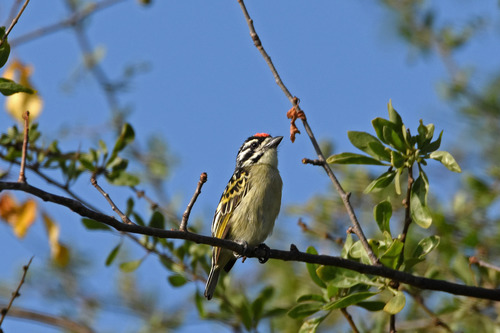
キタアカビタイヒメゴシキドリ (Pogoniulus uropygialis) キタアカビタイヒメゴシキドリ
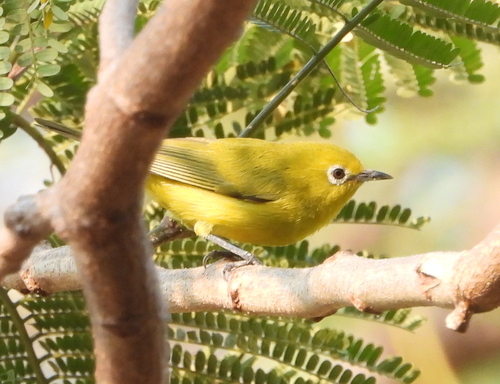
Southern Yellow White-eye (Zosterops anderssoni) Southern Yellow White-eye

メディア

読み込み中…

要点

これら二種を分ける最も信頼できるフィールドマークは、成鳥のオスキタアカビタイヒメゴシキドリのくちばしの上の赤い前頭部の斑点であり、これは南部イエローホワイトアイには決して存在しません。未熟なヒメゴシキドリは見分けが難しいですが、キビタイヒメゴシキドリよりもわずかに小さく、背中が暗いです(ここでは直接比較されていません)。一方、ホワイトアイは顔に赤色がなく、代わりに目の周りに目立つ白いアイリングを示します。構造的には、ヒメゴシキドリは小さくて太いくちばしを持つバーベットであり、ホワイトアイはスリムで、より細いくちばしとより活発でひらひらとした振る舞いを持っています。声も異なります:ヒメゴシキドリは繰り返しの「トゥク」という鳴き声を出し、ホワイトアイは異なる、単調でない鳴き声を持っています。生息地と分布はあまり重ならず、ヒメゴシキドリは東アフリカに、ホワイトアイは南部アフリカに生息しています。

識別のコツ

  1. 赤い前頭部の斑点:成鳥のオスキタアカビタイヒメゴシキドリだけがくちばしの上に明るい赤い斑点を示します。これを見たら、診断的です。
  2. 白いアイリング:南部イエローホワイトアイは常に目立つ白いアイリングを持ち、これはどの年齢や性別のヒメゴシキドリにも存在しません。
  3. くちばしの形:ヒメゴシキドリは頑丈で重いバーベットのようなくちばしを持ち、ホワイトアイは細く尖ったくちばしを持っています。これは双眼鏡で遠くからでも見えます。
  4. 頭部と体の比率:ヒメゴシキドリは大きな頭でコンパクトに見え、ホワイトアイはスリムで小さな頭です。
  5. 羽毛の色:ヒメゴシキドリは模様が多く、顔にコントラストがあります(特にオスの場合)、一方ホワイトアイは主に黄緑色で、アイリング以外に顔の模様はありません。
  6. 幼鳥の混乱:未熟なヒメゴシキドリは赤い斑点がなく、より地味に見えることがありますが、依然として背中が暗く、ホワイトアイよりもバーベットのような構造を持っています。
  7. 飛行スタイル:ヒメゴシキドリは短く直接的なバーストで飛び、直立して止まります。ホワイトアイは常にひらひらと飛び回り、ほとんど静止せず、しばしば群れでいます。
  8. 鳴き声:繰り返しの「トゥク」という鳴き声が聞こえたら、それはヒメゴシキドリです。ホワイトアイはこの音を出しません。
  9. 生息地と分布:東アフリカにいる場合、ヒメゴシキドリが可能性があります。南部アフリカではホワイトアイがより可能性があります。彼らは重なりません。
  10. 群れの行動:ホワイトアイはしばしば小さくて騒がしい群れにいます。ヒメゴシキドリは通常、孤独またはペアでいます。
  11. 止まり方:ヒメゴシキドリは直立して静止します。ホワイトアイはより水平で落ち着きがありません。
  12. 顔の模様:ホワイトアイだけが白いリングのあるきれいで無地の顔を示します。ヒメゴシキドリの顔はより模様が多く、特にオスの場合です。
  13. 未熟個体の背中の色:未熟なヒメゴシキドリは、類似のヒメゴシキドリと比較して背中が暗いですが、ホワイトアイのきれいで均一な緑色の背中は常に欠けています。
  14. 性差:赤い前頭部の斑点を示すのはオスのヒメゴシキドリだけです。メスと未熟個体は示さないので、その場合は構造と行動を使用してください。
  15. 文脈:日光鳥や他の小さな昆虫食の鳥と混合した群れの中に鳥を見たら、それはホワイトアイの可能性が高いです。ヒメゴシキドリはあまり社交的ではありません。

大きさ

キタアカビタイヒメゴシキドリは小さなバーベットですが、南部イエローホワイトアイよりも明らかにずっしりとしていて頑丈です。正確な測定は提供されていませんが、ヒメゴシキドリのくちばしはより太く、頭は相対的に大きく、よりコンパクトで大きな頭の外観を与えています。これに対して、ホワイトアイはより繊細で細いくちばしを持つ小さくてスリムな鳥です。

羽色

行動

キタアカビタイヒメゴシキドリはより直立して静止する傾向があり、目立つ止まり木から鳴くときはしばしば動かずにいます。南部イエローホワイトアイははるかに活発で、常に葉の間をひらひらと飛び回り、小さな群れでいることが多く、長い間静止することはほとんどありません。ヒメゴシキドリの行動はよりバーベットのようであり、ホワイトアイは過活動のウグイスを思わせます。

生息環境

キタアカビタイヒメゴシキドリは東アフリカに生息し、南部イエローホワイトアイは南部アフリカに生息しているため、彼らの分布は重なりません。それぞれの地域では、ヒメゴシキドリは森林や森林の縁にいる可能性が高く、ホワイトアイは庭、森林、ブッシュに頻繁に出没し、しばしば混合種の群れにいます。

声

キタアカビタイヒメゴシキドリは単調で繰り返しの「トゥク」という鳴き声を出し、しばしば長い連続で、また高音の二部または三部の鳴き声や急速なトリルも出します。南部イエローホワイトアイはそのような繰り返しのバーベットのような鳴き声を出さず、その鳴き声はより多様で機械的でなく、通常は高音でさえずり、ここでは詳細に記載されていません。

より良い説明を送る

比較と同じ項目を使ってください。文章はすぐに公開されます。

The most reliable field mark separating these two is the red frontal patch above the bill in adult male Northern Red-fronted Tinkerbird, which is never present on Southern Yellow White-eye. Immature tinkerbirds can be tricky, but they are slightly smaller and have a darker back than Yellow-fronted Tinkerbird (not directly compared here), while white-eyes lack any red on the face and instead show a prominent white eye-ring. Structurally, tinkerbirds are small, thick-billed barbets, while white-eyes are slimmer, with finer bills and a more active, flitting demeanor. Vocalizations are also distinct: tinkerbirds give a repetitive 'took' call, while white-eyes have different, less monotonous calls. Habitat and range do not overlap much, with tinkerbirds in East Africa and white-eyes in southern Africa.

  1. Red frontal patch: Only adult male Northern Red-fronted Tinkerbird shows a bright red patch above the bill. If you see this, it's diagnostic.
  2. White eye-ring: Southern Yellow White-eye always has a bold white eye-ring, which is never present on tinkerbirds of any age or sex.
  3. Bill shape: Tinkerbird has a stout, heavy, barbet-like bill; white-eye has a fine, pointed bill. This is visible even at a distance with binoculars.
  4. Head and body proportions: Tinkerbird looks big-headed and compact; white-eye is slim and small-headed.
  5. Plumage color: Tinkerbird is more patterned, with a contrasting face (especially in males), while white-eye is mostly yellow-green with no facial pattern except the eye-ring.
  6. Juvenile confusion: Immature tinkerbirds lack the red patch and can look plainer, but still have a darker back and more barbet-like structure than any white-eye.
  7. Flight style: Tinkerbird flies in short, direct bursts and perches upright; white-eye is constantly flitting, rarely still, and often in groups.
  8. Vocalizations: If you hear a repetitive 'took' call, it's a tinkerbird. White-eyes never make this sound.
  9. Habitat and range: If you are in East Africa, tinkerbird is possible; in southern Africa, white-eye is more likely. They do not overlap.
  10. Group behavior: White-eyes are often in small, noisy flocks; tinkerbirds are usually solitary or in pairs.
  11. Perched posture: Tinkerbird perches upright and still; white-eye is more horizontal and restless.
  12. Facial pattern: Only white-eye shows a clean, unmarked face with a white ring; tinkerbird's face is more patterned, especially in males.
  13. Back color in immatures: Immature tinkerbirds have a darker back compared to similar tinkerbirds, but always lack the white-eye's clean, uniform greenish back.
  14. Sex differences: Only male tinkerbirds show the red frontal patch; females and immatures do not, so use structure and behavior in those cases.
  15. Context: If you see a bird in a mixed flock with sunbirds and other small insectivores, it's likely a white-eye; tinkerbirds are less social.

Northern Red-fronted Tinkerbird is a small barbet, but still noticeably chunkier and more robust than the Southern Yellow White-eye, which is a tiny, slim, and more delicate bird. While exact measurements are not provided, the tinkerbird's bill is stouter and head proportionally larger, giving it a more compact, big-headed look compared to the daintier, finer-billed white-eye.

  • Adults: Male Northern Red-fronted Tinkerbird shows a bright red patch above the bill, which is absent in all white-eyes. Both sexes of Southern Yellow White-eye have a yellow-green plumage with a conspicuous white eye-ring and no red anywhere on the face.
  • Immatures/Juveniles: Immature tinkerbirds can be confused with other tinkerbirds, but not with white-eyes; they lack the red frontal patch, are slightly smaller, and have a darker back than Yellow-fronted Tinkerbird. White-eye immatures resemble adults, with the same white eye-ring and yellowish tones, and never show any red or barbet-like facial pattern.
  • In flight: No distinctive upperwing pattern is described for either species in the sources, so flight separation relies on structure and jizz rather than plumage.

Northern Red-fronted Tinkerbird tends to perch more upright and still, often remaining motionless while calling from a prominent perch. Southern Yellow White-eye is much more active, constantly flitting through foliage, often in small groups, and rarely sitting still for long. The tinkerbird's behavior is more barbet-like, while the white-eye is reminiscent of a hyperactive warbler.

Northern Red-fronted Tinkerbird is found in East Africa, while Southern Yellow White-eye is found in southern Africa, so their ranges do not overlap. In their respective regions, tinkerbirds are more likely in woodland or forest edge, while white-eyes frequent gardens, woodlands, and bush, often in mixed-species flocks.

Northern Red-fronted Tinkerbird gives a monotonous, repetitive 'took' call, often in long series, and also produces higher-pitched, two- or three-part calls and a rapid trill. Southern Yellow White-eye does not give such a repetitive, barbet-like call; its vocalizations are more varied and less mechanical, typically high-pitched and twittering, but not described in detail here.

変更を破棄しますか?

保存していない編集があります。今離れると失われます。

キタアカビタイヒメゴシキドリ · Southern Yellow White-eye · 苦手な鳥